|
Getting your Trinity Audio player ready...
|
Black Farmer Fund was created to address the long-standing gap in agricultural capital access. A nonprofit, community-led investment organization based in the U.S. Northeast, the fund supports Black farmers and food businesses to build community wealth, health, and long-term stability.
Unlike traditional financial institutions, the fund centers community governance and therefore does not rely on personal credit reports and limits personal guarantees. Community-based committees make investment decisions, ensuring capital supports growth rather than reinforcing debt.
A Need For Representation Among Black Farmers
Myra Marcellin serves as the investment director at Black Farmer Fund, where she oversees investment strategies and funding initiatives to support farmers and agricultural enterprises. “I started out building a career in the Farm Credit System and worked for the company for 26 and a half years,” she says.
“Farm Credit East is part of the Farm Credit System of America, and our role was to provide capital and other resources to traditional farmers. They served farmers in good times and bad; that was their mission. They were considered a one-stop shop: whatever the farmer needed, we provided.”
As one of the few Black female loan officers in her company, Marcellin provided expertise and access to resources to traditional white farmers in the Pioneer Valley region and other rural areas of Massachusetts. Over time, though, she noticed something concerning.
“I didn’t see services being provided to Black farmers in this area. When I raised questions, I was often assured that steps were being taken to reach that demographic. Still, I struggled to see meaningful follow-through. From the stories I had heard, I knew there were Black farmers out there.”
Throughout her career, Marcellin saw a lack of cultural competency, patience, and institutional understanding of the barriers Black farmers faced. Without meaningful investments in training loan officers or developing relationships within Black communities, farmers were often perceived as “unattractive” borrowers, lacking collateral or unlikely to meet strict underwriting requirements.
“As a result, institutions take the easier route,” she says. “Often, capital flows toward borrowers with existing assets and established track records, as they are viewed as lower risk. Without intentional efforts to broaden outreach, this can unintentionally create a self-reinforcing cycle. In that sense, it’s shaped not only by policy, but by perception.”
Determined to work differently, Marcellin sought out organizations focused on breaking down barriers and expanding access to capital and support for Black farmers and food system actors. “I eventually got connected through the community development space and through a colleague, and I immediately saw the opportunity with Black Farmer Fund. This work allowed me to apply the same level of resources, expertise, and financial knowledge I had been providing to traditional farmers; That’s what led me here, to the work I’m doing now within the Black farm and food community.”
Black Farmer Fund Driving Equity Work
Focused on expanding and supporting the Black food system, Black Farmer Fund raises capital from private donors and foundations and invests directly in farmers and food entrepreneurs. “Our work is designed to strengthen the Black food system,” Marcellin explains. “Funding is tailored specifically to Black farmers and food producers to expand their presence and power within it.”
Their work is equity-driven and community-grounded, evolving alongside the needs of the farmers it serves. “The initial stage involves aligning values using a three-pillar criteria model focused on community, social, and ecological impact, with an emphasis on impact and financial sustainability. Maintaining this balance is crucial and delicate, as both aspects need to work in harmony,”
Because of its focus on community, Black Farmer Fund does not operate like a traditional bank; it does not pull personal credit reports or require personal guarantees. The organization still conducts thoughtful due diligence to ensure that any investment strengthens the business rather than weighing it down.
“Many financial institutions rely heavily on credit scores as a gatekeeping tool; if your score falls below a certain threshold, you’re automatically disqualified,” Marcellin says. “A person’s personal credit history does not determine whether their business receives funding. At the same time, we are not interested in burdening businesses with unsustainable debt. Those principles are not mutually exclusive.”
RELATED: Why Get Redy Farm is More Than Just a Farm in Hawaii
Education and New Access to Sustainability
Many Black farmers are navigating systems that were never designed for them, which is why the organization provides education on securing and using capital sustainably. For Marcellin, this problem stems from generations of exclusion from conversations about land and capital.
“Because Black farmers have been shut out of these systems for so long, many don’t even understand how the process works when access is supposedly available,” Marcellin says. “The doors may be open, but the pathway isn’t clear.”
As a result, much of Black Farmer Fund’s public policy discussion focused on education and access, particularly how Black farmers could obtain land and the mechanisms required to achieve that goal. “Integral to this issue is access to capital. Acquiring land requires capital. Even when land ownership is already secured, access to capital is still critical to cultivate the land, develop infrastructure, acquire equipment, and sustain effective farm operations.”
For Marcellin, the gaps in understanding, cultural competency, and access generate ongoing tension between funding businesses to ensure short-term survival and promoting long-term growth and self-determination. This is especially true for immediate needs that often intersect with financial risk, making decisions about the path forward complex and rarely straightforward.
“We manage that through technical assistance. Our goal is to help people understand the process and how funding works, and whether it will truly benefit their business. We provide technical assistance upfront, throughout the process, and even after funds are deployed.”
Marcellin emphasizes that the technical assistance is not a one-time event and that Black Farmer Fund makes it an ongoing practice. “We recognize that success doesn’t happen automatically, so we ensure the level of support needed is available throughout their journey.”
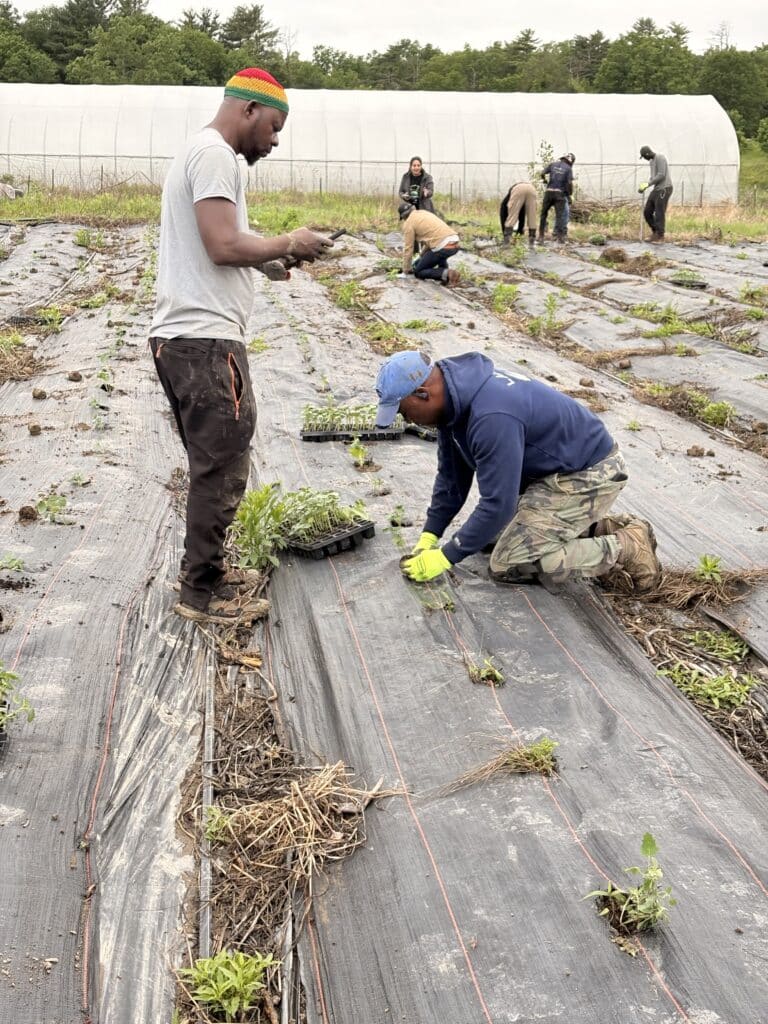
This is especially needed now with the rollback of resources through USDA for socially disadvantaged programs that, at least, attempted to give Black farmers access and support.
“Now, with the cancellation of these programs, that progress has been set back,” Marcellin says. “Resources that helped Black farmers participate in the market, grow sustainably, and navigate climate-related challenges—such as drought, flooding, and other weather crises—are no longer readily available. These programs provided education, tools, and support to manage climate impacts, but their elimination has removed those benefits.”
She points out that even programs aimed at food security infrastructure grants, which became especially important post-COVID, are affected. “The shift in policy has undermined the progress that was being made, leaving Black farmers more vulnerable and further marginalized in the agricultural system.” That reality led directly to the expansion and strengthening of the Rapid Response Fund.
Responding in Times of Need
The Rapid Response Fund provides one-time emergency support for farmers and food entrepreneurs facing sudden crises. Although funds are limited, applicants can be awarded up to $10,000 per emergency.
“Our goal is to provide support where traditional systems have failed, helping farmers continue operating despite unexpected crises,” Marcellin says. “Emergencies might include weather crises that destroy crops, equipment failures such as losing a tractor, or fires; situations that put a business in immediate jeopardy.”
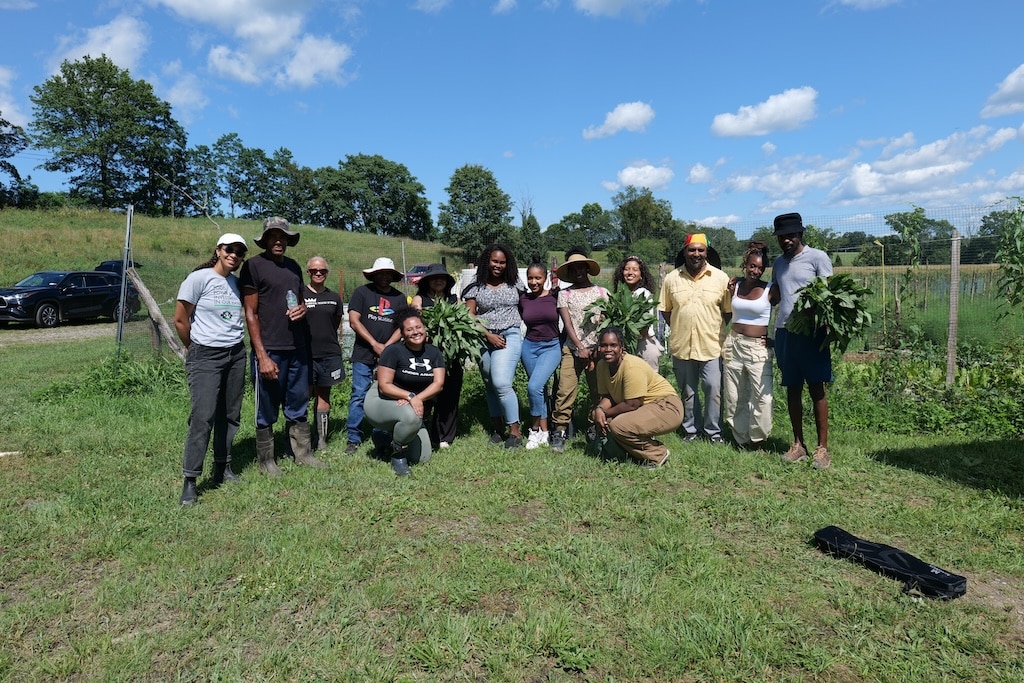
2025 was what Marcellin called an “extra-ordinary year,” with the pauses and cancellations of many grants due to the changes in the U.S. administration, so in response, Black Farmer Fund allocated significantly more funds. “We offered up to $50,000 to individuals who could demonstrate that a grant impacting their business had been paused or canceled. Generally, Rapid Response Funds address emergencies, including climate-related incidents, fires, and other urgent events that threaten operations. The key requirement was that the funding be used to resolve the emergency and stabilize the business.”
Theory in Action: Startup, Sustain and Scale
Marcellin notes that her work is both rewarding and demanding, bringing fulfillment but also requiring considerable effort. “We’re a nonprofit with limited human resources, and there’sT so much need out there,” she says. “Some days it can feel overwhelming because the workload is heavy and the demand is constant. It’s easy to get discouraged under that kind of pressure.”
But what motivates her is the knowledge that they are making an impact, and she recounts a story of a farmer who took out a mortgage with large balloon payments. “He didn’t fully understand the terms or have the resources to make that payment when it came due. The loan had essentially been seller-financed, and he was facing foreclosure because the sellers, who had financed the property, had planned to foreclose after he had worked the land for many years.”
Black Farmer Fund was able to help him. “We were able to step in and refinance the mortgage under more favorable terms, with a lower interest rate and a more flexible payment structure that was actually affordable for him previously. Of course, we can’t always save every situation, but in this case, we were able to stabilize the farm and keep it operating.”
This is exactly what the work is about. “Even if it’s one business owner at a time, if we can deploy capital to help a business start, sustain itself, and eventually scale, that’s what matters to me. I call it my triple S theory: startup, sustain, and scale.”
Support Black Farmer Fund through their newsletter, shop, or donations. You can also follow their work on Facebook and Instagram.