|
Getting your Trinity Audio player ready...
|
Dr. Donna Nickerson is the owner of Da’ Shack Farmers Market Health and Wellness, Inc. in Waco, Texas. “Professionally, I’m a psychotherapist, and I also have a deep connection to Indigenous gardening, which has been a part of my family for generations,” she says.
“I started gardening as a child, learning from my mother, who hails from the Philippines, while my father is from the United States.” Dr. Nickerson grew up surrounded by her family’s gardens, which fostered her love for them and taught her how to compost at home.
Her family made compost using ancestral agricultural techniques, a practice she enjoyed as a hobby before transforming it into a business. “I’ve been running it [Da’ Shack Market Health and Wellness] since 2017, and I have collaborated with different partners in the community to encourage sustainability.”
What is Composting
“Composting is the process of taking organic debris—like fruit and vegetable scraps, leaves, weeds, and twigs—and allowing it to break down over time,” Dr. Nickerson explains, naming what you can compost. “You start with topsoil and add these materials, creating a mix that balances carbon and nitrogen, which are essential for healthy gardening.”
She goes on to explain that when done correctly, compost shouldn’t smell bad. “It shouldn’t be too wet or too dry; it should have a balanced, earthy texture,” she says. “The vegetable and fruit-based composting method we promote is straightforward, which makes it more accessible. When something is easy and manageable on a small scale, more people are likely to try it.”
Dr. Nickerson employs Indigenous gardening practices, emphasizing simplicity and sustainability. “It’s about making use of local, accessible materials and teaching people how to do it properly so that the compost is actually productive.”
How to Compost at Home
Dr. Nickerson offers advice for those using food for a do-it-yourself compost. “Food scraps, like fruit and vegetable peels, will naturally break down over time and eventually become a rich, soil-like matter. To start composting, use topsoil that’s free of chemicals. I personally recommend the Timberline brand sold at Lowe’s; it’s inexpensive and works well as a base.”
However, avoid using coffee grounds except for specific plants. “A lot of people love adding them to compost, but coffee grounds are best suited for acid-loving plants like blueberries or azaleas,” she says. “We grow a wide variety of vegetables, herbs and fruit trees, which don’t thrive in highly acidic soil. So if you’re composting for a vegetable garden or fruit trees, it’s best to leave the coffee grounds out.”
From here, add what’s known as “browns,” which are carbon sources: leaves, weeds, and garden clippings and “greens,” which are nitrogen sources, such as fruit and vegetable scraps. “Ideally, you want a 50-50 split between browns and greens. That balance is key to successful composting.”

Dr. Nickerson notes that one common issue people face with other methods is imbalance. “If the levels of carbon and nitrogen are off, the compost can burn plants or just fail to nourish them properly,” she says, giving tips for those learning how to compost at home.
“We’ve seen many people give up on gardening out of frustration when it doesn’t work as expected. Composting might seem intimidating at first, but once you break it down mixed with chemical-free topsoil, it’s easy.”
If your compost is too wet or starts to smell bad, that usually means you have too many greens. To balance it out, you need to add more browns, such as dry leaves, weeds, or garden clippings. Conversely, if your compost is too dry, it means you need to add more greens. Add more fruit and vegetable scraps to bring in the moisture and nitrogen it needs. Don’t worry about critters either. In keeping with the Indigenous ancestral practices, Da’ Shack Farmer’s Market keeps it natural.
“We plant an herb called wormwood near our compost pile to keep animals away,” Dr. Nickerson says. “It naturally deters rodents, cats, dogs, pretty much anything that might try to get into the pile. When animals smell the wormwood, they tend to stay away.”
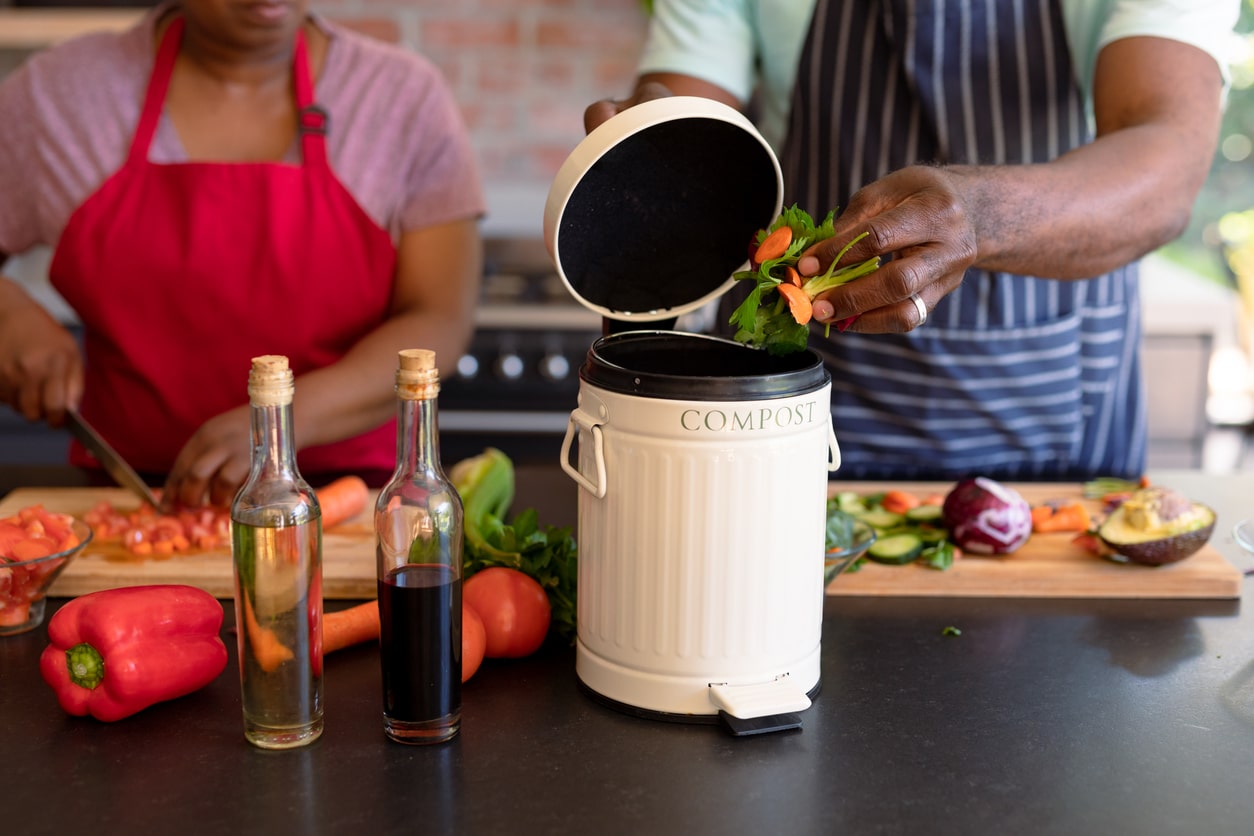
Dr. Nickerson suggests that composting at home should be part of your daily routine. “For me, I keep a small pot in my kitchen to collect scraps. Once it’s full, I just take it out to the compost bin. If someone prefers liquid composting, they can do that too, although there is only so much waste that can be converted into liquid. And if you’re not composting yourself, try finding someone in your community who is. Share your scraps so they can put them to use.”
She emphasizes that education is crucial, especially in neighborhoods, schools, and churches, and particularly in areas with strict homeowners’ associations (HOAs).
“Many HOAs prioritize the appearance of your yard over sustainability. That’s where food scaping comes in,” she says. “You don’t have to plant food in rows like a traditional garden. You can incorporate edible plants into your landscaping—blend them in with your perennials—so it still looks beautiful while serving a purpose. It’s a way to grow food while keeping things HOA-friendly.”
Best Foods to Compost
“You can add vegetable scraps and fruit directly to your compost, covering them with soil to decompose. Eggs with shells can also be composted, but shells need to be ground for full breakdown; otherwise, white fragments remain. We avoid eggshells for cosmetic reasons, preferring tidy garden beds, but they are useful if appearance isn’t a concern.”
Da’ Shack Farmer’s Market offers guidance and education on their YouTube channel on how to compost at home. Dr. Nickerson presents various composting methods, acknowledging personal approaches, while also providing additional guidance to alleviate confusion. “I always tell folks, no matter who you’re learning from, go take a look at their garden. That’s the real proof. If their garden is thriving, then their composting method is working.”
Composting at Home: Indoor Edition
If you’re wondering how to compost at home with no outdoor space, it’s still possible. “We teach a method called liquid papaya, where you blend your fruit and vegetable scraps with water,” Dr Nickerson says. “Not making it thick like a smoothie, but more of a thin liquid. This creates what some people call “compost tea,” which you can then pour directly onto your plants as a natural fertilizer.”
For anyone looking to learn how to compost at home, Dr. Nickerson notes that there is no limitation. “Composting doesn’t have to be limited to a pile outside; liquid composting is an excellent alternative for many people. We respect all kinds of gardeners, whether you use containers, grow directly in the ground, or garden indoors.”
RELATED: Cultivating Freedom Through Homesteading: Tips to Get Started and Reconnected
Benefits of Composting
For Dr. Nickerson, composting is a mindset rooted in responsibility and care for the earth. While the initial change may feel odd, she says that it just becomes second nature once it becomes a part of your daily routine. She also laments that the lack of public education about waste is one of the biggest issues.
“For example, most people bag their leaves and send them to the landfill. But what’s missing is education. Leaves are a vital part of the ecosystem; they provide food for bees and other beneficial insects. Bagging them up and throwing them away is wasteful and unsustainable.”
Another example is the money spent on grass and lawn maintenance. “These are lawns they can’t even eat from,” Dr. Nickerson says. “That practice actually comes from Europe, where lawns were a status symbol. It’s not Indigenous—it’s not in harmony with the land.”
She points out that with the extreme heat and droughts in Texas, keeping grass alive is becoming impossible. “People spend money on fertilizers to keep weeds out of grass that struggles to survive, and those fertilizers are killing bees. Without bees, we won’t have food, and we won’t survive. So the real issue is awareness. People often just copy what they see others doing; if everyone bags their leaves, then they assume that’s what they should do. But they don’t know any better.”
To change these habits, Dr. Nickerson and a colleague collaborated on developing community-driven solutions. A compost exchange occurs between a nursing home and a church, where church volunteers collect kitchen scraps weekly, compost them on-site, and return the finished compost to the nursing home for its garden.

“These are the types of community solutions we need to spread awareness and sustainability,” she says. “We need to stop obsessing over grass and focus on native plants that support the environment. Stop spraying herbicides on weeds because those weeds feed the bees we need.”
Rather than treating weeds as a nuisance, she encourages gardeners to recognize their role in feeding the ecosystem. “Yes, we all want a nice-looking garden, but I leave the weeds for a bit and then clean them up by composting them. We don’t need to spray chemicals; we need to work with nature.”
Dr. Nickerson assures that the benefits of composting speak for themselves once someone gets into it. “You’ll see how powerful it is. That compost flows like crude oil. When you watch it, make your plants thrive, you won’t want to share it with anyone. I’m telling you, it’s that good.”
Da’ Shack Farmers Market education teaches gardeners how to compost at home and maintain a healthy garden throughout the year, thereby reducing replanting costs. “A lot of people find themselves replanting every year because their soil health just isn’t where it needs to be,” she explains.
“Their plants often die in summer or winter due to poor soil management. We teach how to nourish the soil with soil milk alternatives, such as peat, without using chemicals. Excessive use of synthetic fertilizers and pesticides depletes soil nutrients, leading to farmland degradation and the outsourcing of food production. Soil can only endure so much abuse before losing productivity, and no fertilizer can fix it once it’s gone.