|
Getting your Trinity Audio player ready...
|
Crocodile. The first time I ate one, no crocodile tears were shed for the carnivorous critter impaled on a Maasai sword skewer and carried by two servers to our table. The large reptile had been skinned and slow-roasted, rotated over coals. The chunks of crocodile meat sliced onto my plate were pleasantly charred; the meat was tender. I wondered how the croc would have felt knowing he was served up with potato salad and greens.
That was prior to 2004, which is when Kenya imposed a ban on the sale of game meat. I assume that was a wild croc. These days the giraffe and wildebeest are gone from the then-menu at Nairobi’s Carnivore Club. These days, any crocodile meat served there is farmed.
Fast forward to not long before COVID. That time the crocodile dish, according to the menu, had been marinated overnight in thyme and mustard. It was then wrapped in bacon, pan-fried and placed on a bed of crushed carrots, sweet potatoes and mussels in brandy. This was at a high-end eatery that the time was a Hilton hotel in central Durban.
On the day this story dawned, eating crocodile meat and meeting Raphael Tsaurayi, a friendly crocodile crackerjack turned culinary crocodile aficionado, were not what I was expecting when I asked my farmer friends Lynn and Mike if anything interesting food wise was going on in their neck of the woods. Their “woods” being a remote timber, sugar cane and macadamia farm “in the middle of nowhere” in KwaZulu-Natal, South Africa.
They live up a rutted dirt road, way off the beaten track about a 90-minute drive from Durban where, many years ago, Lynn and I met at high school and became besties. I love to make the trek to visit them, but do have some hesitancy these days. Rather wish they hadn’t told me about the large puff adder, an extremely venomous snake, Lynn found curled up on the pillow my head had laid on just a few hours earlier during a recent sleep over.
Mike ponders my foodie question, for not too long. Then tells me about this elderly Zulu woman who, most days, lights a fire in a small rickety grill she has knocked together and sets up on the grass verge near the turn-off to their farm.
“People traveling to work place orders for the crocodile meat she sells. She has it cooked and waiting for them to pick up on their way home.”
“And there is a crocodile meat café in Pietermaritzburg (PMB),” Lynn pipes in, PMB being the closest large city to their farm.
By morning when I am set to leave to drive home to Durban, they have made a plan. Thinking our isiZulu-speaking roadside crocodile meat purveyor may not speak English or want to talk to a camera-wielding stranger — and to make sure I find the PMB crocodile establishment — Mike has asked the farm induna (foreman), Vusi Zuma, to accompany me (after which, he will taxi home).
Culinary Crocodile Meat
The day might have flopped like a disappointing soufflé without Zuma because the crocodile woman was not in her spot. But, “Do you know where the crocodile farm is?” I ask Zuma, Mike having said her crocodile meat came from a farm.
Turns out Zuma is game and adventurous. He points me along the well-used narrow asphalt road in the direction of Pietermaritzburg. I drive until he points and says: “There,” indicating a dirt track, which leads to: a locked gate.
After a couple more false starts and bumping along through some fields of veggies, we come upon a clearing with a shed, a small house and a man in a van.
A long conversation ensues between this man and Zuma, interjected with my, “Is the crocodile farm here?” No.
“Is there a farm?” Yes.
Zuma’s gesticulations, plus lots of pointing and head-nodding indicates he is checking and confirming directions.
Our new route doubles us back from where we came and after not too long leads us to another dirt road, which ends at a No Entry, Crocodile Abattoir, By Appointment Only sign. I tell the gate man, in English, that I am a food writer interested in crocodile meat. What Zuma tells him, in isiZulu, is likely of more relevance. Because, suddenly friendly and welcoming, he signs us in.
We drive a few yards before Zuma and I simultaneously glance to the left.
“Wow!” I say. “Hau,” he says, using the isiZulu equivalent.
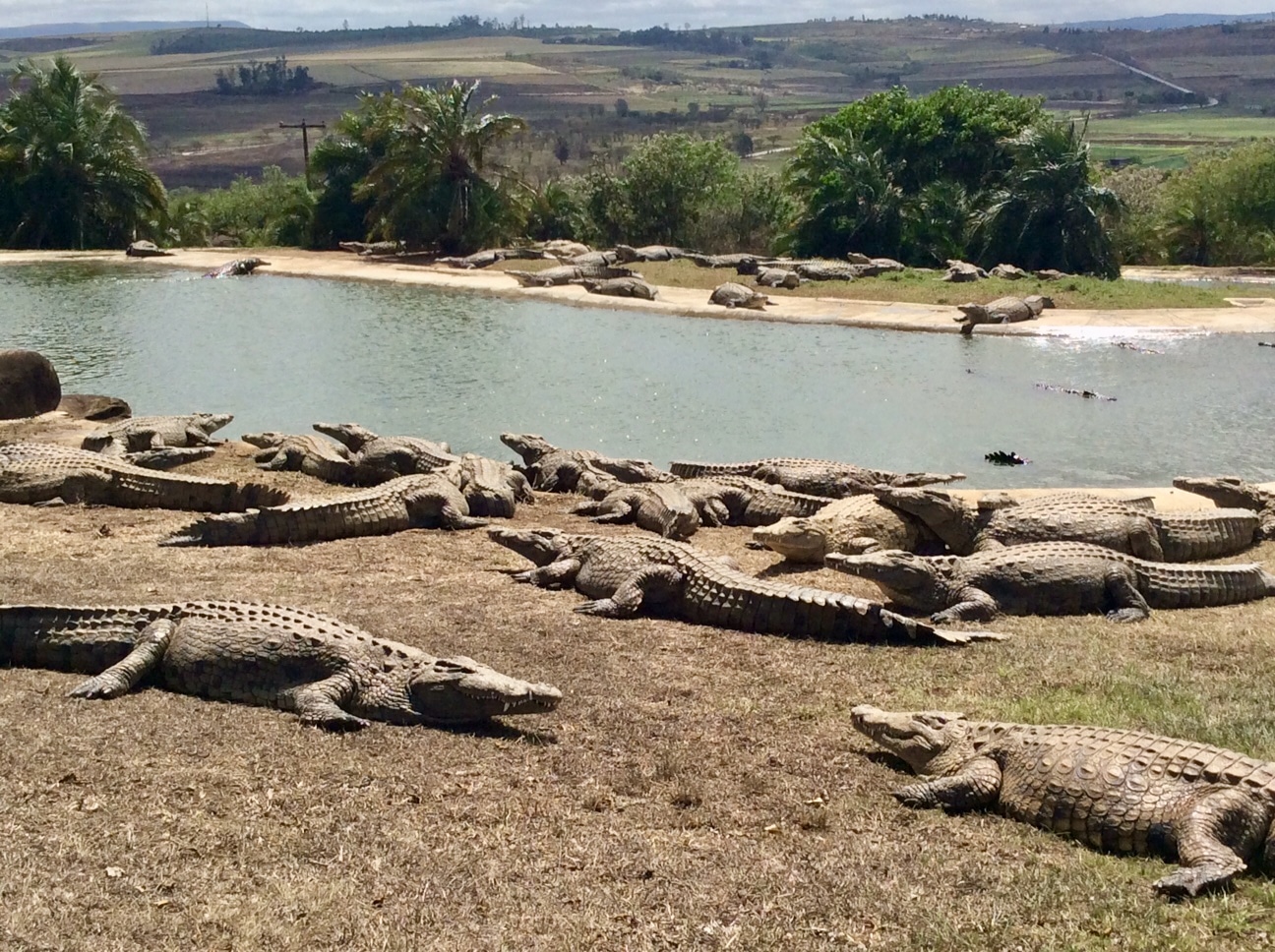
Several dozen crocodiles are swimming, climbing over each other, mainly sleeping under the African sun in and around a large concrete pool, one of several.
Some crocodile facts: It is only the Nile crocodile (Crocodylus niloticus) that occurs naturally in South Africa, eSwatini, Kenya — sub-Saharan Africa — and they are formidable predators. A large adult is capable of preying on the largest buffalo or wildebeest. Big males can weigh 700kg (about 1,550 pounds) and have up to 68 teeth.
Krocodile Dheli
At the end of the driveway we see the crocodile abattoir sign and track down a supervisor who tells us the crocs we’ve seen will soon be relocated to a different farm as the crocodile abattoir is being converted to a facility for chickens.
And yes, they do still have crocodile meat for sale and sure, I can purchase a pound or so of frozen tail. He will wrap it in newspaper for its journey home to my fridge.
From the abattoir, we head for Pietermaritzburg. We have an address: 390 Boom Street. We pass auto shops and taxis and congestion. Then up jumps an inviting culinary oasis, a little house in a rough-and-tumble industrial stretch of road. Primary colors and a welcoming sign.
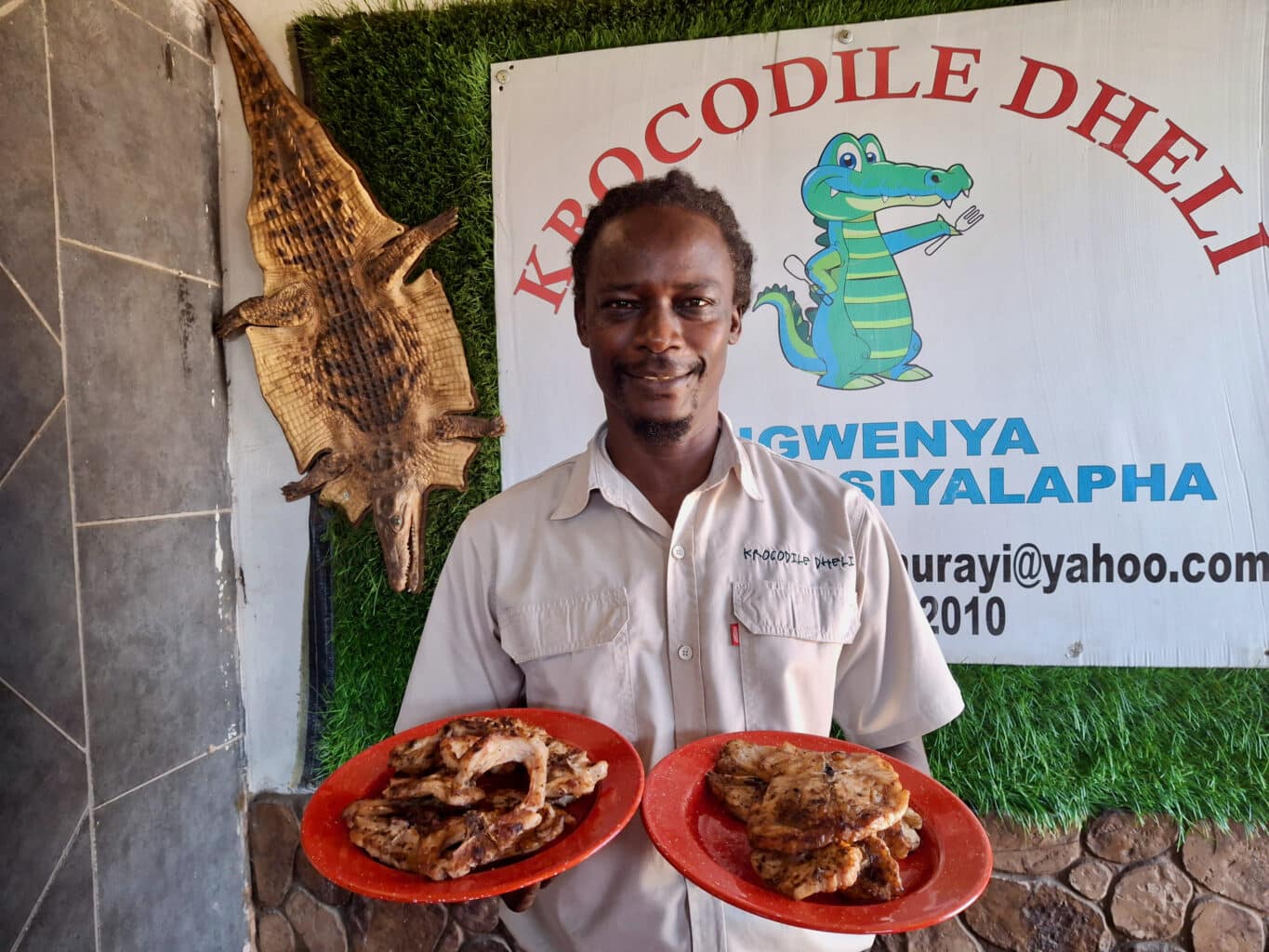
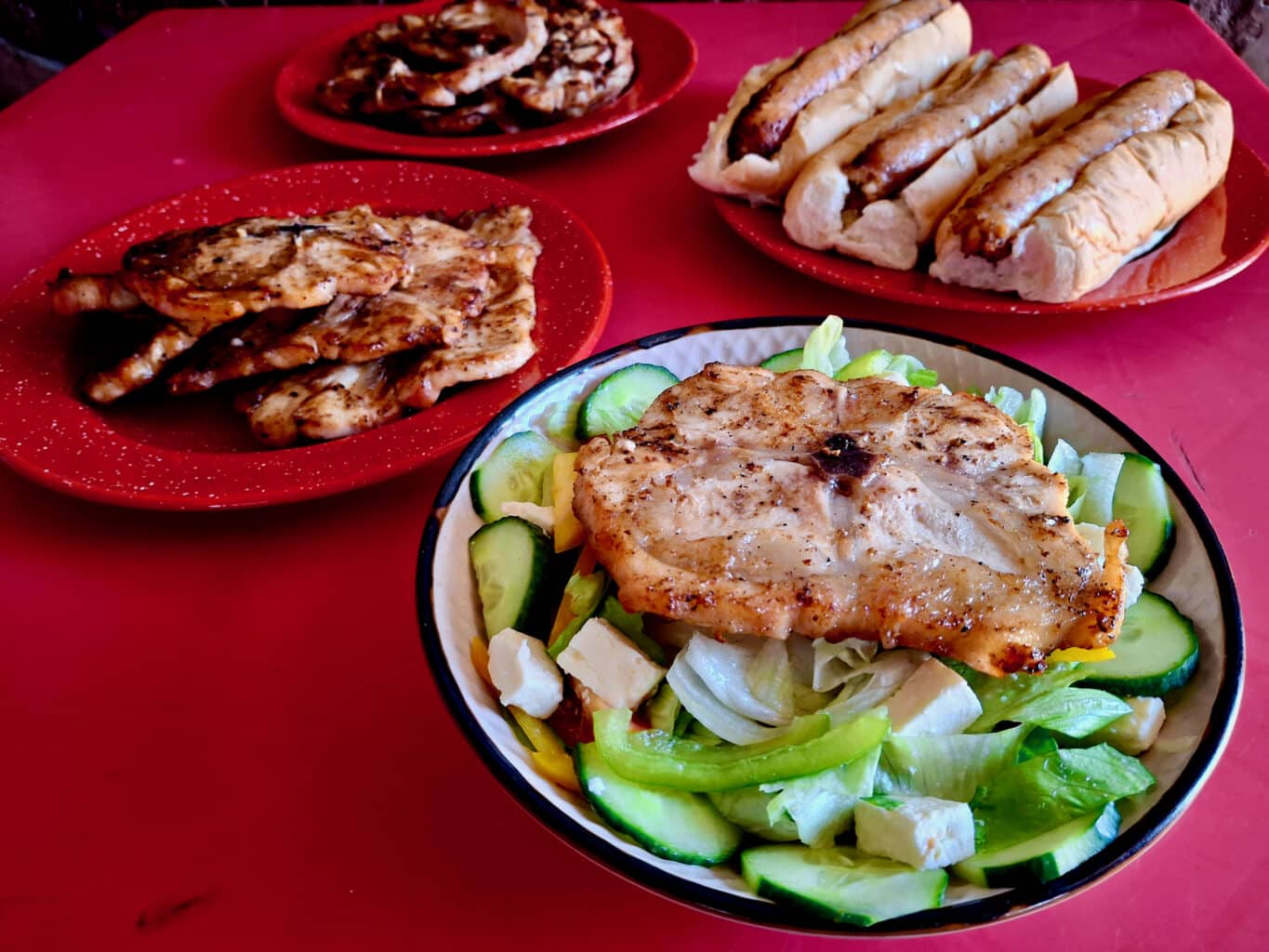
Laminated menus stuck on the wall offer crocodile curry with rice or phuthu (a crumbly kind-of-grits); crocodile burgers between soft rolls, with tomato, lettuce and onion; crocodile hot dogs; ready-to-eat croc steaks; packs of frozen crocodile, various parts, to cook at home.
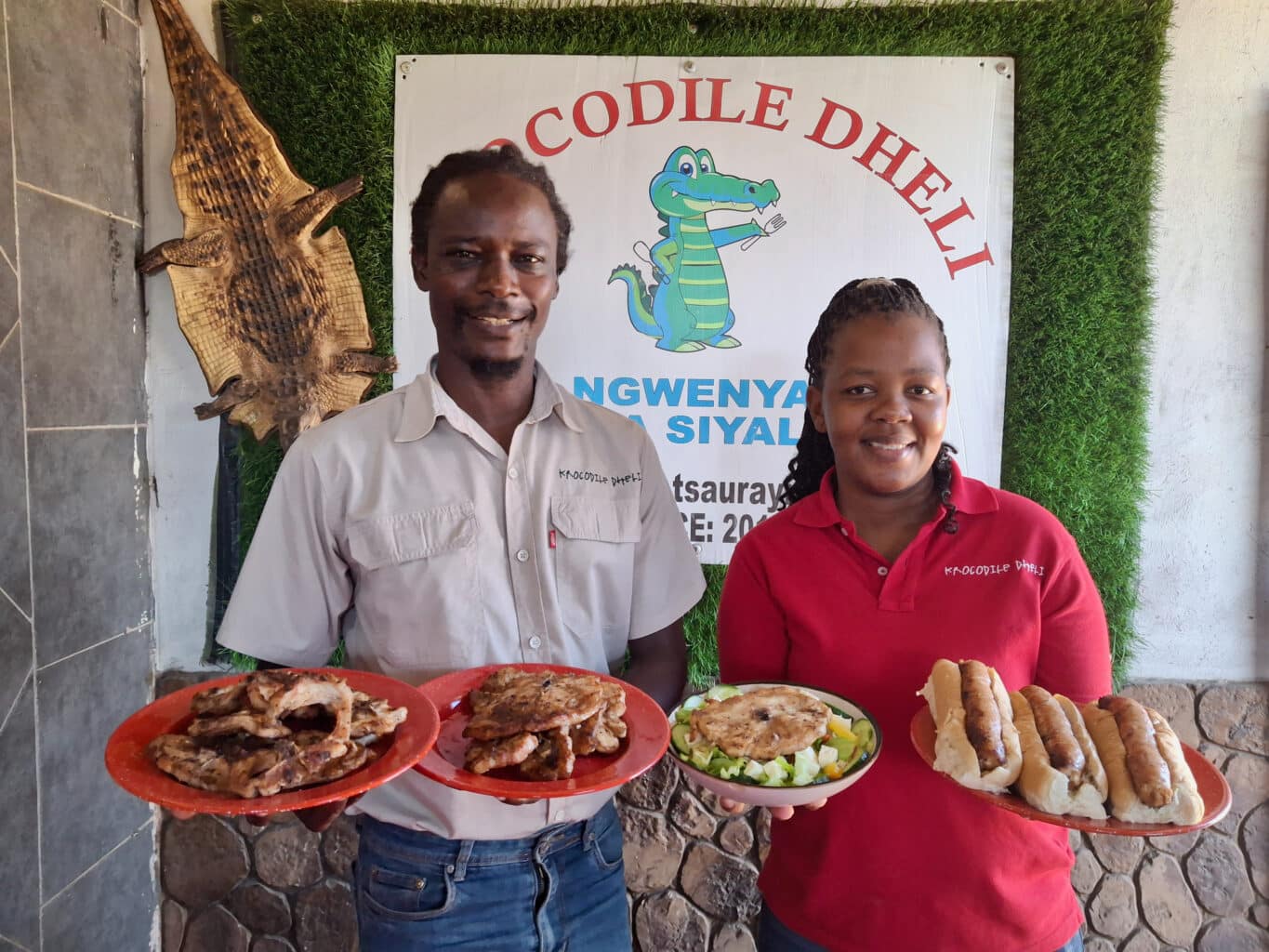
This is “Krocodile Dheli,” Raphael Tsaurayi’s humble café butchery cum shisanyama, a barbecue equivalent in South Africa where you choose your meat and have it cooked for you on the spot. You can then either eat it there or take it home.
At this point, let me explain that it is about five years since I first met Tsaurayi; since Zuma and I set off that day on our crocodile adventure; since we arrived, unannounced, at “Krocodile Dheli.”
Since that first encounter we have kept in touch and I have become a Tsaurayi fan. Seen him slowly and surely grow his business, refine his menu. These days, with Nomthandazo Mkhize, his life and business partner, cooking and styling the food and doing front-of-house alongside him. “I enjoy cooking and our recipes, we’ve developed by trial and error. The wors, the patties, even the curries we do.”
RELATED: Jade Klaasen Connects Finnish Food and Flavors in South Africa
Place of the Elephants
Tsaurayi was born in the town of Chiredzi in south-east Zimbabwe. It won’t be on your radar unless you are familiar with the Gonarezhou National Park, Zimbabwe’s second-largest game reserve, the name translating as “the place of elephants.” Distant from any major tourists routes, it is known for its large tracts of pristine wilderness.
Chiredzi is also near what Tsaurayi calls, “the mighty Runde River.” When he worked at a wildlife conservancy 23 miles from Chiredzi early in his career, there were regular crossings, by Landrover, of the river, which was “infested with crocodiles and hippos.”
Back then, around 1994, eating them was the last thing on his mind. His focus was more on avoiding being eaten by these Nile crocodiles, known as patient and opportunistic hunters capable of staying submerged for more than an hour. Each year, hundreds of deadly attacks are attributed to them in Sub-Saharan Africa.
No Crocodile Tears
Tsaurayi’s journey into the world of crocodile cuisine is a story of energy, ingenuity, risk-taking and hard work. He was 25 years old and teaching computer programming at a private tertiary institute when his training director recommended him to a crocodile farmer as the right person for the job.
At the time, he had tried crocodile. A chef on a farm where he’d worked often slow-cooked chopped and well-washed crocodile tail with fresh veggies and locally grown herbs and chillies, always tomatoes, into a spicy and tasty stew. But eating crocs, back then, part of the plan.
“He wanted to introduce the latest irrigation technology and to computerize the farm accounting system. The money was good and boom, that was the beginning of my new career.”
Two years after he started, the company relocated from near Chiredzi to a farm close to Zimbabwe’s capital, Harare. Next came the move to South Africa, the idea being to set up an export facility for crocodile skins.
By then Tsaurayi had climbed the corporate crocodile ladder. He was asked to transfer and be abattoir manager in charge of, among other things, crocodile skin grading and sales. At the very abattoir Zuma and I had visited.
Back then, the crocodile meat business at the farm was zero. “In fact, we were required to dig trenches to bury the meat. Each slaughter day, tons of meat was thrown away,” he says.
The challenges of gearing the business to skins and the export market were the focus. There was even an irrational fear that the crocodiles might be stolen (poached) if their food potential was seen.
Tsaurayi hated seeing the waste, knowing there were nutritional needs.
While crocodile farms, now more than back then, are being badly impacted by climate change and crocodile meat is acknowledge to be an excellent, affordable and delicious protein source, some high-end restaurants have long served the meat as a delicacy offering dishes like crocodile carpaccio (thinly sliced, cured crocodile fillet), tender sous-vide tail steaks and feta, strawberries and grilled crocodile salad.
Crocodile Cuisine
When, around 2010, Tsaurayi decided to opt out of the skin trade, go it alone and focus on culinary crocodile options, he started off by selling his farmed crocodile meat door-to-door. The meat was unfamiliar to many and encouraging people to try it took determination.
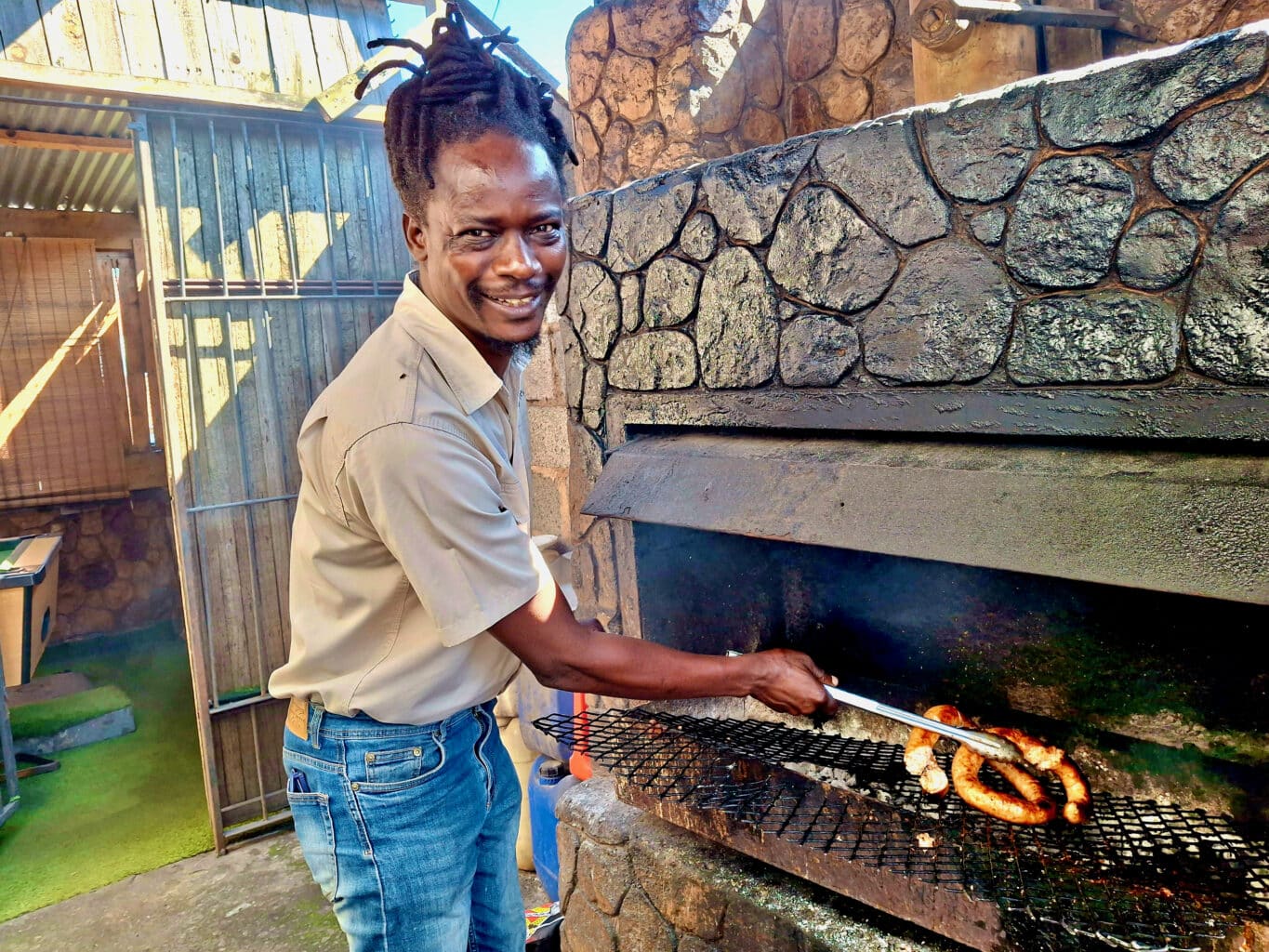
That is when he began experimenting. Marinating the meat using lemon, garlic, fresh herbs. Making slow-cooked curry casseroles using tomatoes, onions, fresh garlic and settling, after trying different spices, on a local one known as “peli-peli” named for the little peri-peri chillies that grow easily, and have a much-loved flavor. He also experimented marinating the ribs and slices of tail in a garlic, lemon and herb mix before cooking them over charcoal.
Early attempts to debone the ribs, the cheeks (jowls) and some of the tail meat, fat removed, mince these and flavor them with lemon, herbs, garlic and pepper have resulted in the burger patties and the flavorful wors that have become signature dishes. Favorite, though, among his regulars are the tail steaks and ribs he marinates overnight and cooks over the charcoal.
Persistence along with his charm and culinary skills won out. Demand continues to grow.
After 27 years in the crocodile business, “More than half my life!,” he can talk about crocs, their skins, their habits, the health benefits of eating the meat, humane slaughter practices, till the cows come home.
The biggest challenge has become sourcing the meat, which is now regarded as something of a Zulu and Sotho delicacy. “Definitely African food,” he says.
When I Google, I see crocodile meat described as a superfood. Laminated sheets in Tsaurayi’s butchery push the health benefits.
Crocodile and Potency
There’s a belief, he says, that rubbing on crocodile fat, for example mixed into a cream, can cleanse a person of bewitching spells and bad magic. Health benefits, he tells me, are both physical and psychological.
Men can drink the soup boiled from the meat for potency, many of his customers believe. Conversely, if a spell is cast on one’s manhood, the oil, which he sells in small containers, can counter the spell.
But most of his customers buy it for the flavor.
“I love it. It tastes like a combination of chicken and fish,” a smiling Zulu woman shared when I was there recently and she was leaving with her ready-cooked dinner.
What about the crocodile I bought frozen and wrapped in newspaper? It went into my freezer. As time went (further-and-further) by, I considered tossing it.
But finally, I slow-cooked it, inspired by ideas from a casserole recipe found via a Google search. Cut the tail into bite-size pieces. Let these rest overnight in a sealed bowl rubbed with a mix of yoghurt, freshly ground garlic, turmeric, paprika, ground-from-seeds coriander (because it smells so good), lemon juice and a sprinkling of fine white pepper. Next day, put this in a pan with lightly seasoned veggie stock broth and let it cook slowly, slowly, for about three hours.
Added a good splash of fresh cream and served it, with quinoa and a salad, to an unsuspecting guest. A man friend I know as a cautious nosher. It was melt-in-the-mouth tender. Delicate in taste.
Only after he deemed it delicious did I tell him that what he had just eaten might, under different circumstances, have eaten him. A second bottle of wine helped absorb the shock.