|
Getting your Trinity Audio player ready...
|
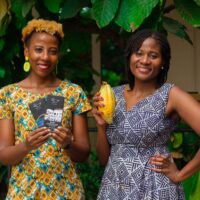
Over the years, Cuisine Noir has covered the journey of Kara Still and Carmen Dianne, co-founders of Prosperity Market, and their mission to make healthy food accessibility easier within communities. In 2021, the duo launched their all-Black farmers market in response to the COVID-19 pandemic after seeing a lack of grocery options and fresh produce in neighborhoods.
Since launching Prosperity Market, Still and Dianne have conducted farmers market pop-ups throughout Los Angeles, increasing the markets’ recognition and fulfilling a need across communities. Their success has transformed the neighborhoods, recognizing people and businesses that were typically an afterthought when it comes to food security.
Now, they have achieved another major milestone thanks to the support and collaboration of the communities they serve: a mobile food trailer. This achievement highlights and celebrates Black-owned businesses throughout Los Angeles, providing greater visibility and opportunities for these entrepreneurs.
Mobile Food Trailer Transition
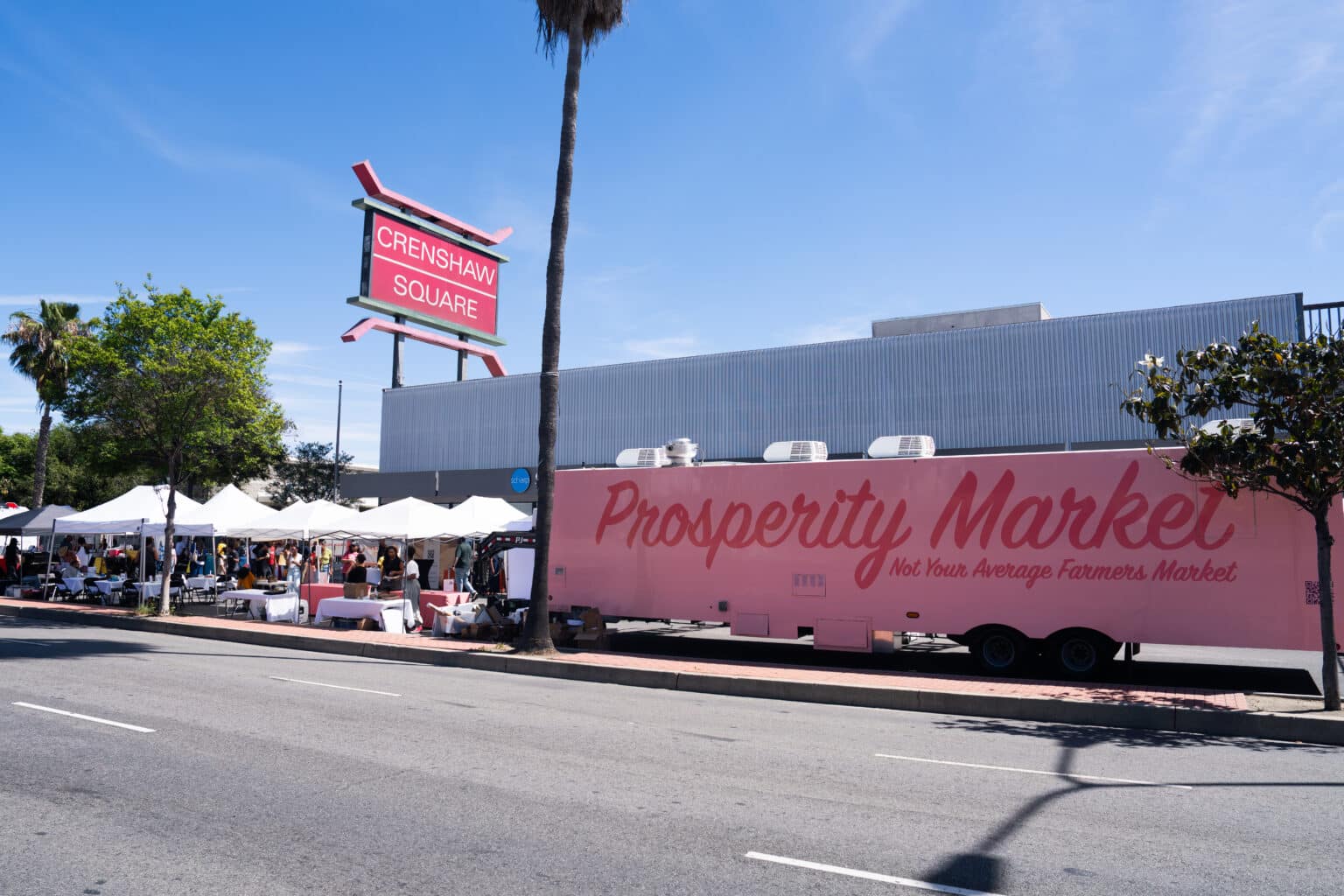
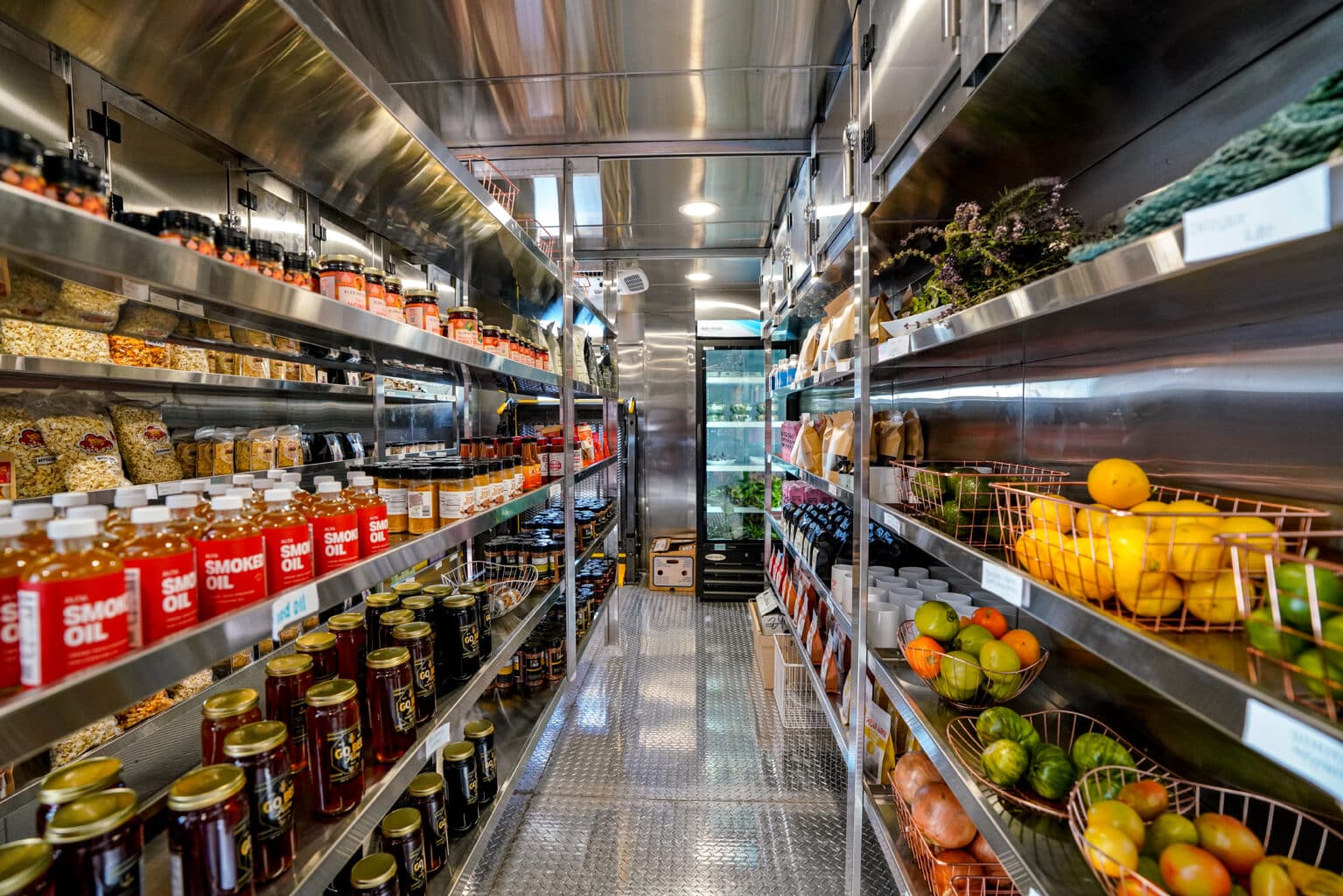
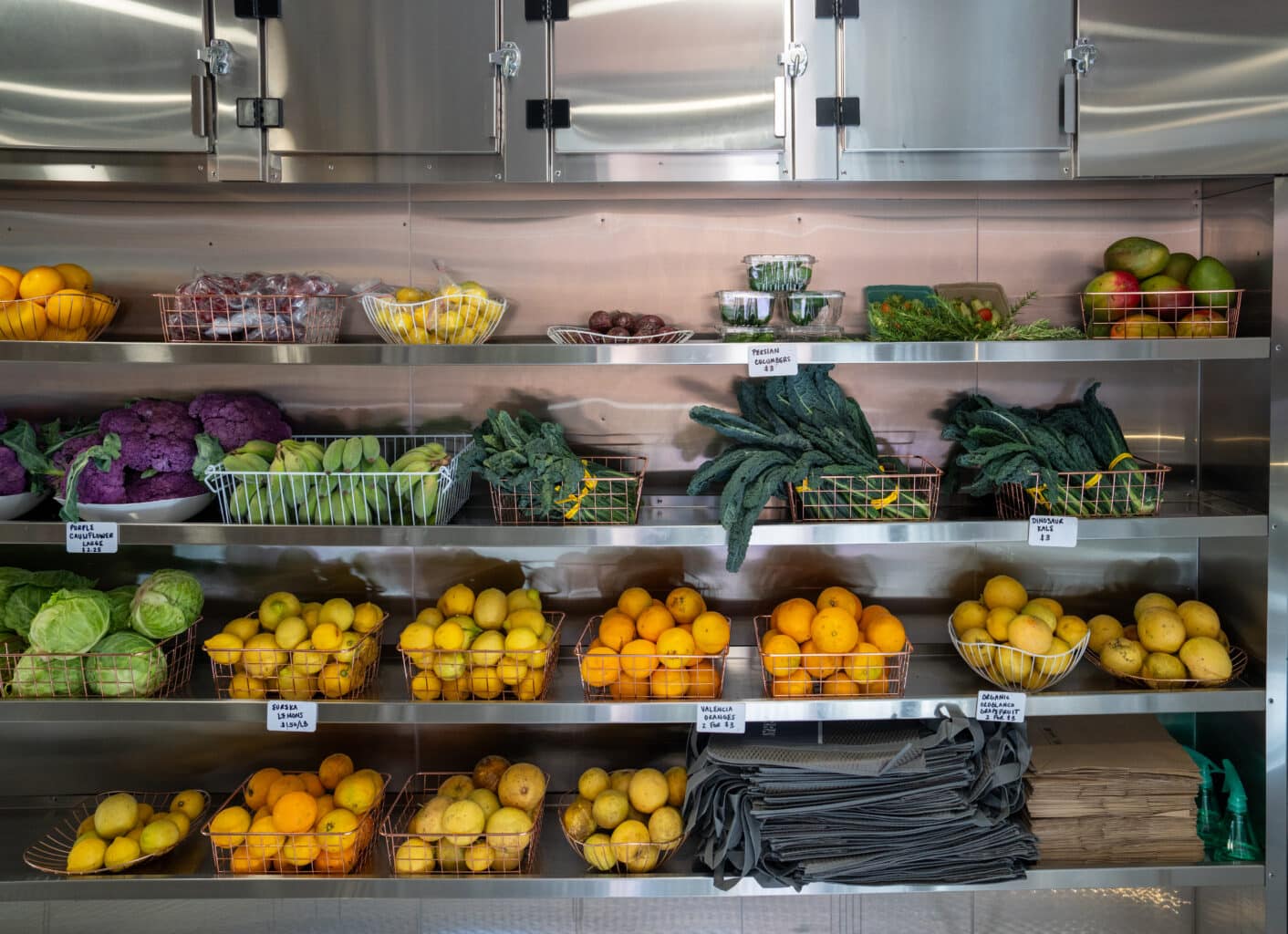
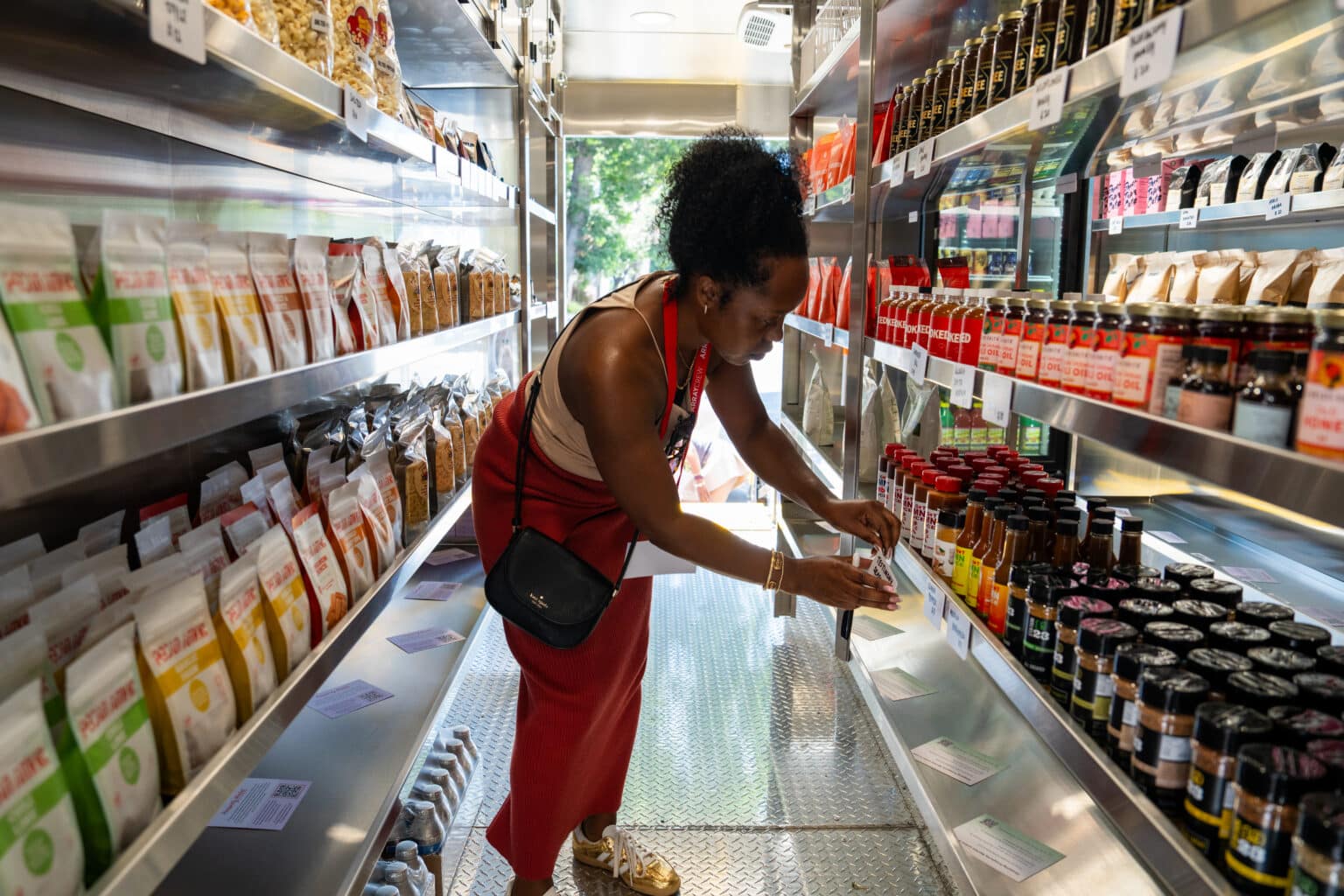
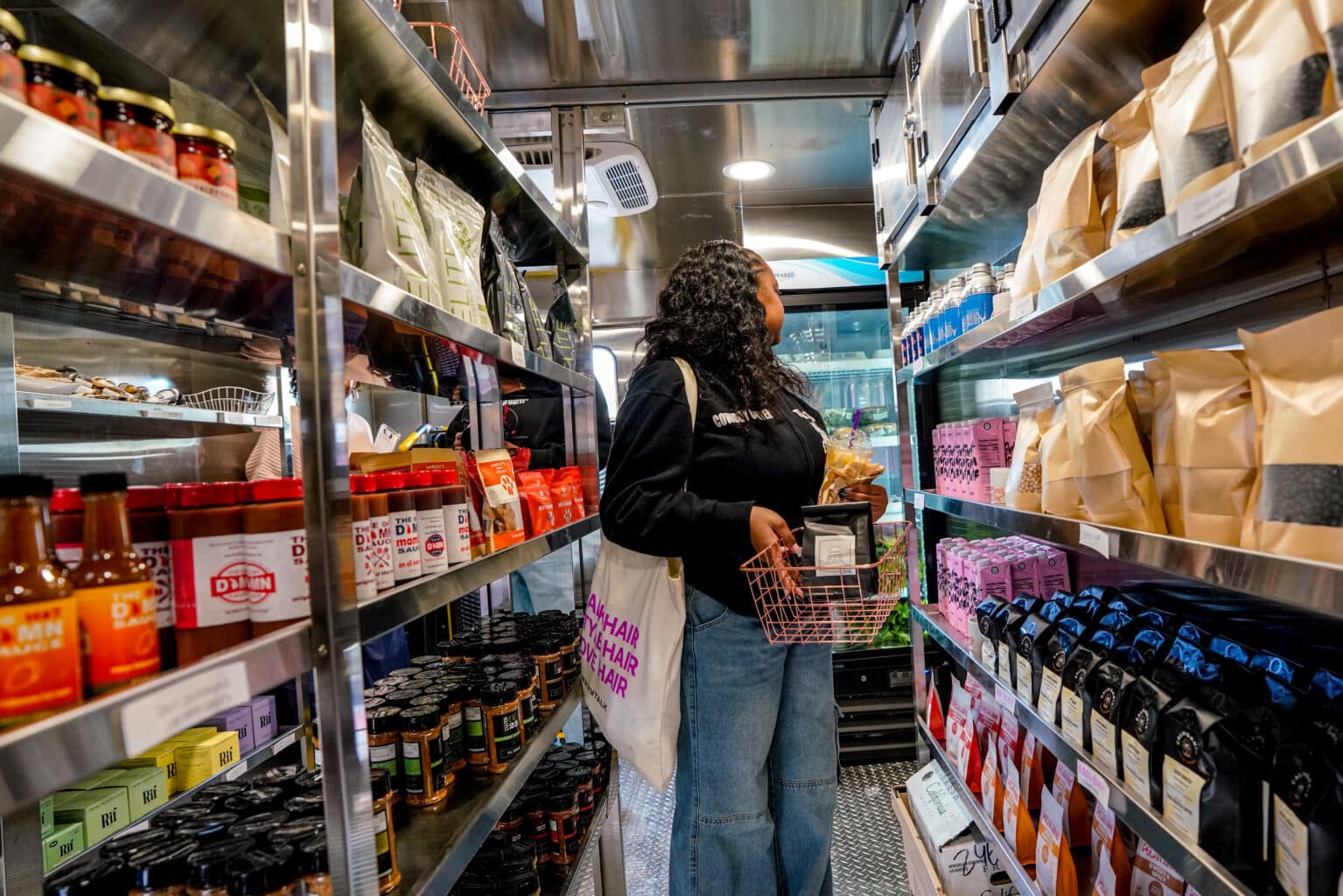
Earlier this year, the duo officially launched their first 48-foot mobile food trailer, made possible with a crowdsourcing effort started in 2022 that raised over $100k. The food trailer is solar-powered and electric, with the front serving as a food truck featuring a rotating roster of Black chefs and food entrepreneurs. In the back, shoppers can find a grocery store stocked with locally grown produce from Black farmers and other items from Black-owned businesses. With the move from pop-ups, Still and Dianne are making some huge changes.
“Our biggest change is that we’re transitioning away from the pop-up model we started with —moving from changing locations with a tent and table—and focusing instead on our mobile trailer, which is our farmers market on wheels,” Dianne says.

“That’s where we’re putting our energy now, and we want people to get used to shopping with us that way. We’re building a regular trailer route throughout Los Angeles, helping people understand what the mobile market is and know they can always shop with us online as well.”
Still chimes in and says, “That’s always been the goal from the beginning, which is part of why we never held our pop-ups in the same place all the time. While we were figuring out how to build and create a true mobile market vehicle, we wanted people to understand early on that you weren’t always going to find us in one fixed location.”
They say this approach has helped them build invaluable relationships and community throughout Los Angeles, but the core of their mission and work remains the same. “We’re still mobile. We’re still going from place to place. The vehicle just looks different now,” says Still.
The duo has built a strong following through the years and appeared on “Good Morning America”in February 2023. Their interview caught the eye of rapper, record producer, record executive, and Los Angeles native, Dr. Dre, who generously donated funding for two more mobile food trailers for Prosperity Market.
“I just love imagining him—kicked back on the couch, maybe eating a bowl of cereal, watching ‘Good Morning America’—and deciding, in that moment, to support what we’re doing. That image always makes me chuckle,” Dianne laughs.
“We are eternally grateful for Dr. Dre’s donation and contribution,” says Still. “Knowing we have future plans for growth and expansion, the fact that he contributed funds to help build those trailers is immeasurable in terms of our planning and long-term vision.”
Expanding the Mission and Impact
His donation not only helped advance the next phase of their mission, but also extend their work far beyond Los Angeles. “What a lot of people don’t realize is that his contribution also had an international impact,” Still explains.
“We work with a fiscal sponsor, SIMA studios, that partners with Leap Africa, which runs programs supporting women across the African continent through education, workforce training, and other resources. His donation helped extend that work as well. I believe nearly 6,000 women benefited from his contribution.”
The mobile food trailers mark a major step in a new direction, but they still face some challenges.
“Technically, in Los Angeles, we can park anywhere food trucks are allowed to pull up, so that’s worked in our favor,” Dianne says. “The challenge is that we’re 48 feet long; we’re big, and we need space. So while we can technically pull up almost anywhere, we also have to guarantee that the space will actually be available when we arrive.”
They point out that the permits needed to park the mobile food trailer can be tricky, as they must be coordinated with multiple people and agencies to ensure the space is secured and ready for it.
“That’s where relationships really come in handy and make a difference,” Still says. “As we plan our trailer route and move into different neighborhoods, those community connections matter. If we already have relationships with local businesses and they know we’ll be there once a week, there’s already a level of trust and understanding in place.”
The early pop-ups throughout Los Angeles helped establish relationships and trust that they now rely on to expand their mobile food trailer into new neighborhoods, including communities with varying levels of resources and income.
“Part of our model is going into these areas that may already have resources, disposable income, and all of those things, but they don’t necessarily have a diverse shopping pool,” Still says. “People there may want to shop their values and contribute in ways their immediate neighborhoods don’t really support. That helps expand the reach of the businesses, farmers, and vendors we work with.”
Dianne adds, “At the same time, it’s equally important for us to go into under-resourced and overlooked communities that don’t have the same level of access, because everyone deserves that standard. For us, the impact exists at both ends of the spectrum. Each serves a different purpose, but both are equally important.”
Beyond permits and parking logistics, the duo says operating itself has brought an entirely new learning curve.
“This hasn’t really been done before in this capacity, so there’s only so much even our builders could tell us ahead of time,” says Dianne. “A lot of it has to be stress-tested in real-world conditions. For example, how long will the batteries last when everything is running at once? The AC is blasting because it’s 85 degrees outside, the lights on, all of it? Those were things we had to learn in real time, and it definitely wasn’t fun.”
RELATED: Ariell Ilunga Champions Food Access in Los Angeles at Carla’s Fresh Market
More Food Access
On Saturday, April 4, Prosperity Market officially launched their mobile food trailer in the Crenshaw District. With Dr. Dre’s donation for additional food trailers, Dianne and Still are working to ensure the support translates into long-term access.
“I think the mere fact that his investment is tied to a tangible, physical resource already gives us a huge advantage when it comes to long-term impact,” says Still. “His contribution specifically supports the build-out of our mobile markets; it’s a physical thing that has to be out on the road serving people. That alone extends the impact, because it’s something visible and active in communities. By its very nature, it will continue to reach and benefit multiple people and neighborhoods simply because of what it is and what it’s designed to do.”
“That’s the question we ask ourselves every day, ‘How do we make this successful and impactful for the long term?'” Dianne says. “I think the fact that we’re still here six years later is a testament to the choices we’ve made and the foundation we’ve built.”
Dianne points to the partnerships they have built, which are a big part of sustaining their work in the long term. Prosperity Market is also very close to accepting SNAP and EBT, which would be a major step toward expanding food access.
“But in the meantime, we said, ‘Okay, how do we still show up for our community?’ Because this is a need. So we created Prosperity Bucks, our program that gives sponsored dollars to community members to shop at the market. It has to be sponsored because the money has to come from somewhere, so partnerships are really important.”
“Even once we begin accepting SNAP and EBT, our Prosperity Bucks program is still going to continue because it creates an additional way to support community members who need access to food,” Still adds. “It also gives people who care about these issues a direct way to make an impact. There are many people who want to support causes like this but don’t necessarily want to build an entire program themselves. Prosperity Bucks gives them a way to contribute directly to both the food businesses and the communities we serve.”
The co-founders mentioned that infrastructure is also a high priority, and that ownership of their mobile food trailers is essential amid rising rents and economic instability.
“What we’ve seen happen to a lot of businesses over the years is that when you don’t own your property, everything can change overnight,” Dianne says. “Rent can go up, a landlord can change their mind, the property can be sold; there are so many things outside of your control. Ownership gives us a level of security that allows us to move forward with our plans confidently and think long-term about what we’re building.”
Still agrees. “And in the spirit of partnership, we also believe as much as possible in ownership and partnering with people who are building and owning parts of the logistics and supply chain themselves. That matters because it gives all of us the ability to make the choices we need to make along the way.”
Evolving the Business Model
The transition to a mobile food trailer is bittersweet, as they have been doing their pop-ups since 2021, but they’re optimistic and eager for the future. This adjustment has required extensive building, planning, and strategy, especially for the inevitable pivots and unforeseen circumstances.
“Building a sustainable revenue plan matters because there are so many components that make up Prosperity Market,” Still says. “There’s the programming that supports the community, the different ways we support vendors, the online marketplace, and now the transition from pop-ups to the trailer model. There are a lot of moving parts within the business. So it really comes down to creating multiple streams of support and revenue that can sustain all of those pieces, because each one is equally important to building Prosperity Market.”
“We exist as a platform to expand the reach of these businesses while also creating access across multiple communities, so community support genuinely helps us grow,” says Dianne. “A lot of the challenges we face are tied to the challenges our farmers and vendors face. When extreme weather impacts what farmers can grow, it affects what’s available. And if a vendor runs into shipping issues or can’t get bottles or supplies, that impacts not only their business, but also what we’re able to stock on our shelves.”
Because of that interconnection, Dianne and Still encourage community support–whether through shopping, sharing, or partnerships–that directly impacts farmers, vendors, and producers that make Prosperity Market possible.
“Part of our role is doing everything we can to share information, create community, problem-solve,” Dianne says. “And point people toward solutions whenever possible. At the end of the day, we’re a community of entrepreneurs all trying to figure out how to grow our businesses and move forward together.”
Shop at Prosperity Market’s online store to support Black-owned business. Learn more about their work on YouTube and follow along on Instagram for upcoming events and mobile trailer locations.