|
Getting your Trinity Audio player ready...
|
Rice and beans are staples in the pantry of most Black households and many have fond memories of eating the comfort food. “I love me some rice and beans,” exclaims Sunny Satva, author of “Vegan Swahili Cookbook.”
“It just feels like comfort and home. There’s so many rice and beans dishes I grew up eating – everything from red beans and rice to jambalaya to chili with rice to beanie weenies,” laughs the Brooklyn, New York resident, who grew up between the South and Las Vegas.
“My first memory of eating rice and beans would be in Nigeria,” says Canadian Tokie O’Tona, who grew up in both Dominica, where she was born, and Nigeria. “In Nigeria, we typically eat it with white rice with a honey brown bean, which is really, really sweet.”
Food and social justice advocate Robin Sparks, shares, “We ate beans and rice several times a week when I was growing up. Usually it would be pinto beans with a ham hock in it and white rice.”
“I have fond memories of when my grandmother would have people over at her Louisiana home and she’d put on a big ol’ pot of pinto beans,” remembers Vanessa Williams, co-founder of online bookstore, Red Rice Books. “When we had rice and beans, it was usually a butterbean or pinto bean, with homemade cornbread and Kool-Aid,” she laughs. Co-founder Kaneisha “KG” Gaston of Charlotte, North Carolina, adds, “One of the fondest memories I have of rice is eating it for breakfast. I prefer rice over grits and it’s the only time I eat rice without adding beans or something else over it.”
Gullah cultural bearer and personal chef BJ Dennis of Charleston adds, “At New Year’s, most Black people do black-eyed peas, but in the Gullah Geechee tradition, we do Hoppin’ John, which is the red field pea and rice cooked all together. On New Year’s Day, mama got Hoppin’ John, grandma got Hoppin’ John, auntie got Hoppin’ John, everybody got Hoppin’ John,” he laughs.
How Rice and Beans Spread Throughout the African Diaspora
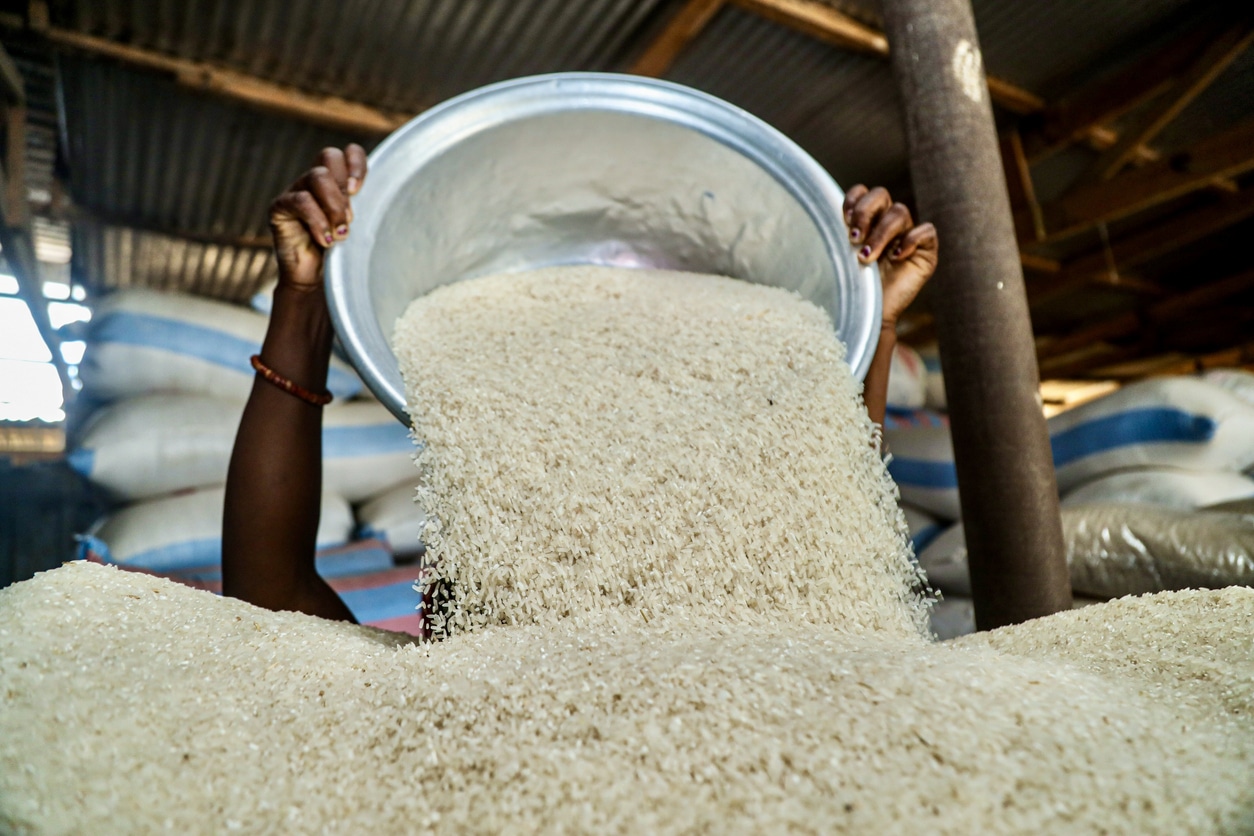
Rice was first cultivated nearly 10,000 years ago in the Yangtze River valley of China. But uncultivated rice was growing in Ancient Africa around the same time. Eventually, ancient lakes and rivers dried up forming the Sahara Desert and causing rice to depend on humans for its survival. That eventually lead to its domestication with skilled West African farmers turning unfriendly environments into thriving rice paddies.
Rice became synonymous with wealth, forming The Rice Coast and helping to fuel the ancient empires of countries like Ghana and Mali. By the sixteenth century, the Portuguese had brought Asian rice varieties to West Africa, where it was planted widely and spread throughout the African diaspora on slave ships. It’s believed that African women also carried rice seeds in their hair during the Middle Passage.
The beans that are popular in rice and beans dishes like black beans, navy or white beans, pinto beans, kidney beans and lima or butterbeans were first cultivated in the Americas, in what is now modern-day Mexico and modern-day Peru. And though the Marama bean or Camel’s foot is native to southern Africa, the beans from Mexico and Peru were brought to Africa through 16th century Portuguese traders, including those who bought and sold Africans.
“I think beans and rice are so popular throughout the African diaspora because it is so accessible,” notes O’Tona. “When they are cooked together, it is such a dense and complete meal that it’s easy to eat on its own and be satisfied.”
Food events creator Jacqueline Greaves, who was born in Jamaica but now lives between Brooklyn, New York and Rome, Italy adds, “Colonialism is so amazing in the way that food travels and the way people manage to preserve their heritage and their traditions.Rice and peas is a spiritual dish that ties us to the Motherland and to our disparate ‘siblings.’”
Rice and Beans Cooking Traditions in the Southern U.S.
Each culture puts its own twist on the humble dish. Dennis shares the Gullah Geechee traditions in his hometown of Charleston, South Carolina, where slave labor resulted in 50 to 70 million pounds of rice leaving the city’s ports every year. “It makes me think about how much our ancestors labored to make that happen,” Dennis laments.
“We prefer the red rice, which is the daughter or child of African jollof, which is tomato-based,” he continues. “We love making Hoppin’ John, which is the Sea Island red field pea and rice cooked all together. It’s one of the perloos [one pot dish with roots in Africa] of the Gullah culture,” he explains.
“We cook it with the red peas because we want that broth to get really dark and we cook the peas down with some type of smoked pork like a ham hock, thick cut bacon, fatback, or jowl meat. Then you add your peas or beans and once the peas are tender and seasoned, you drop your rice in there and let it cook.”
Dennis says the Gullah way is to have some type of greens with it, like collards, turnip or rutabaga. “But even though Hoppin’ John can be a meal by itself, we could also serve it with baked chicken, BBQ ribs, or fried fish and, of course, top it off with cornbread,” he concludes.
Travel southwest from South Carolina to Louisiana for the traditional Creole dishes of red beans and rice and jambalaya. In New Orleans, red beans and rice are traditionally eaten on Monday, because that was laundry day. Red beans need time to cook, so they could simmer while the women tended to the laundry.
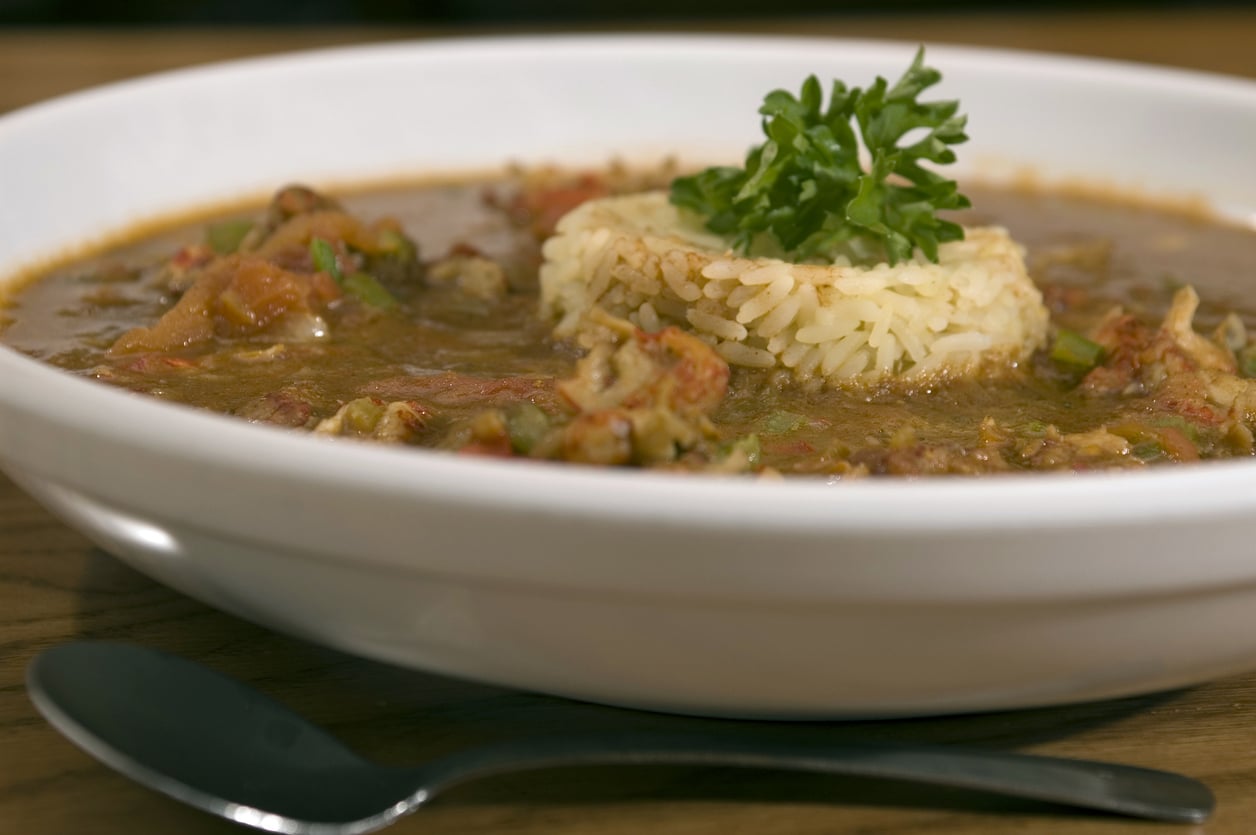
The late owner of Dooky Chase, Chef Leah Chase, also known as the “Queen of Creole Cuisine,” was well known for her red beans and rice and her jambalaya. She always noted that the Creole way of cooking was influenced by African, French, Spanish and Indigenous foodways.
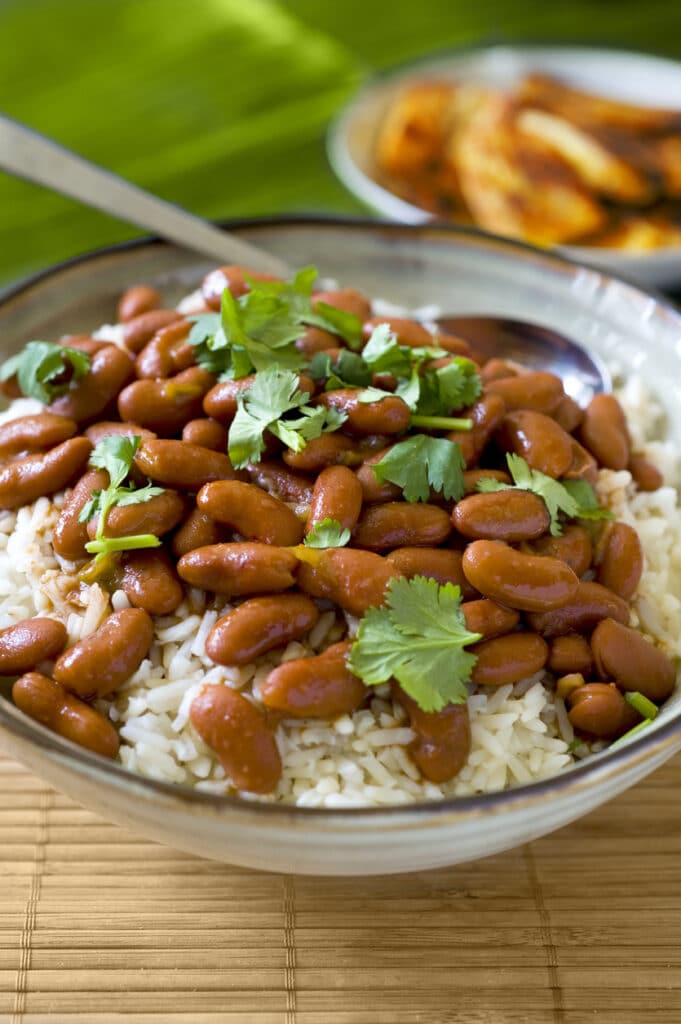
To make traditional Creole red beans and rice, a pound of dried kidney beans (soaked), andouille sausage, and the “holy trinity” (onion, bell pepper, celery). Sauté veggies and meat, simmer with stock and seasonings for 2-3 hours until creamy, then serve over white rice.
Chef and caterer Wanda Blake of Oakland, California, remembers, “A friend of mine had moved from New Orleans to San Francisco and I told her I grew up on pinto beans saying, ‘I don’t really know about no red beans,'” she laughs. “And my friend said, ‘What? Girl, let me fix you up!’ She made the red beans and rice with the sausage and cornbread, and oh my God! I’ve been hooked on red beans ever since,” Blake exclaims.
Rice and Beans Traditions in Mexico and the Caribbean
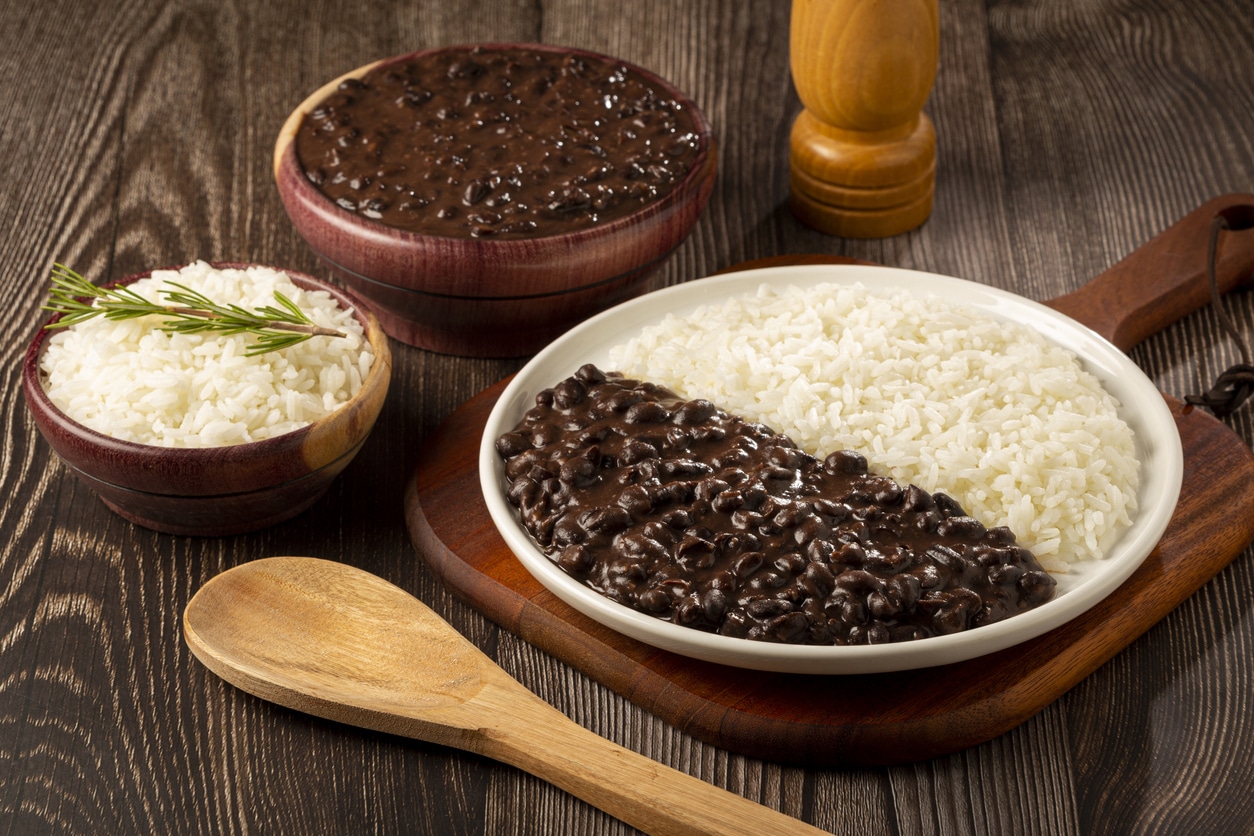
In Mexico, they cook black beans and rice, which they call moros y cristianos. “The black beans are the Moors and the grains of white rice are the Christians,” explains Greaves. “It all goes back to Spain.”
She continues, “The Caribbean, Puerto Rico, Cuba and the Dominican Republic also cook with black beans and white rice.” The difference is in the spices used, like cumin, Mexican oregano, smoked paprika, cilantro, garlic, cinnamon, and a wide variety of dried chiles.
She continues, “I grew up on rice and peas in Kingston, Jamaica. We’d eat it every Sunday for lunch. My grandmother had a fist-like grater with a handle attached to her kitchen table and you’d put that inside a coconut and grated it to make fresh coconut milk.”
Jamaicans are known for making their dish with pigeon peas and long-grain rice cooked in coconut milk. “The flavor is unbelievable with allspice, thyme, garlic and scallions,” she effuses. “Rice and peas is such an important part of our history and culture that it’s called our Coat of Arms,” Greaves says with pride.
Greaves says access to canned beans and canned or frozen squares of coconut milk helped rice and beans to be made in less time, resulting in it being cooked more frequently and not just on Sundays or special occasions.
Rice and Beans Traditions in Central and South America
“You can find Jamaican rice and peas in Panama because a lot of Jamaicans worked on the Panama Canal,” notes Greaves. “You’ll also find Jamaican rice and peas in Costa Rica, because there’s a section of Jamaicans there who came in the late 1800s and early 1900s to do construction,” she adds.
Brazil has the largest number of Black people outside of Africa, so its culinary influence is African, Portuguese and Indigenous. “I dated a Brazilian and visited Brazil a few times,” smiles Satva. “They have a black bean stew called feijoada, which is served with white rice and is one of my favorite South American dishes.”
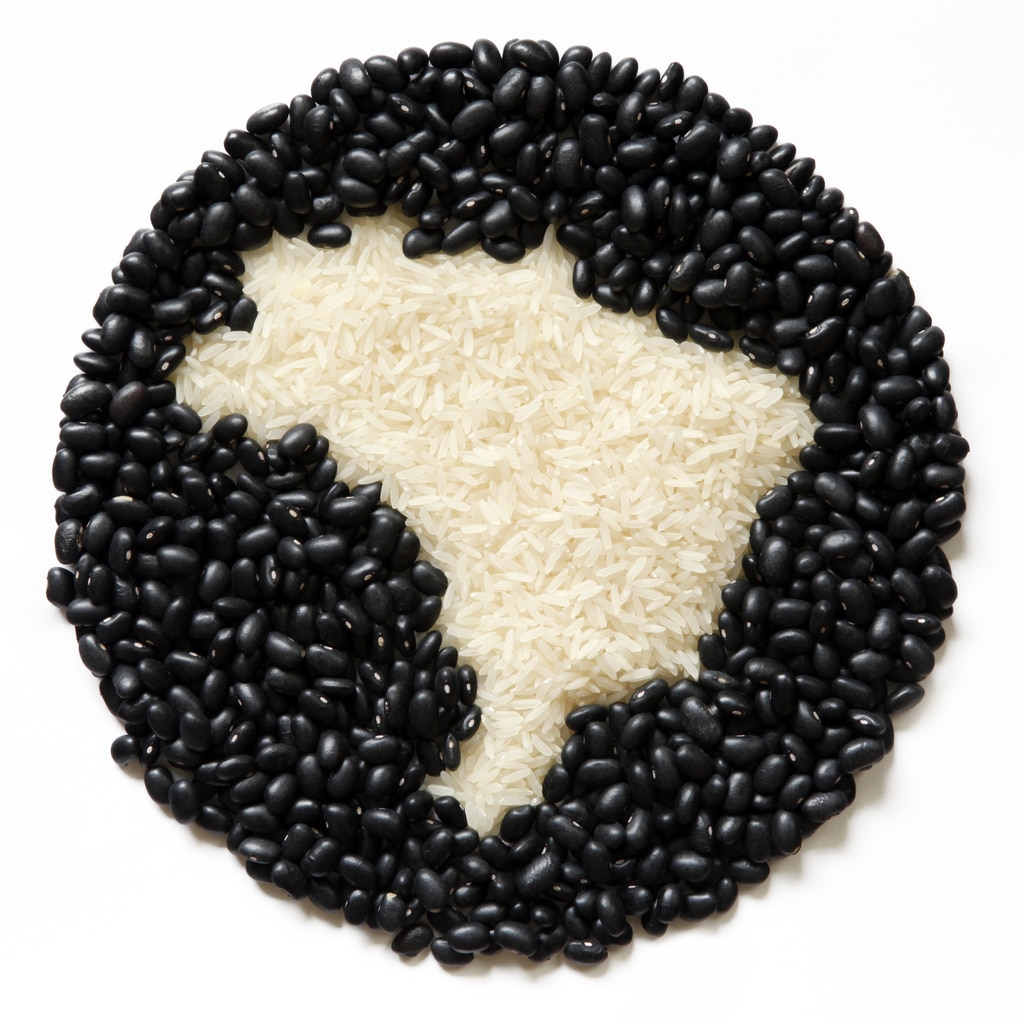
Dennis notes, “The South American Maroon community, particularly with the people of Saramaka of Suriname, have a huge rice culture.” He continues, “They say one of the first leaders of the Saramakas was a woman called Ma Pansa. They have a strain of rice named after one of the first leaders of the Saramakas – a woman called Ma Pansa. They have a strain of rice named after her and say she traveled with [rice and bean] seeds in her hair.”
Rice and Beans Traditions in Africa
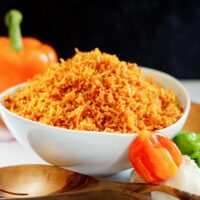
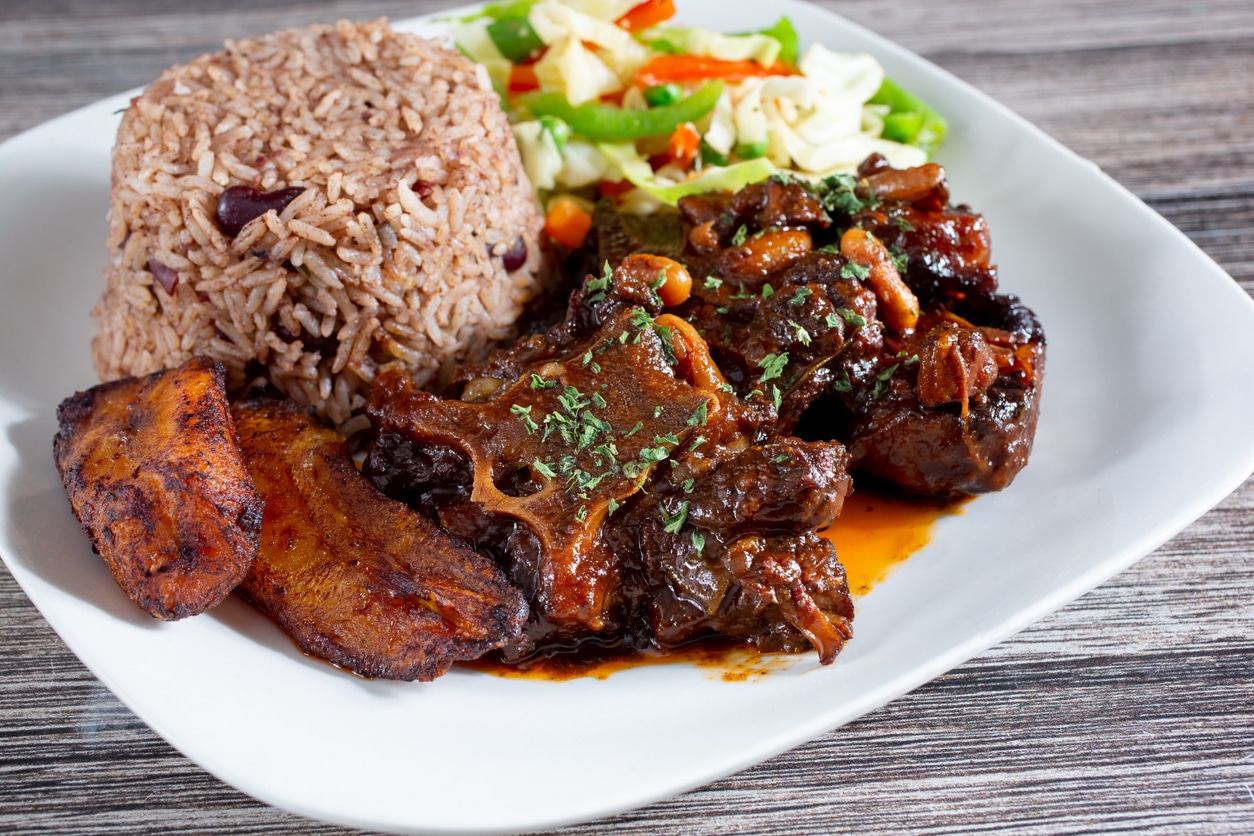
In West Africa, jollof rice is king! It’s a popular, one-pot dish of long-grain rice cooked in a savory, aromatic tomato-and-pepper base with onions, oil, spices like thyme and curry and stewed black eyed peas and served with fried plantains and meat.
The dish originated from the Wolof people in Senegal and has become a staple dish in many West African countries, like Ghana and Nigeria. “The whole West African diaspora is pretty competitive when it comes to jollof rice,” laughs Satva. West Africans see jollof as the king of all other rice dishes and the precursor to Creole jambalaya.
Ghana is also known for its popular dish called waakye, pronounced wah-chay. It’s made of rice and beans cooked together with dried sorghum or millet leaves, giving it a distinct reddish-brown color, earthy flavor, and aroma.
The staple breakfast and street food is usually served with shito – a spicy pepper sauce, fried plantains, boiled eggs, spaghetti and avocados.
“About two years ago, I traveled to the rice fields in Casamance, Senegal,” remembers Dennis. “I found out that rice is sacred to them and that a lot of our ancestors who came from that part of West Africa were sought after because of their knowledge of how to cultivate rice.”
He adds with emotion, “It was a full-circle moment for me to be dancing in the village where they’re celebrating us and seeing the people with bowls of rice on top of their heads. To this day, rice harvesting is still done by hand and with no chemical pesticides.”
“In East Africa, rice and beans are huge staples, but it’s less jollof rice and more pilau and biryani, which are the sweet aromatics,” Satva notes. “Things like pigeon peas and cow peas, which are very similar to black-eyed peas are really popular and are called mbaazi.”
She continues, “During my time living as a vegan in East Africa, I found that those beans or peas were my go-to plant-based proteins…East Africa is along the Indian Ocean, so there’s lots of influence from Indian and Arabic food.”
The Perfect Combination of Taste and Nutrition
“Rice and beansare fillers or stretchers and they can also be eaten without meat,” says Blake. “You can take two low-cost staples and really stretch out a meal for a family. It’s one of our survival foods,” she exclaims.”
A chef friend said to me, ‘Wanda, we’re like beans and rice,’” Blake laughs. “It’s a friendship that’s unmatchable and that’s how I see beans and rice – they just belong together.”
“I love beans, so they are the star of beans and rice, for me,” laughs O’Tona. “They are so versatile and so dense and satisfying.” Rice and beans is not only a stick-to-your-ribs dish, but it provides good nutrition. Although beans are both a protein and a carb, they have a lot of fiber, which decreases the carbs and helps with blood sugar management for diabetics. “Beans also have a good amount of iron,” shares O’Tona.
Satva discloses, “Growing up, I was anemic for years because of iron deficiency and my doctors would always tell me to eat more red meat.” She continues, “I would eat lots of burgers, but that didn’t help. But when I went vegan and started eating beans almost every day, my anemia was reversed practically overnight. Beans also have calcium and magnesium, so they’re a superfood.”
Gaston adds, “Some people might say in a snobby way, ‘Oh we don’t eat that kind of food anymore. It’s poor people’s food.’ But we say rice and beans is a part of our food heritage and is rich in nutrients, so we need to put it back into our diets.”
Honoring the Ancestors
Blake, who is also a priest, says her ancestors are very involved in her cooking. “I feel them when I’m cooking in the kitchen,” she says with emotion. Each year, Blake does a presentation at the Council of Global Ancestor Reverence. In 2025, she said listening to her ancestors lead her to tell the story of rice, starting in Africa and ending in the Bay Area. “I talked about the migration of the enslaved Africans, the growing of rice in the Carolinas and how we built the economy through rice,” explains Blake.
She continues, “Rice was a higher commodity in economic growth than cotton was. They used to say rice was queen before cotton was king. So in my presentation, I did a prayer and then I did a roll call of rice foods: rice and beans, rice and chicken, rice and okra, jambalaya, dirty rice and more.”
For the past four years, Blake has also created altars to the ancestors, using food items like rice and beans at Oakland’s Latin American Cultural Center.
Dennis is honoring his ancestors by working with a Gullah Geechee elder in the small town of Midway, Georgia, off the coast of Savannah. “For the past three years, I’ve been growing Carolina Gold rice in partnership with Elder Daniel Fleming,” says Dennis. “We take it to Anson Mills and they process it for us for free and FedEx it back to us. We’ll cook with it during our rice harvest celebration and also give a lot of it out to families in the community.”
Dennis continues, “I love learning this process with Elder Fleming who, at 82-years-old, remembers growing rice at age seven with his father and grandfather.” He says growing rice in anything that would get wet, including ditches, was a normal thing among Gullah Geechee people, up until the late 1970s. “But the old ways are dying out, so we want to bring it back to our culture,” he emphasizes.
Greaves wants to honor her ancestors by teaching her children and grandchildren about how her ancestors cooked rice and peas the Jamaican way as well as other Jamaican foodways. “When you marry into another culture, you start changing your style of cooking to adapt. But it’s important to teach our children and grandchildren our traditional foodways,” she notes.
Gaston and Williams are honoring their ancestors through the name and mission of their online bookstore. “Red rice and beans is a through-line between a lot of different cultures within the African diaspora, so we wanted to use that as our bookstore title,” Williams discloses.
Their website shows their mission is to “deepen Black folks’ connection to food, food systems and global food sovereignty – honoring our past while cultivating a more just future.”
So to help veteran and new generations of home cooks to learn more about the history and recipes for rice and beans, they offer suggested readings from their bookstore collection. “Rice” by Michael Twitty and “Our South: Black Food Through My Lens” by Ashleigh Shanti, which has several rice and bean recipes and talks about the different regions where rice and beans are used heavily in the South,” Gaston lists.
Williams adds, “I would mention ‘Black Food’ by Bryant Terry, who is a vegan chef. He has examples of rice and bean dishes for vegans. I also like ‘In Bibi’s Kitchen: Recipes and Stories of Grandmothers from the eight African Countries That Touch the Indian Ocean’ by Hawa Hassan with Julia Turshen.”
For Gullah Geechee rice and beans, Gaston suggests, “There’s the ‘Gullah Geechee Home Cooking’ by the late Chef Emily Meggett, ‘Gullah Home Cooking the Daufuskie Way’ by Chef Sallie Ann Robinson. And a contemporary Gullah Geechee chef would be Kardea Brown, who wrote ‘The Way Home: A Celebration of Sea Islands Food and Family with Over 100 recipes.’”
“Most of us are very disconnected from our ancestral culture, so one of the ways for us to hold onto that connection has always been through food,” Satva says through tears. “It’s one of the few things that couldn’t be erased by colonialism.”
Greaves concludes, “Consuming rice and peas is an experience that connects us to the past, the present and hopefully to the future. It’s a symbol of endurance and tradition.”