|
Getting your Trinity Audio player ready...
|
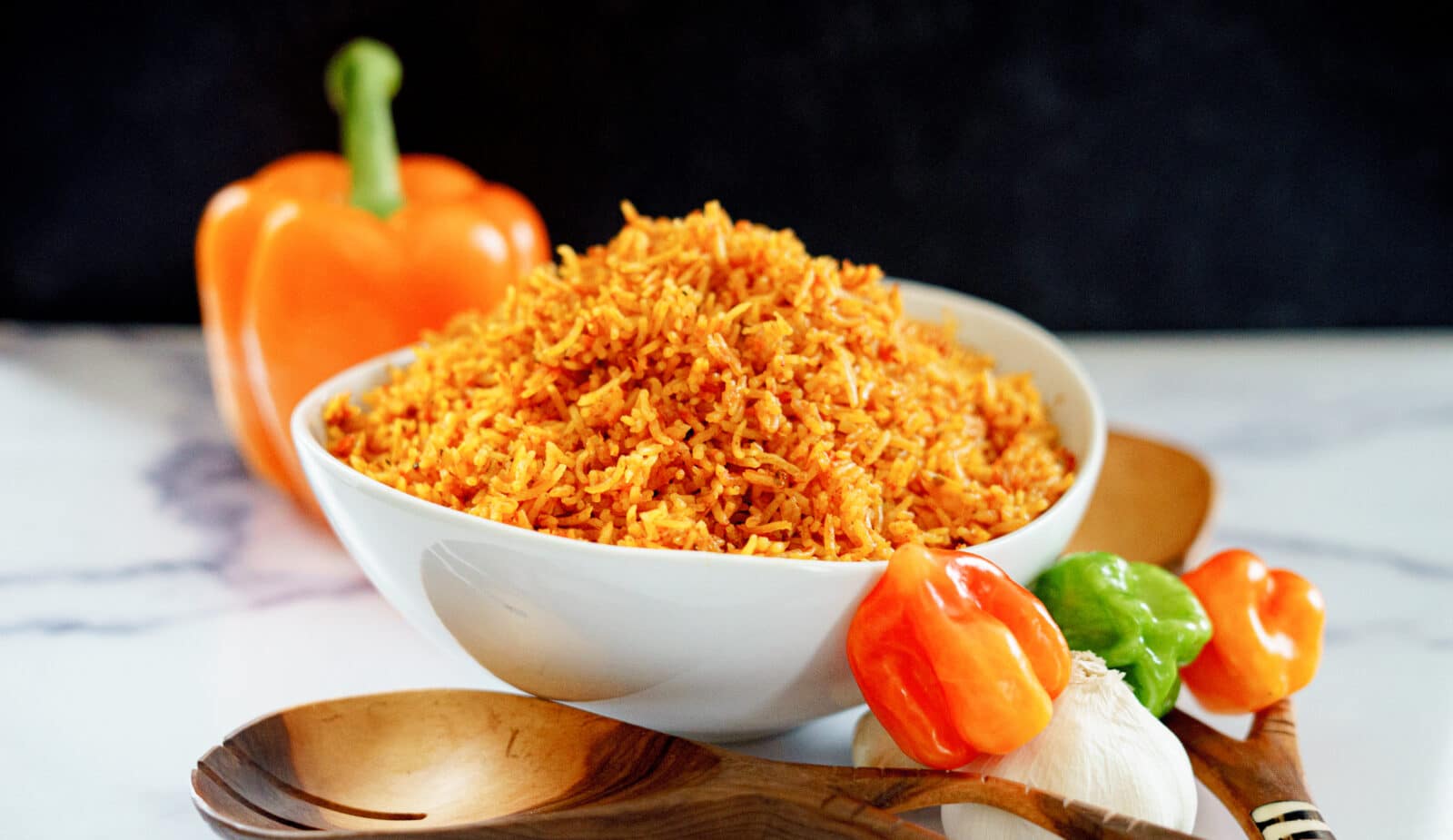
No matter where you travel in the world, one dish will almost certainly appear on the tables of West Africans. Whether they emigrate from Africa to the U.S., Europe, the Caribbean or other countries, the jollof ricelove story travels with them.
“My first memories of jollof rice go way back to growing up in Ghana. I was five years old and enjoying my grandma making jollof rice in a black cauldron,” says chef Awo Amenumey. “The whole family would enjoy it. All the kids would gather around, and she would distribute it.”
Fond Memories of Jollof Rice
The founder of Eh’vivi hosts Ghanaian pop-up dinners in Charlotte, North Carolina, featuring jollof rice. “It is a celebratory dish that everyone enjoys, and it brings the community together. There is no event, function or gathering in Ghana that does not have jollof on the menu. Whether it is a funeral, a wedding, an anniversary or a baby dedication, there has to be jollof on the table,” Chef Amenumey comments.
First-generation American children of many African immigrants share Amenumey’s fond memories of eating the dish growing up, including an award-winning Senegalese chef in New Orleans and a home cook and former diplomat of Ghanaian descent.
“I remember the joy that people had when they came to our house because they knew they were going to get delicious food. Rice is one ingredient that has always been present. Jollof was one dish that was pretty much present at least five times a week,” says Serigne Mbaye, chef-owner of Dakar NOLA.
The American-born Mbaye lived in Senegal as a child, but the days he spent in his mother’s and aunt’s New York City kitchens inspired him to become a chef. Jollof rice is on the menu at Dakar NOLA, winner of the 2024 James Beard Award for Best New Restaurant. Mbaye’s mom, Khady Kante, always served jollof rice to the numerous guests she fed Senegalese specialties to in her Harlem home.
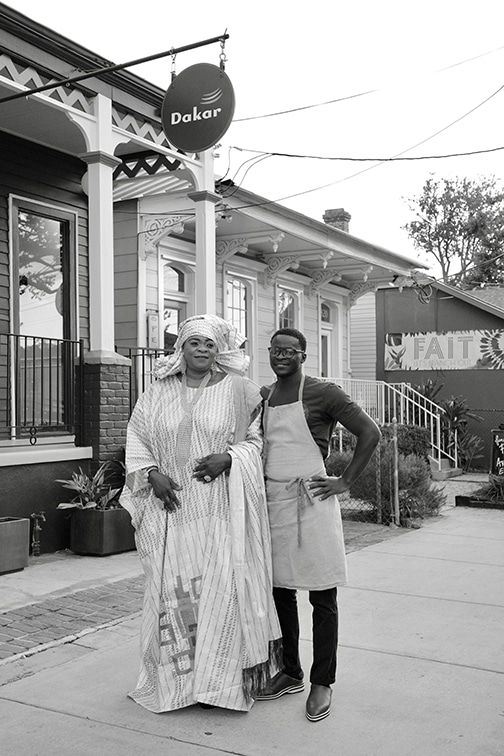
“We are jollof. My mother was a pioneer of that. She had Senegalese food in her house. People came and knocked on the door. It was at 114 Morningside Drive,” Mbaye recalls. “She had a restaurant in the late 80s, but the restaurant was closed before I was born. Our house was an extension of that, where we were not only cooking, but hosting a lot of people.”
Senegal’s national dish, also called ceebu jën or thieboudienne, is usually made with broken rice, fish and seasonal vegetables. Mbaye’s mom made the dish at Touba Taif, the Senegalese restaurant she ran in NYC. Other African countries, including Ghana, Nigeria, Togo, Cameroon, Liberia, Lagos, Gambia, Sierra Leone and Mali, adopted their own jollof rice traditions and preferences passed from one generation to the next. Part of the jollof love story is its versatility and its central role in the lives of West Africans.
“Jollof rice was the dish that I always knew was going to be on the table, whether I was at my grandma’s house, or when I was traveling to Ghana as a young child with my family, or going to a party on the South Side of Chicago, where we spent a lot of our time at social activities with other Ghanaians,” says Katherine Ntiamoah, a former U.S. diplomat and home cook.
Ntiamoah, who attended the University of Ghana as a study abroad student from Indiana University, soon recognized how deeply the love of jollof rice was woven into the fabric of Ghanaian culture, both in Africa and in America. “It was the one thing that we all agreed was central to our culinary identity. It was fun to see how different aunties, uncles and restaurants prepared jollof rice differently. I always delighted in that,” says Ntiamoah.
The History of Jollof Rice
Where was the first pot of jollof rice made, and when? Encyclopaedia Britannica traces the dish back to the 14th-century Wolof empire. Rice cultivation became the source of dishes such as thieboudienne, a rice dish cooked with fish or shellfish. Other research connects jollof rice to colonial times in West Africa, when the French imported broken rice from Indochina.
UNESCO, the United Nations Educational, Scientific and Cultural Organization, addressed the question of origin when it placed Senegal’s ceebu jën or jollof rice on the List of the Intangible Cultural Heritage of Humanity.
UNESCO places the origin of the dish in Senegal’s fishing communities on the Island of Saint-Louis. The Intangible Cultural Heritage designation settled the long-standing argument about the birthplace of jollof rice.
“I always give credit to the originators, which is Senegal. Jollof is from the Wolof tribe of Senegal. They are the ones I always give credit to for being the true originators of jollof, even though Ghanaians and Nigerians tend to be the loudest,” says Chef Amenumey.
The North Carolina caterer considers jollof rice the main event of a meal, not a side dish. While the way and where the one-pot wonder is made may differ, its place in the culinary cultures of West Africa has endured for hundreds of years, as demonstrated by the pride jollof makers take in their versions of the dish.
“It is rice cooked in a rich, tomato stew. It is packed with a variety of spices and seasonings that give it an undeniable flavor. The tomatoes give a vibrant hue. It is a celebratory dish that everyone enjoys, and it brings the community together,” Chef Amenumey offers.
RELATED: Serigne Mbaye Expands Vision for Senegalese and Afro-Centric Cuisines at Dakar NOLA
Chefs on How to Make Jollof Rice
The jollof rice that many chefs and cooks fell in love with as children was usually made with ingredients favored in the homeland of their grandparents or parents. The technique employed most often involved making the dish in one pot, simmering the base of vegetables and sometimes meat long enough to develop a deeply flavored stock. The rice is added later to absorb the stew’s liquid.
Chef Amenumey expresses her love for the variations of jollof made by the women in her family. “My grandma would make it with palm oil and smoked herring. My aunts would put shrimp powder in there. They liked the smokiness of the dried shrimp and the depth of flavor it added to the dish. My mom would make a party jollof with fried beef or fried chicken. That is what we would serve for a special occasion.”
Another way jollof cooks give their dish a personal touch is by using different spice and seasoning blends. “In a typical Ghanaian jollof, you will see rosemary, anise seed and sometimes, bouillon cube. When I’m frying my onions, I’ll throw in a few star anise to infuse the oil with its fragrance. I’ll do a combination of red onions and some leeks and add in some stock,” says Amenumey.
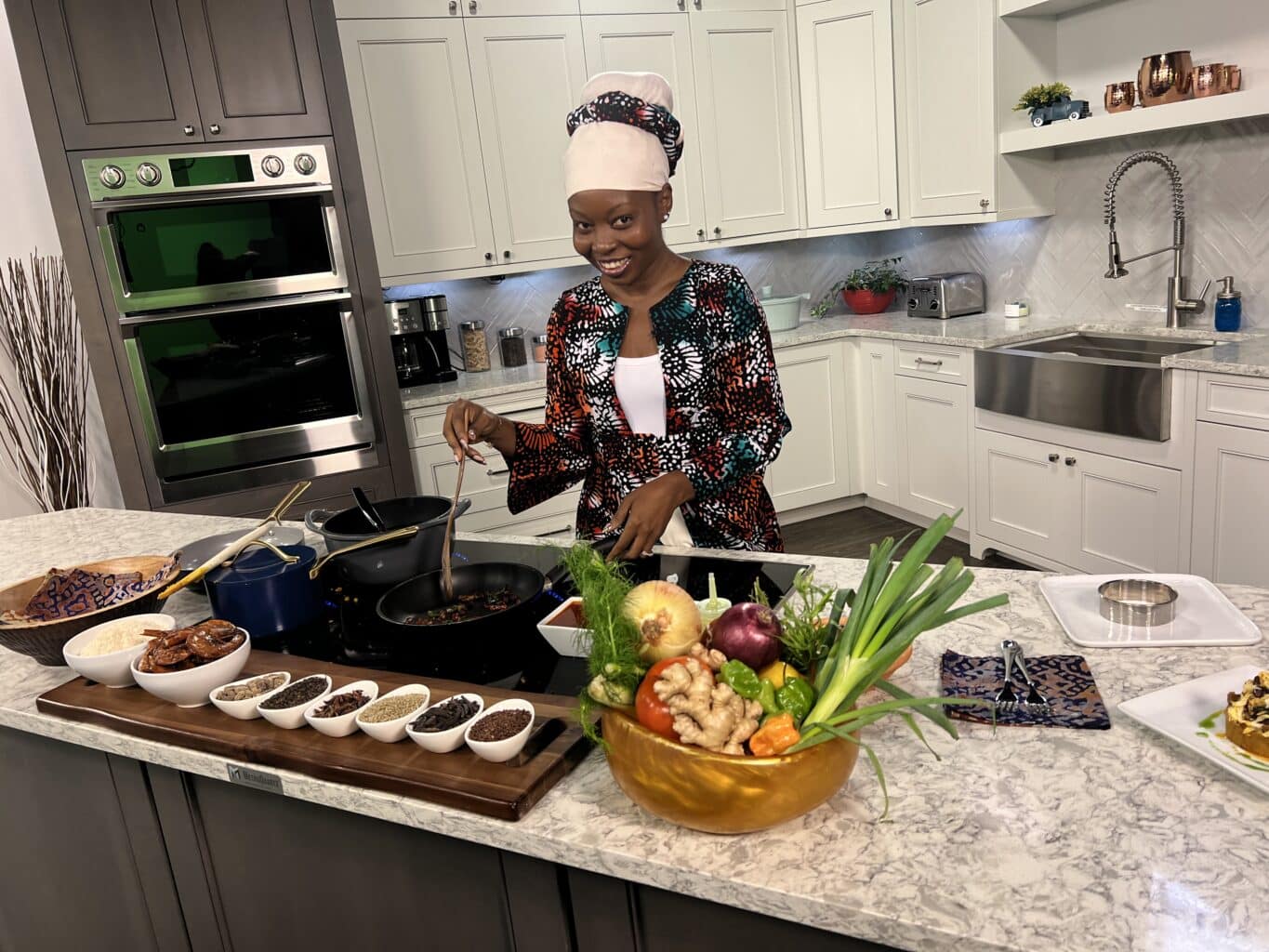
The chef continues detailing her approach to jollof. “You need what I call the Ghanaian trinity: fresh tomatoes, onions and peppers. I’ll add tomato paste. It has to have a nice kick. For that, I’ll sometimes use yellow peppers. Or if I want it super spicy, I’ll use Carolina reapers.”
The Eh’vivi host might change the jollof rice she makes for pop-up dinners and at home, depending on how she feels that day. She might roast her vegetables, use goat to flavor the stew or add chicken. Amenumey names one constant in her recipe variations. “I use a combination of jasmine and basmati rice. I like the fluffiness of basmati and the fragrance of jasmine. It gives it a different texture, and combining them takes it to another level.”
Long before Chef Mbaye was named one of the rising stars on the 2024 Time 100 Next List, he learned how to make jollof rice from his mom and late aunt, Ndoumbe Kante. She ran one of Harlem’s oldest restaurants for 17 years. The jollof she made at Baobab was so good, patrons had to call ahead to put their names in the pot.
“You had to call at least two hours before the restaurant opened to put your order in. My aunt would make these two really big pots. If you ordered too late, your plate was not accounted for,” says Mbaye.
“My father would prioritize Sunday to make sure he ordered the rice and fish from my aunt because of the enormous joy it brought me.”
The elation the New Orleans chef felt eating his aunt’s jollof rice later turned into inspiration. “I remember before culinary school, I went to stage with her for a few days to learn how she made jollof and experience her work ethic. I think after she passed, it inspired me even more to take my culinary career seriously because she gave everything to cooking,” reflects Mbaye.
Last September, the restaurant he owns with Effie Richardson was selected as one of the All-Time Eater 38. The digital media food and dining site named Dakar NOLA “one of the most essential and influential restaurants in America of the past 20 years.” The same month, The World’s 50 Best listed Dakar NOLA #6 on the list of North America’s 50 Best Restaurants and Best in the South USA.
The jollof rice dishes Mbaye creates borrow from the past but highlight the present. “I’m not making my mother’s jollof or my aunt’s jollof. I’m making my own version of jollof because I took everything I learned from my mom, my aunt and my grandmother in Senegal and tell my own story through the emerging New Orleans cuisine in me,” Mbaye admits.
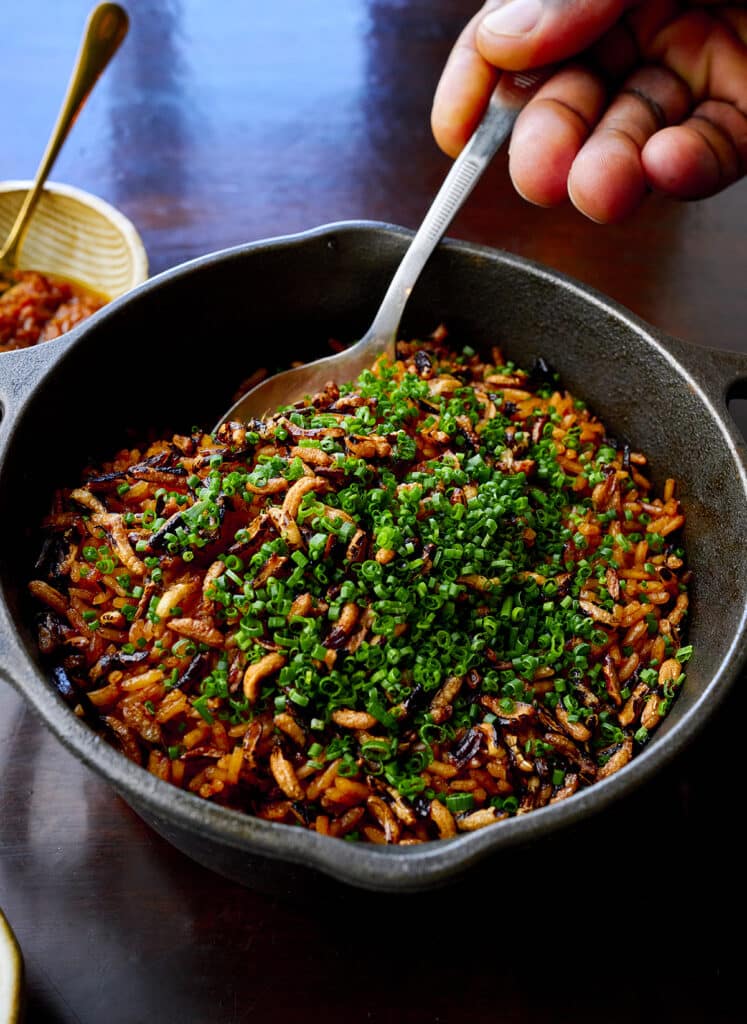
Unlike some of their West African neighbors, the Senegalese make versions of jollof that skip the tomatoes. “Right now, the one that we have at the restaurant doesn’t have tomatoes in it. It’s not red and is very similar to a Cajun jambalaya. We’re using white hibiscus as a coloring aspect,” says the chef.
The jollof rice and other tasting menu dishes at Dakar NOLA introduce diners to modern Senegalese food with the New Orleans influences the acclaimed chef picked up while cooking at some of the city’s best restaurants.
“When I think of jollof, I think of everyone telling their own stories. That’s what makes jollof what it is. What story do you want your diners to know? It is the connection between Louisiana and Dakar. That’s the story I’m telling,” the Mbaye explains.
RELATED: Georgiana Viou Shines Her Michelin Star on America and Africa
A Diplomat’s Jollof Rice Journey
When Indiana University’s Director of Policy Engagement & Strategic Partnerships entered the U.S. Foreign Service in her 20s, Ntiamoah knew she would miss her mom’s jollof rice. That is when she started taking the art of making jollof rice seriously. During her travels around the globe, the first-generation Ghanaian-American enjoyed sharing her version with people of other cultures.
“Whenever I could introduce people to my version of what America was through jollof rice or any other Ghanaian dish I put on the table, I would say, ‘This is what we had every Thanksgiving, 4th of July and Christmas.’ I could give people a more nuanced view of what the American experience could really be,” Ntiamoah shares.
The former diplomat still cooks jollof at home and makes sure she is seldom without her mom’s rice dish. “I cook it about once a month and then more during the holiday season. If I know someone is coming over who really likes jollof rice, I cook more of it for them,” says the Bloomington resident. When I go to my mom’s house, she always makes me a big pot so I can take it back and freeze it.”

Ntiamoah’s husband is Mexican, so the jollof rice she makes for them is hotter than some traditional versions. “Our through line is that we both like spicy food, so I always like to make it spicy. When I’m making the base of the stew that makes it red, I always make sure I put in some habaneros,” says the home cook.
The Best Jollof Rice Debate
Years before it exploded on social media, West Africans had friendly, but serious, debates about whose jollof rice was the best. Ntiamoah heard the wrangling in the South Side Chicago homes she visited.
“It’s a point of pride, but it’s also a little bit of a cultural culinary battle between most West Africans I know who claim jollof rice as their own. It’s always fun when you meet a West African to talk about, ‘Well, my jollof rice is better. Or you all put vegetables in it. We put meat in it.’ It’s always that fun, playful part of jollof rice,” she acknowledges.
The playful, sometimes heated banter centers on what should or should not be the ingredients of jollof rice. Ntiamoah believes the passion behind the debate comes from West Africans’ strong ties to jollof traditions. “Everyone has this version of jollof rice that is the best from generation to generation. You’ve worked so hard to perfect it that when someone tells you theirs.”
In 2023, UNESCO named Senegal the true home of jollof rice, settling the argument about the dish’s origins. That hasn’t stopped chefs and cooks from battling it out for the title of best jollof rice at festivals worldwide.
A 2025 digital article published by Number Analytics reports that the first documented Jollof Rice Festival took place in Ghana in the early 2000s. Other West African nations soon joined the battle for bragging rights at festivals on the continent and in U.S. cities. JollofFestival.com lists 2017 as the first year of its cook-offs in New York and Washington, D.C.
“What began as a friendly competition between Nigeria and Ghana has grown into a continental celebration that spans multiple cities across the United States and beyond, bringing together thousands of food enthusiasts annually,” the article reads.
Since 2017, the Jollof Festival events have expanded to 13 cities, including an international competition in the United Kingdom. Different countries claimed victory in 2024, with Nigeria winning in Atlanta and Houston, Ghana in D.C., Senegal in Oakland, Liberia in Chicago and Sierra Leone in Seattle.
According to Africa News, 4,000 people attended a 2024 jollof battle in Lagos. The same year, a radio station sponsored a three-nation contest in Ghana. Senegal won that competition. Charlotte’s Amenumey was a vendor at the first Jollof Festival in her city four years ago. Still, Dakar NOLA’s chef-owner chooses to put his energy into the jollof rice love story and not the cooking contests.
“I focus on whose telling the story that relates to the bite I am eating. Which story resonates more? It doesn’t really matter whether you are from Senegal, Gambia, Guinea-Bissau, Ghana, the Ivory Coast, Nigeria or Cameroon. What does matter is whether I can feel the generosity and flavor through the spoon of rice that is being served,” says Chef Mbaye.
The Unifying Power of Jollof Rice
The New Orleans restaurateur’s perspective came under a global spotlight when Chase Sapphire Reserve released an ad campaign featuring Oscar-winner Michael B. Jordan and jollof rice. The Hollywood movie star asks, “So, what jollof rice is the best?”
Jordan’s dinner companions included celebrated West Africans such as ESPN analyst Chiney Ogumike, musician and producer Sarz, actors Tony Okungbowa and Michael Oloyede and a few other notable guests. As they passionately debate the merits of jollof rice, a famous Nigerian chef delivers an answer that highlights its unifying power in the Chase Sapphire commercial.
In an April 2024 Cuisine Noir article, chef Tolu Eros said, “The conversation was totally unscripted, giving those familiar and those curious a glimpse into the passionate discourse surrounding this debate. It also leaves room for unity, which is the most important takeaway.”
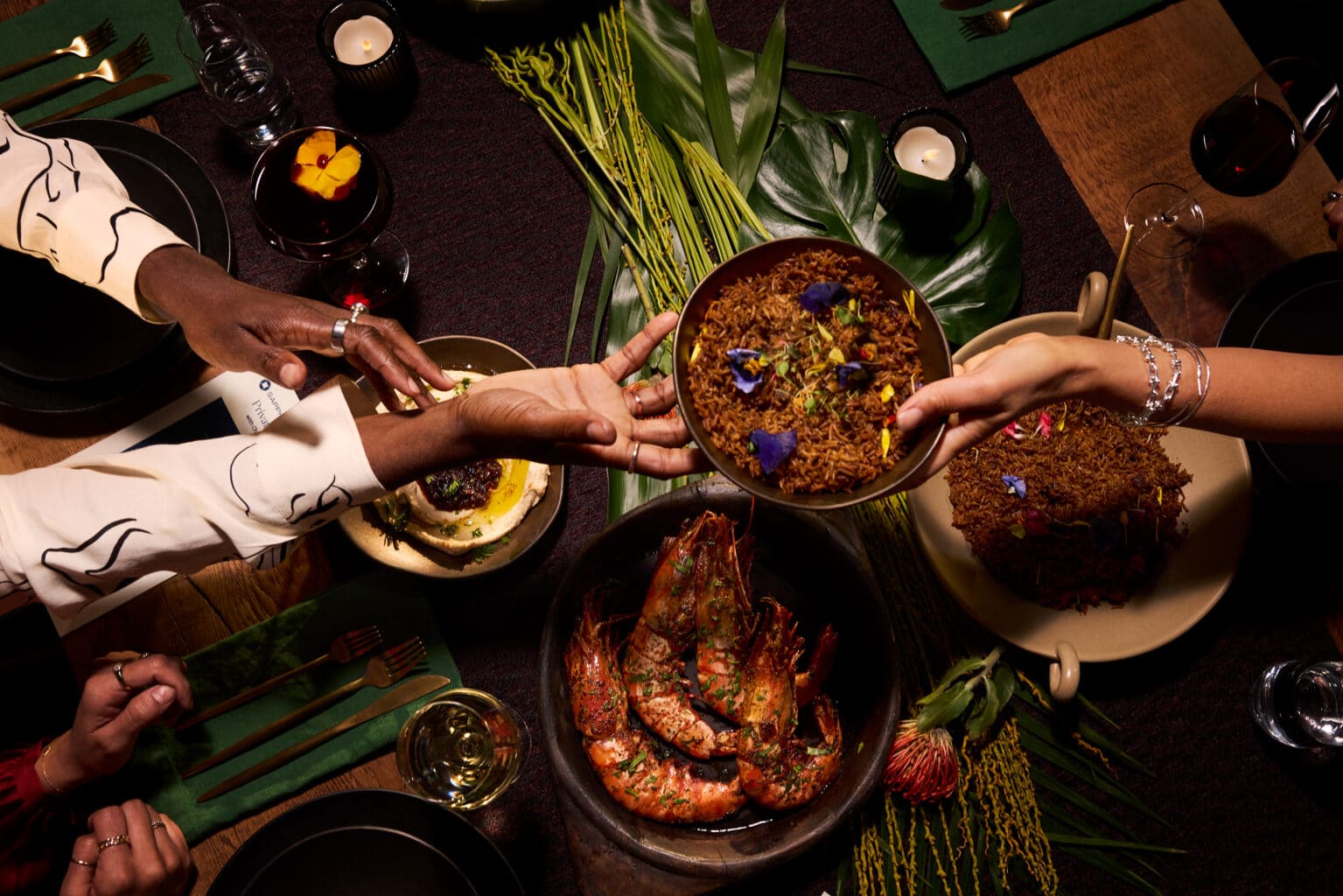
The global restaurateur also described the dish he served Jordan and the other diners to offset the jollof argument that has raged for years. “I found that to be hugely distracting and also dividing. As such, we created the Unity Jollof Rice. We fused the best of the three main jollof worlds: The Ghanaian with their fragrant rice (jasmine or basmati), the Senegalese with the use of vegetable stock and plantains, and the Nigerian with the infusion of smoke, burnt bits, and spice,” said Chef Eros.
“When I saw the ad, I was very happy to hear my childhood dish being talked about throughout the diaspora,” says Mbaye. “I thought it was an amazing, well-done video.” The Senegalese chef agrees with the idea of promoting unity over jollof rice competitions.
“That’s why I want people to know not the idea of who makes the best this or the best that. We are much stronger together than divided African countries. I don’t cook to go against anyone’s culture. I cook to bring cultures together,” the James Beard Award-winning chef adds.
A photo representing that kind of unity sits in Ntiamoah’s office at Indiana University’s Hamilton Lugar School of Global & International Studies. It is a picture of Kamala Harris thanking the advance team that prepared for the Vice President’s arrival in Ghana. Ntiamoah and her co-workers put in grueling hours to support Harris’ March 2023 speech at the historic Cape Coast Castle, an infamous slave trading post.
“We always gathered together at the end of the day, eating jollof rice and talking about our lives, the work and how we were going to support the trip better. They always had jollof rice ready, no matter what time of the day it was,” Ntiamoah says.
The best outcome of the attention the jollof rice love story generates is the growing recognition of and praise for West African cuisine. OpenTable data showed it at the top of food trends in 2023. Its popularity rose by 72% among diners from Los Angeles to London and beyond, as they tried jollof and other traditional West African dishes.
Chef Mbaye relays why he is thrilled about the trend. “I think people are now realizing how much West Africa has inspired the world.We have many young chefs and others who are trying to claim their stories. Nobody else is telling their story for them, which is great.”
Ntiamoah’s globetrotting days might be over, but she still checks out West African restaurants when she travels. “The last time I went to Washington, D.C., I went to Eric Adjepong’s Elmina restaurant. It was so nice to see people from all different backgrounds in there enjoying his food and interacting with him,” she says.
For North Carolina’s Amenumey, jollof rice represents love, community and the pride found in West African cuisine. “All these chefs, including myself, are all pushing West African or African food from our own point of view. That makes it very beautiful. It’s not cookie-cutter or one way. I hope more people will continue to try jollof and make it their own.”