|
Getting your Trinity Audio player ready...
|
Everything in its place—that’s the meaning of the culinary French term mise en place. But while it may sound intimidating, this organizational cooking method may just be something you’ve been doing all along.
Sheri L. Raleigh shares that although the mise en place term came from the French, other cultures practice similar organizational techniques when cooking. “I look at West African cooking, especially when they’re doing open-flame cooking. They have all their ingredients ready. They’re adding the ingredients as they cook. So, I think it’s just a hallmark of cooking organization.”
MEET OUR EXPERT
Sheri L. Raleigh is a culinary educator and the founder of Cast Iron Skillet Culinaire LLC. She is also the author of the Gifts From The Ancestor cookbook series, her tribute to generational Creole heritage recipes.
What is Mise En Place?
Simply put, mise en place involves preparing and organizing all the ingredients and equipment you’ll need to cook a recipe. Not to be confused with meal prepping, which Raleigh says involves long-term storage of ingredients to use for several meals, mise en place is about assembling and organizing the ingredients to prepare an individual recipe.
“It’s putting everything together so you’re ready to assemble whatever recipe that you’re working on. Mise en place is an organizational method that goes hand-in-hand with knife skills,” defines Raleigh, citing how mise en place plays an important role in the professional kitchen.
“It brings order to the cooking line. Most executive kitchens have people who only prep and chop ingredients so the line cooks and chefs don’t have to do that. Those ingredients are ready and they’re replenished as the meal service continues,” says the cooking pro who specializes in cooking classes she describes as “culinary edutainment.”
The Basics of Mise En Place
Employing mise en place in the home kitchen can yield the same efficiency and time-saving benefits as that of a pro kitchen says Raleigh. Here, she outlines the basic steps needed for mise en place cooking.
1. Read the recipe thoroughly. Before you start cooking, review all the ingredients and familiarize yourself with how they will be used in the recipe. “You’re putting together anything that would be needed to put into the pot,” reminds Raleigh about making sure all a recipe’s ingredients are readily available.
2. Get cutting. This is the heart of mise en place—and where some basic knife skills are needed says the culinary educator. “The two basic knives are a paring knife and a chef’s knife. You really don’t need more than that. But of course, there are knives that can help you to do more complex cuts,” notes the cookbook author.
She shares that to be successful with your mise en place, you’ll need to practice four basic knife skills when preparing ingredients: julienne cut (or French fry cut), large dice cut (these are made from the French fry cut), small dice cut (1/4” in size) and brunoise cut (or micro-dice cut).
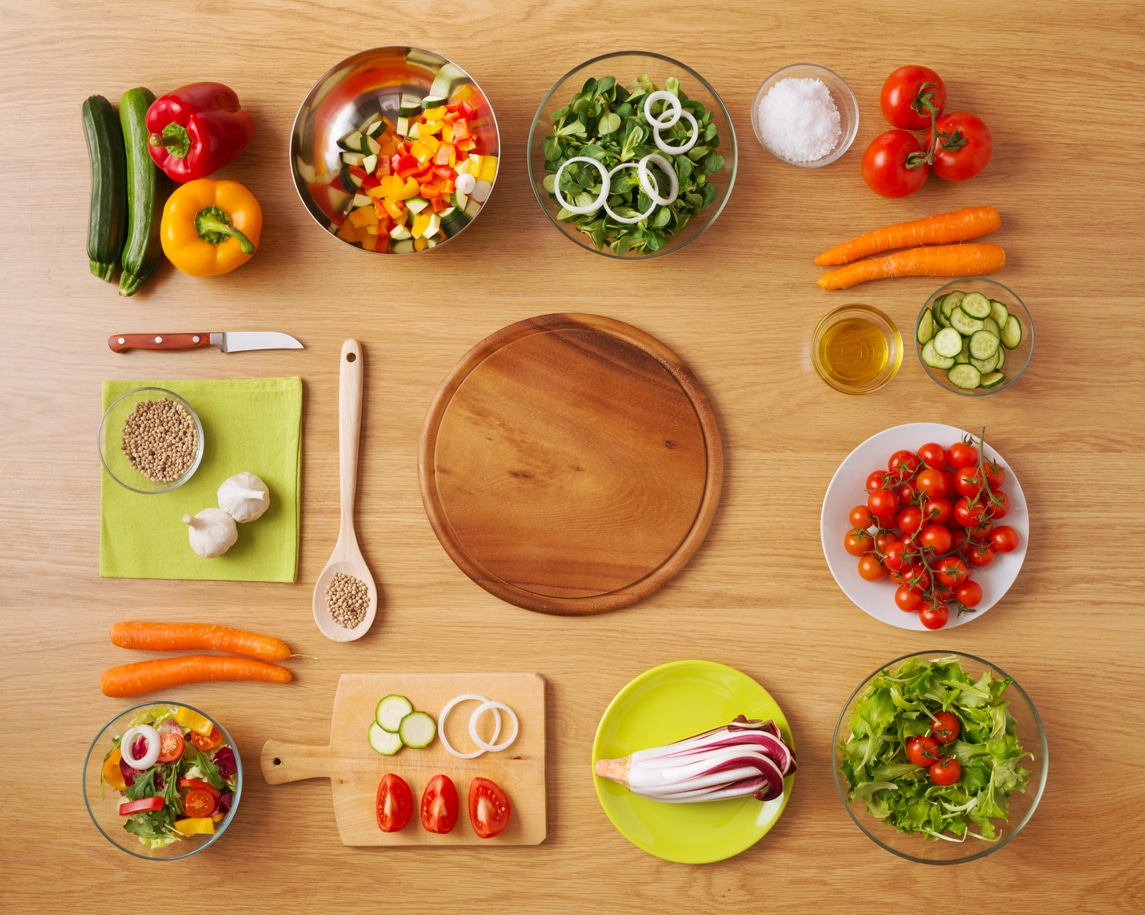
3. Weigh and measure. This step is crucial, especially when baking points out Raleigh. Measuring spices and weighing dry ingredients ahead of time are all part of mise en place cooking and will save time as the recipe comes together during the cooking process.
4. Organize the ingredients. Arrange the ingredients in order of use in the recipe. “This step will help keep you organized, especially if you’re trying a new recipe.” She suggests keeping ingredients separated for ease. “You can put the ingredients in containers or use disposable bowls and cups. I got stainless steel bowls from a dollar store; they came in a set of six nested bowls.”
RELATED: 8 Chef Tips For Cooking From Scratch
The Order of Things
The time it takes to do mise en place hinges on the complexity of the recipe. “It depends on the number of ingredients. For example, if I’m making salsa, it’s probably going to take me about 10-15 minutes to get everything ready,” Raleigh notes.
“But let’s say you’re doing a complex recipe that has about ten ingredients. It may take you 45 minutes to get everything prepped but then your cooking time will be really quick.”
When all is chopped and done, Raleigh says the point of mise en place is simple. “It’s so you can concentrate more on the way the ingredients are being put together in your cooking. Mise en place brings order to your kitchen. It keeps you organized and it just makes things flow easier.”