|
Getting your Trinity Audio player ready...
|
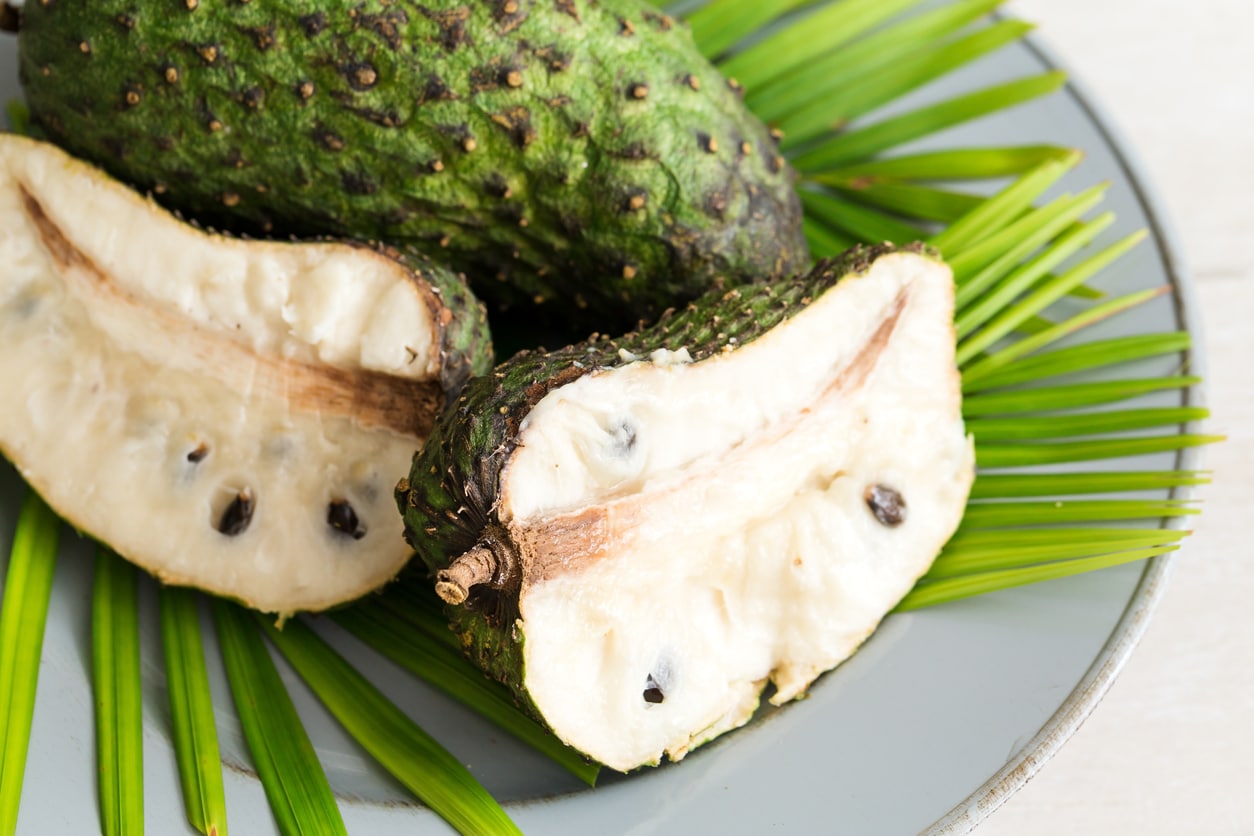
Its name is unusual and it’s outer layer is a bit prickly. But one bite delivers a taste that’s been described as a little piece of heaven. Soursop, a fruit native to tropical America and the West Indies, has long been flying under the taste radar.
“It’s like if you know, you know. So if you didn’t grow up mainly in the Caribbean, or even Miami…a lot of people just wouldn’t know about it,” observes Jamaican-born blogger Ainseanlea Bonds about soursop, also called graviola, guyabano or guanábana.
Asia Bullock, aka Chef Asia, agrees, noting how the fruit’s rarity in regular grocery stores is part of soursop’s mystique. “It’s a Caribbean fruit so it could be found in a lot of the Caribbean markets or the independent mom and pop groceries,” she details about where to find the whole soursop fruit, as well as packaged soursop pulp, in the U.S.
MEET OUR EXPERTS
- Ainseanlea Bonds is the blogger and recipe developer behind The Stush Kitchen, a recipe blog featuring elevated recipes with a Jamaican accent.
- Asia Bullock a culinary pro who blends food, culture and storytelling. She specializes in recipe development and food writing, with a focus on heritage-inspired dishes and meaningful experiences.
As for why it’s worth the effort to score soursop, let’s begin with its taste. “The flavor is mild, but extremely distinct. The inside is very creamy. It’s almost reminiscent of a banana. But it has a very floral flavor, kind of like an orange or mango,” describes Bonds, who also likens the texture of soursop to that of a custard apple. “Most people don’t use it green, whether cooking or eating just because as the fruits ripens, it softens and then the sugars also are more potent, so you have more flavor that way.”
While soursop’s taste is intriguing, Bullock cautions that its plentiful seeds are toxic and should not be eaten. “They’re brownish seeds that I’ve picked out with a spoon or by hand to take them out,” shares the professional chef about working with the fresh fruit. Bonds adds, “When you get the soursop pulp, usually frozen, it never has seeds in it. Those are typically removed.”
Soursop Benefits
Beyond it’s taste, soursop benefits are also to be appreciated. Bonds, a nurse by profession, notes, “Everybody is about gut health and soursop is pretty high in both soluble and insoluble fibers. It also has enzymes which help to break down glucose. If you’re having it with a regular meal that has carbohydrates, it’s going to help to lower the glycemic index of those other foods so that your blood sugar isn’t being spiked as high. So the fiber and that enzyme alone [in soursop] helps to improve digestive health for a lot of people and manage blood sugar levels,” she shares.
“I never recommend that anyone use natural substances, fruits or supplements as a replacement for their medications. But you can always supplement when you speak with your doctor. And [there are] some studies that are promising, but it could potentially help to treat high blood pressure.”
“I think in terms of whole foods. It’s always something good to incorporate as part of your preventative care, not necessarily curative,” points out Bonds about utilizing soursop benefits in a diet. Lastly she shares, “Soursop is also very high in antioxidants and vitamin C; it has more vitamin C per serving than oranges and even cherries. So it’s really a powerhouse for vitamins and those other micronutrients that you need daily.”
Cooking With Soursop
While soursop can be enjoyed solo, the fruit also lends itself to a number of uses in recipes. The following soursop recipe ideas are some tasty and creative ways to incorporate the fruit into everyday.
Soursop juice, says Bonds, is the easiest way to enjoy and familiarize yourself with the fruit’s unique flavor. “If I’m using a ready-bought soursop pulp, I’ll just put it in my blender with some water, lime juice, sugar to taste and it’s done,” she details.
Cocktails using soursop juice is a great way to indulge using this distinctive fruit. “One of my favorite things to add is a little bit of tequila or gin because the floral flavors complement each other,” reveals Bonds.
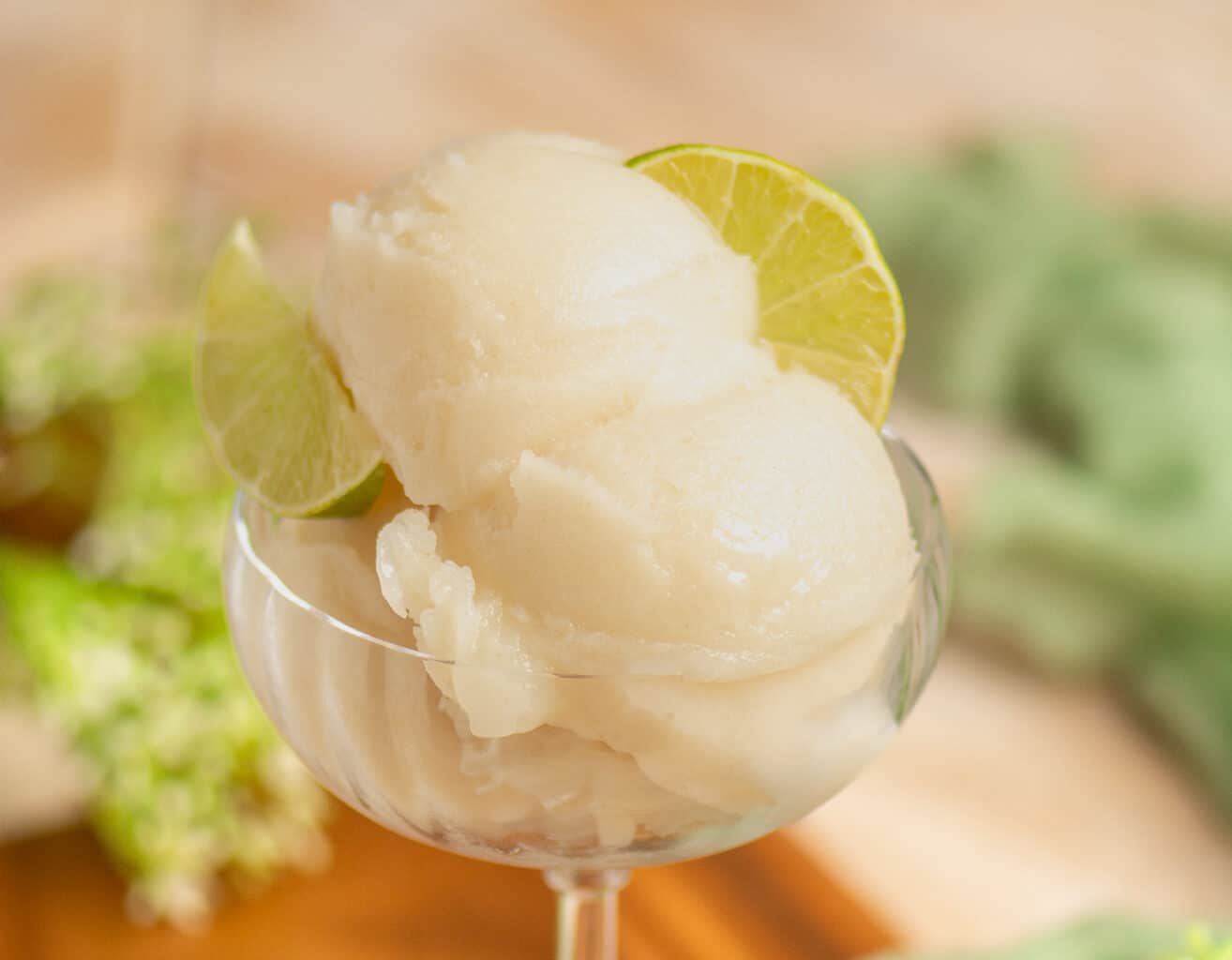
Try the Recipe: Soursop Sorbet
Frozen treats like snow cones, sorbets, popsicles and ice creams show off another dimension of soursop’s flavor when combined with coconut milk, regular milk or condensed milk. “For the popsicles you’re freezing the juice. For sorbets and ice cream, I always recommend simmering the pulp a little bit,” notes Bonds. “When you cook soursop, it changes the structure of the fruit a bit to kind of gelatinize it, so that when it actually freezes, there’s not too much ice crystal formation and you get a smoother product.”
Smoothies get a glow-up when soursop’s vitamin-rich pulp is added as a supplement. “I would blend [the soursop pulp] with a little water and keep it in a sealed jar in the fridge. I would then use a couple tablespoons of it in my smoothie,” shares Chef Asia.
Syrups and jams are additional ways for making use of soursop’s distinctive flavor. Chef Asia details making a simple syrup base using soursop, water, sugar and vanilla paste. “Let it boil with a couple cinnamon sticks. You’ll have a soursop syrup you can use over chicken and waffles. There’s your sweet and your savory right there,” she says. The culinary pro also likes to combine soursop with fresh berries (like blueberries and blackberries) to make a jam.
Try This Recipe: Soursop Hot Honey Dipping Sauce
Savory use of soursop gives the fruit an unexpected twist. “I’m constantly doing things with sweet and savory fruits and adding it to whatever dish I make because I just love that balance of saltiness and sweetness,” reveals Chef Asia, who counts her soursop hot honey dipping sauce as a prime example of the flavor combo. “Thinking outside of the box, I would do a hot honey sauce with the soursop juices, and it would be serve as a dipping sauce for some rosemary buttermilk fried chicken.”

“It’s a very unique, rare fruit. A lot of people won’t realize what they can do with it until you bring it to their attention,” observes Chef Asia about exploring soursop’s use as a creative recipe ingredient.
But beyond it’s versatility, Bonds encourages us to simple enjoy the fruit on its own. “You want to enjoy it as close to raw or plain as possible,” she encourages. “I would just implore anyone who hasn’t tried soursop to definitely go ahead and try it. There’s nothing like soursop.”