|
Getting your Trinity Audio player ready...
|
The Republic of Angola is a country located in southwestern Africa. Although its official language is Portuguese, a significant portion of the population is from the Bantu people, an ethnolinguistic grouping of 400+ distinct native African ethnic groups.
Due to the eclectic demographic, the modern appearance of Angolan cuisine consists of a combination of indigenous African ingredients and cooking techniques, Portuguese influences and ingredients from other colonies. However, the same demographic mix has led to a loss of Angolan culinary practices.
To combat this, chef Helt Araújo created OVINA YETU, a project intended to reveal and promote Angolan cuisine as a fundamental element of Angolan cultural and environmental heritage.
Becoming the Solution to a Problem
At age ten, Chef Araújo wanted to write a book about Angolan cuisine. He describes himself as an “Angolan at heart and soul,” who is originally from Benguela. His curiosity about food led to experimentation at a young age, eventually finding a permanent passion in the kitchen. “There was an awakening of the senses consolidated over the years,” he says. “One of my great memories is being fed by my mother at the kitchen counter. Another is living with my father and celebrating when it was my day to cook.”
While researching for the book as an adult, Araújo ran into challenges. “I encountered many difficulties in obtaining information,” he says. “Whether written or oral, it was disconnected from reality. I realized I’d have to set aside the intention of writing a book and instead create a project to address this documentation process scientifically.”
Angolan Cuisine Explained
After attending the School of Hospitality and Tourism in Lisbon, Portugal, Araújo rectified the lack of Angolan gastronomy by establishing the CHA group, which offers private aviation catering and operates two restaurants. Later this year, he is launching OVINA YETU, a groundbreaking project that aims to fill the gaps in information and knowledge about Angolan gastronomy and products.
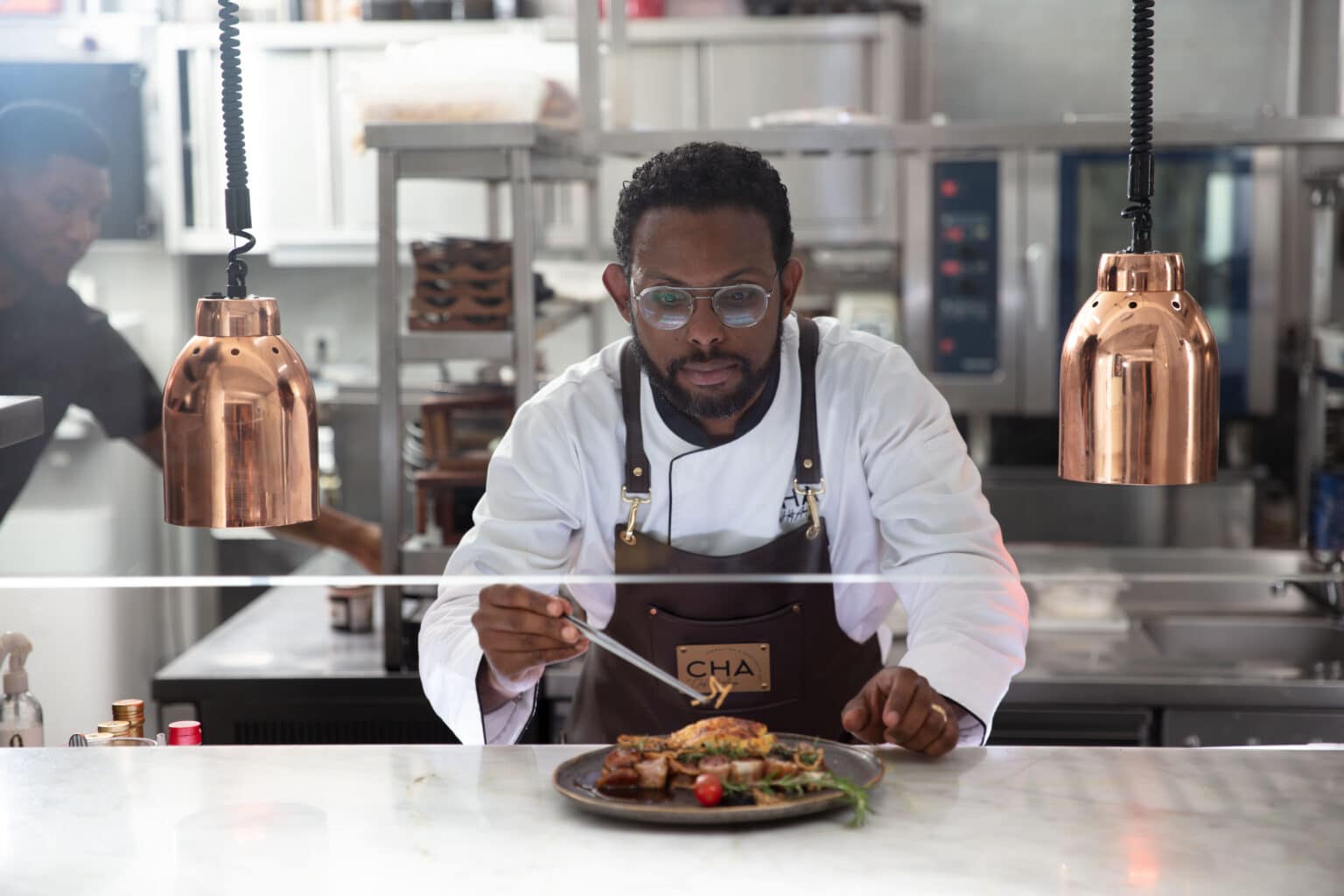
The name means “Our Product, Our Thing” in Umbundu—one of many Bantu languages—and reflects a philosophy of life toward a path of research, documentation, systematization and writing. “It’s the dissemination of Angolan gastronomy history and products that contribute to a more sustainable production process,” shares the Luanda resident.
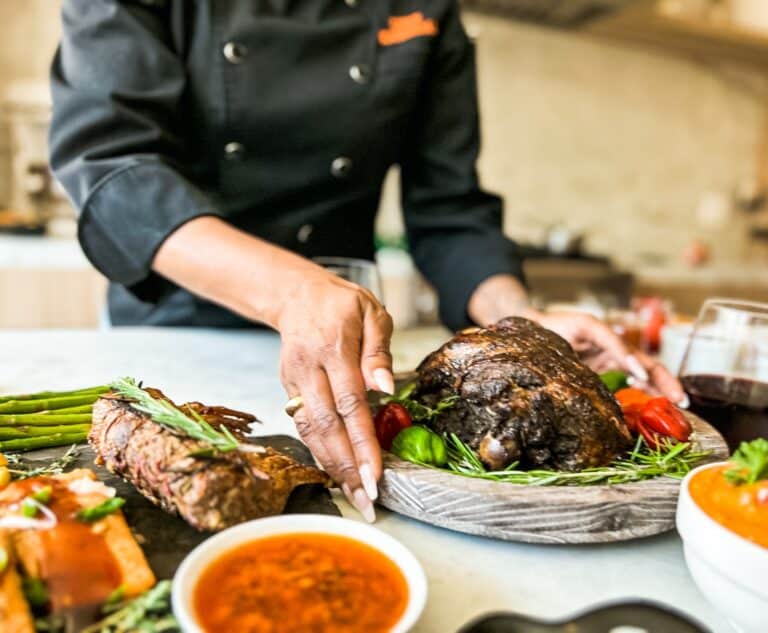
In traditional Angolan cuisine, cereals such as massambala and maize, legumes such as beans, tubers such as yam, and vegetables such as okra and bitter leaf dominate. “The basis of Angolan cuisine consists of yam, cassava, maize, or rice, boiled or used in flour, pasta, or bread, combined with vegetable stews or sauces,” Chef Araújo says.
“With sesame or palm oil or complex and subtle spice blends, okra is highly appreciated for its viscous and thick texture. Game meat, dried meat and fish are also prominent, especially in coastal regions and along major rivers and lakes. Inland, it’s smoked and dried fish.”
Simplicity is the main characteristic of Angolan cuisine, with fresh ingredients and contrasting flavors. Angolan cuisine does not feature refined or complicated sauces; less creates more, which characterizes the visual image of the dish itself.
RELATED: A Mother’s Dream Inspires Soul Food Restaurant by Felicia in Lisbon
Reshaping Angolan Culinary History
Outside influences reshaped Angolan gastronomy. Chef Araújo says modern Angolan cuisine is Portuguese-based due to colonization and various adaptations of dishes from Portuguese-speaking countries and Europe. “The result is that the cultural mixture, national cuisine has become diverse, offering flavors and textures that appeal to almost every palate.”
That’s why OVINA YETU wants to educate native Angolans on their roots and aims to distribute knowledge about unknown native products. “This topic inspires us because we see it as an identity and cultural response, a rescue of the basic Angolan culture, agriculture and its communities. By demonstrating the potential to contribute to the scarce literature on the rich Angolan gastronomy, we want to influence food education from a place of deeper cultural knowledge of our history.”
Connect with Chef Helt Araújo on Instagram (@chefheltaraújo) to follow his food journey, catering projects and restaurants. Learn more about OVINA YETU and the work being done to reshape Angolan cuisine and celebrate its roots on the website.