|
Getting your Trinity Audio player ready...
|
The word Creole is used to describe multiple cultures around the world that, at first glance, are seemingly unrelated. However, if you dig deeper, what emerges is a shared legacy of blended language, foodways, values, and traditions that come together to shape unique cultural identities.
Réunion Island is embracing this global heritage with its first-ever Creole food festival, The Sommet & Festival International des Chefs Créoles, organized by the International Institute of Creole Gastronomy (IIGC). “The festival marks the birth of a global movement dedicated to transmitting, uniting, and elevating Creole gastronomy,” says Jean-Charles Bertrand, who oversees the institute and is the founder of the festival.
The IIGC defines Creole as an identity born from blended cultures, rooted in Africa and shaped by Indigenous, Asian, and European influences, reflecting the complex history of societies formed through colonization and the transatlantic slave trade.
The event will highlight distinct cuisines from more than ten Creole territories from Louisiana to the Caribbean and across the Indian Ocean, to include Mauritius, Seychelles and Réunion Island. Through collaboration with Creole chefs from around the world, this event will focus on educating, inspiring, and connecting people to the depth and diversity of Creole cuisine.
Réunion Island – A Young Island Shaped by History
Réunion Island is a French territory situated in the Indian Ocean, south of the equator and just east of Madagascar. “La Réunion is a young island, but it carries a vast and powerful history,” shares Bertrand. “Here, Africa, Europe, India, Madagascar, China, and Southeast Asia meet, respect one another, and blend together.”
Shaped by its history of colonization, slavery, and indentured servitude, the Réunionese identity was forged in resistance—a mosaic of different cultures and traditions preserved through it. Today, Réunion Island is multiethnic, with the majority of its population being of mixed descent.

“The island is a living laboratory of coexistence, a place where cultures talk to each other, respond to each other, and build together without ever erasing one another,” the founder explains.
This diversity is reflected not only in its people but in its landscape. The tropical paradise is a rare place where nature and culture come together to create an experience unique to Réunion Island.
“The first treasure of La Réunion is its people. The smiles, the warmth, the joy — this way of being truly “alive,” says Bertrand. “Here, you can hike through majestic mountains in the morning and swim in a lagoon in the evening. There is the volcano, the waterfalls, a unique biodiversity, and above all, there is a cuisine, a heritage found nowhere else on Earth.”

RELATED: The Creole Food Festival Unifies Through Culture and Taste
Réunionese Cuisine Enters the World Stage
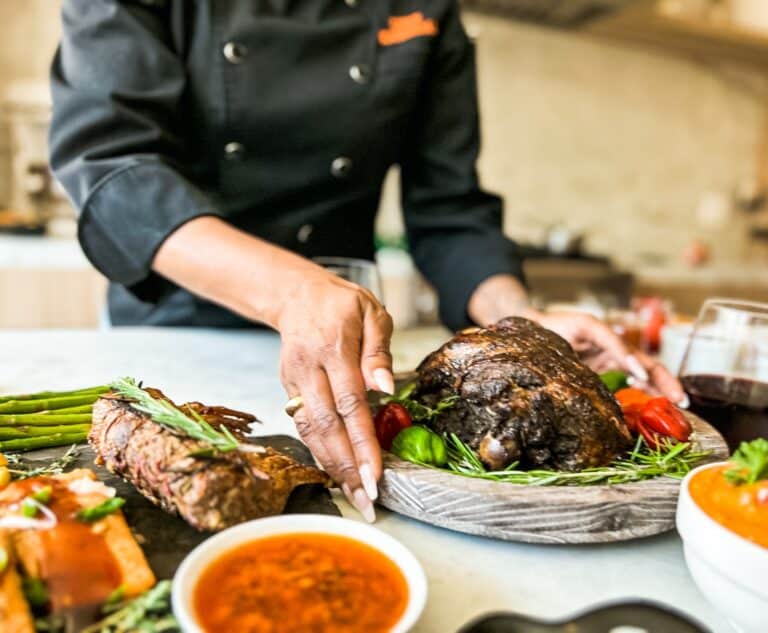
The cuisine of Réunion Island is a powerful expression of its Creole identity, encapsulating the history and cultures that bind the island together. “Réunion gastronomy is part of our history—it’s a true heritage,” says Réunionese chef and Creole food festival collaborator Kevin Minatchy. “It comes from the first indentured laborers who arrived on the island, bringing their traditions, spices, and cooking methods.”
Minatchy emphasizes how deeply the island’s history is woven into its cuisine. “When you look closely, Réunion cuisine truly lives up to its name, ‘Reunion.’ It’s a blend of nations, cultures, and tastes—Asian, Middle Eastern, African, and European influences are all present. All these cuisines come together in a single gastronomy that is the island’s rich heritage.”

This multicultural identity is reflected most clearly in its staples and ingredients. Onion, tomato, garlic, and ginger form the base of many Réunionese dishes, and are layered with aromatic spices. “Cumin is very common in Réunion cuisine and is heavily influenced by Indian cuisine. We also use masala, curry leaves, coriander, turmeric, and many others,” Minatchy explains.
Seafood, fish, and smoked meats are often stewed into caris(curries) or rougails—tomato-based stews—along with seasonal vegetables. “Smoking is used extensively: smoked sausages, meat, and chicken. These are very important products in our cuisine. Local vegetables like cabbage, as well as various types of leafy greens, are also part of our daily cooking.”
While Réunionese cuisine is distinct and a product of its unique history, many Creole cuisines around the world share surprising similarities. Réunion Island’s upcoming Creole Food Festival aims to explore the throughlines of flavors, dishes, and traditions that define the shared legacy of Creole gastronomy.

The Creole Food Festival
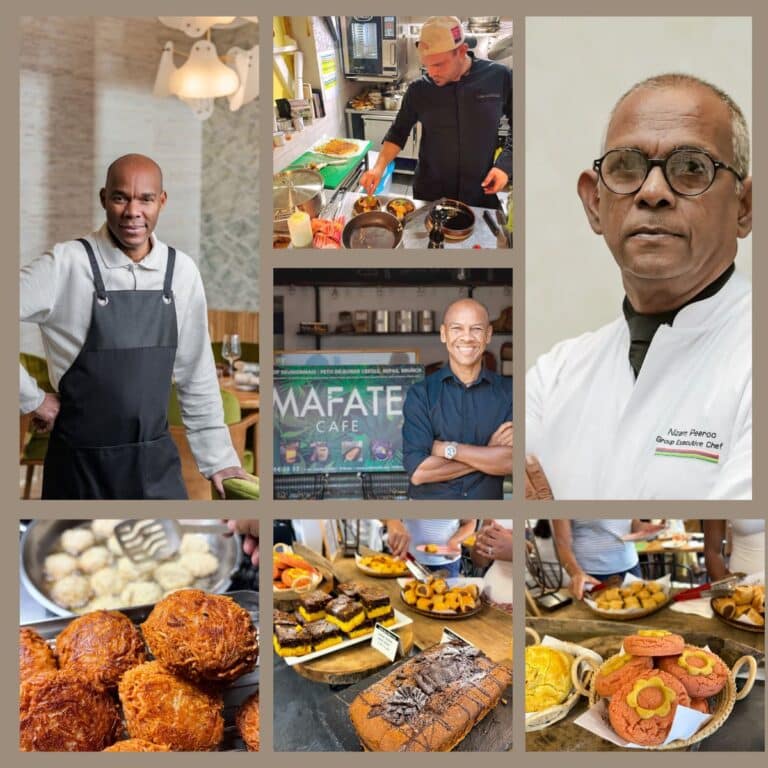
The Sommet & Festival International des Chefs Créoles taking place May 22 – 24, 2026, in Saint-Denis, Réunion, will be a celebration of Creole cuisines and identities on a global scale. “For three days, we will gather chefs from La Réunion, the Caribbean, Mauritius, Louisiana, and the Seychelles,” Bertrand explains.
“There will be masterclasses, workshops, roundtables, gala evenings, a public food festival, local markets, demonstrations, competitions… All designed to tell the world who we are, where we come from, and where we are going next.”
Bertrand and Minatchy share the inspiration behind the festival and their desire to highlight Creole cuisines. “The Sommet & Festival International des Chefs Créoles was born from a deep conviction: our cuisine deserves a place on the world stage,” shares Bertrand. “It is not folkloric, nor merely regional. It is universal, the result of a unique human history.”

Minatchy agrees, “What touches me about the International Creole Festival is the idea of bringing together all Creole cultures. This festival allows us to showcase our heritage, our history, and especially our cuisine.”
With more details about the inaugural event to be shared over the coming months, Chef Minatchy concludes, saying, “The festival is a time for sharing, transmission, and discovery. It offers the opportunity to encounter other Creole cuisines and influences, but always with the same spirit: to showcase our origins and what it truly means to be Creole through our food.”
For more information about the upcoming Sommet & Festival International des Chefs Créoles including participating chefs, events, ticket sales and more, visit the festival website.