|
Getting your Trinity Audio player ready...
|
The Sommet & Festival International des Chefs Créoles in Saint-Denis, Réunion, is set to take place next week from May 22 – 24, gathering Creole chefs from various parts of the world and marking the island’s inaugural Creole food festival that joins global food narratives about Creole cuisine, culture and history.
In December, Cuisine Noir spoke with Jean-Charles Bertrand, the festival’s founder. Organized by the International Institute of Creole Gastronomy, which Bertrand leads, the Institute views Creole as an identity rooted in mixed cultures, originating from Africa and influenced by Indigenous, Asian, and European elements.
“The process happened quite naturally, with chefs coming together around a theme like Creole cuisine,” Bertrand explains. “It’s universal; it brings people together across oceans, whether from the Caribbean, the Indian Ocean, or elsewhere. We almost all share the same history, the same experiences, the same struggles. Creole cuisine is a moment that brings us together—that’s what makes the event a success.”
This reflects the complex history of societies shaped by colonization and the Transatlantic Slave Trade. Here are three talented, Creole-rooted chefs participating in the upcoming culinary event and how each is keeping the traditions of Creole cuisine
Creole Cooking as a Living Memory – Chef Marcel Ravin
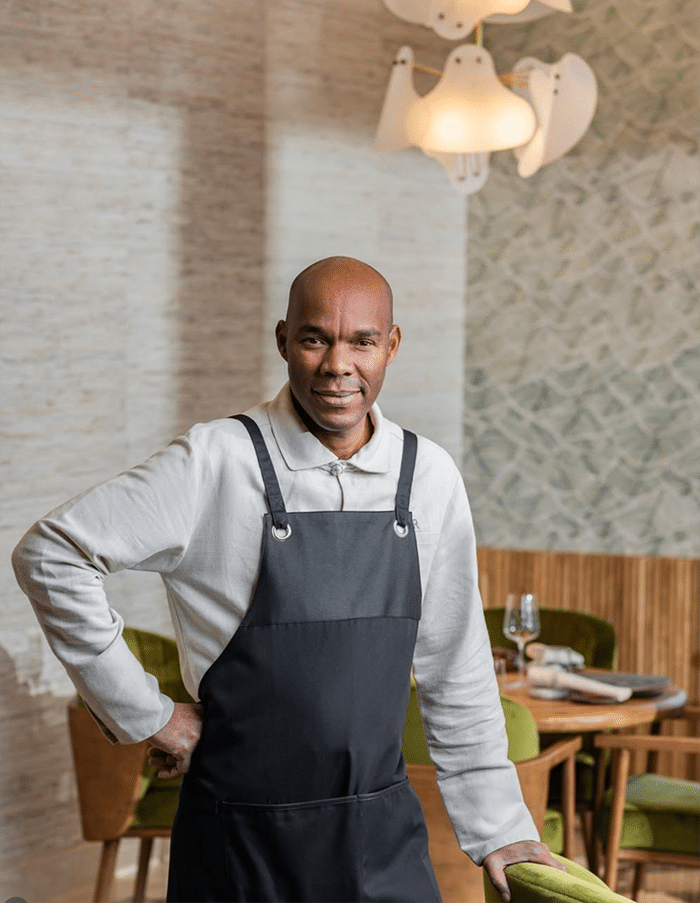
Marcel Ravin was born on the French Caribbean island of Martinique. “I grew up in Le Diamant, surrounded by my grandmother Yvanesse’s simmering pots, where everything cooked slowly, and where I was learning without even realizing it.”
He says that on the island, cooking is a living memory, passed down more than taught. “Creole cuisine is a cuisine of survival that became a cuisine of transmission,” he says. “It was born out of constraint, forced migrations and silent resistance. Today, it is a powerful cultural expression, and it is time for the whole world to recognize it.”
Chef Ravin characterizes his cuisine as a “cuisine of culture,” reflecting a fusion of identities developed through his dual education. “My family’s deeply rooted Creole traditions are one, and then classical French cuisine is the other, he says.
“I left Martinique at 17 after earning my Certificat d’Aptitude Professionnelle (Certificate of Professional Aptitude or CAP) to continue my training in mainland France. My journey began in Alsace, then continued in Michelin-starred establishments from Brussels to Lyon, before bringing me to Monaco in 2005. It is a constant dialogue between two heritages, and that dialogue has become my signature.”
Ravin’s cuisine blends Creole, African, Indian, and European influences, describing it as a “bridge between Martinique and the Mediterranean,” symbolizing what he has learned and what he aims to pass on. He states that his organic hen’s egg with truffled cassava and passion fruit jus dish represents these two things and him as a chef.
“It is a humble product, full of history; it embodies resilience, transformation, and Creole identity,” he says. “I choose to pair it with truffle, a noble ingredient, because that is exactly who I am; a child of the Caribbean seated at the table of great world gastronomy. My guests speak of an encounter that is unusual yet explosive.”
For Chef Ravin, participating in Sommet & Festival International des Chefs Créoles is a historic recognition and acknowledgment. “For too long, Creole cuisine has been marginalized, folklorized, and underestimated. Today, it is being seen, studied, and celebrated, and this festival in Réunion at the heart of the Indian Ocean sends a powerful signal to the entire world. I am taking part in it with immense pride.”
He states that Creole food is often misunderstood as simple or folkloric, when it’s more complex and technical. “I want to offer a contemporary interpretation of Creole cuisine—dishes that tell the story of my journey between Martinique and Monaco, between the Atlantic and the Mediterranean. It will be a sincere cuisine, without compromise, worthy of such an event and of what Réunion itself represents as a Creole land.”
He hopes that festival participants leave with an understanding that behind every Creole dish lies an invisible story of people, displacement and transmission. “Black and Creole cuisines are reclaiming their place in the global narrative of gastronomy,” he says. “For too long, our story was told in other people’s words. It is time to tell our story in our own words, with our own flavors, and our own voices. This festival is as much a statement of commitment as it is a gastronomic event.”
RELATED: Réunion Island Celebrates Creole Gastronomy With Its First Creole Food Festival
United Brotherhood of Creole Chefs – Chef Nizam Peeroo
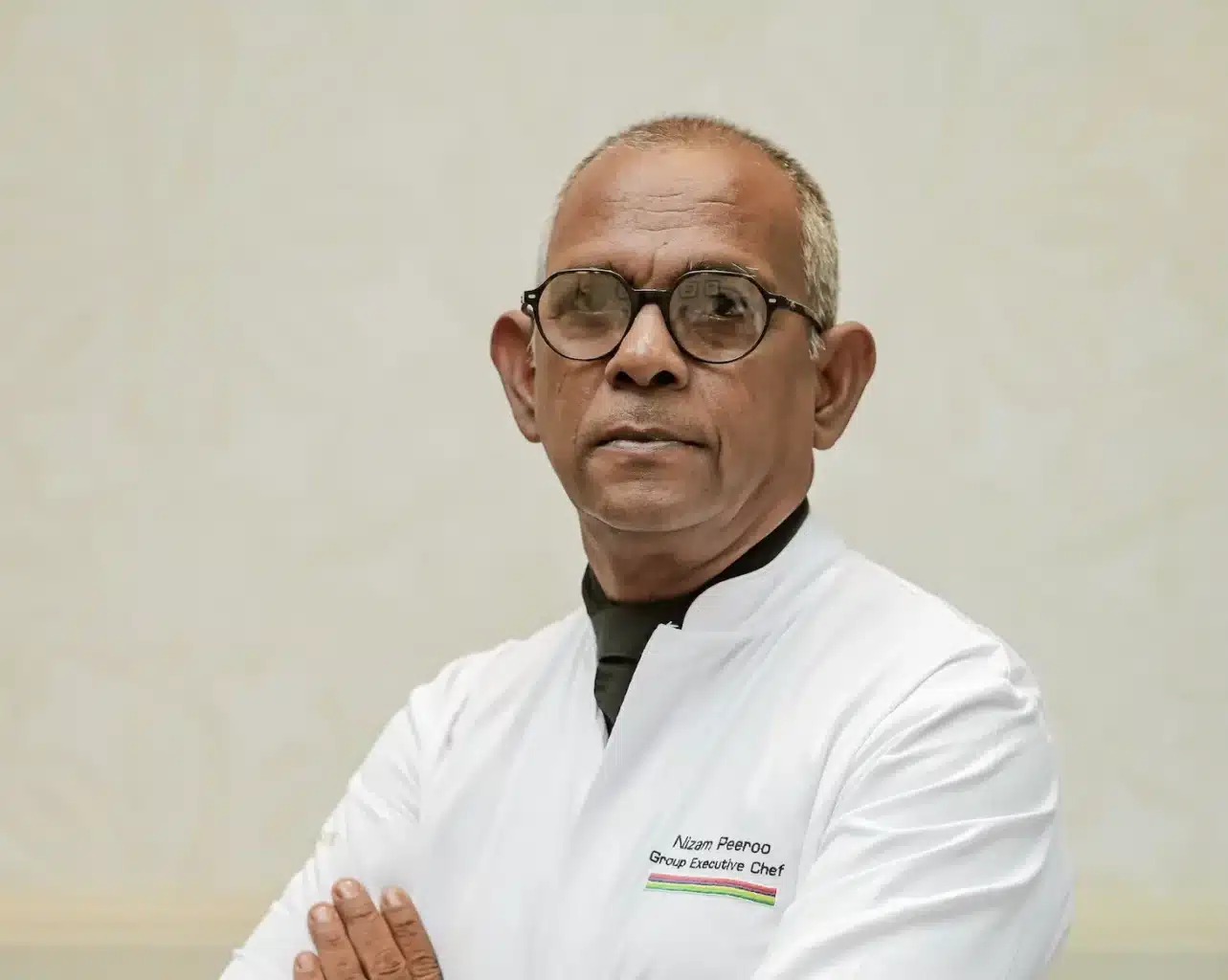
Nizam Peeroo comes from the Republic of Mauritius, an island nation east of Madagascar. He is the group executive chef for Ninety-Six Business Hotel, managing nine restaurants with cosmopolitan cuisine.
“I trained at Mauritius Hotel School for a CAP and completed studies in France in Business, Technology, and Hospitality,” he says. “I worked across France, learning French cuisine, and did a one-year training in Mumbai School, focusing on Indian cuisine. I’ve also participated in over a thousand food promotions worldwide.”
Peeroo, from a lineage of father-to-son butchers and an Indian Muslim family, was raised immersed in a cuisine abundant with mixed spices. “Creole cuisine was born during colonial times from the fusion of African, European, and South Asian food. It is the soul of our Mauritian cuisine. One dish that would represent me is roasted red snapper with a Creole spice sauce, garnished with pickled eggplant flavored with molasses.”
To balance tradition and innovation, Chef Peeroo believes pure alchemy is needed to incorporate techniques such as slow cooking or firewood cooking, along with a mix of Creole spices and molecular techniques.
“The lack of knowledge of Creole cuisine is due to colonial complexion,” he says. “Nowadays, our Creole cuisine has evolved rapidly with the advent of new techniques worldwide, and we now have Mauritian gastronomic fusion cuisine. Mauritian cuisine is a blend of a mix of spices, ingredients coming from different continents, and I strongly associate with these traditions being part of this multiracial Island.”
Chef Peeroo describes his cooking style as Creole cuisine with a twist of French technique, which he plans to showcase. “It is an honor to be part of the Creole Festival, which will gather people who are passionate about this authentic and endemic cuisine. I’ll be presenting a sample of the new Mauritian creole cuisine, which I call ‘A Taste of Mauritius.’ It is an evolution of our cuisine de grand-mère into the elaborated fusion cuisine of Mauritius over the last 40 years.”
Chef Peeroo emphasizes the importance of the Creole food festival, highlighting that Creole cuisine has a significant place in global culinary culture. “Before, it was challenging, but in the last 30 years, guests have been looking for traditional and flavored cuisine as a souvenir of the heritage cooking,” he says.
“At Kareron, we recreate a permaculture garden to source out spices and vegetables. Luckily, in Mauritius, our market has a huge variety of what we need. Nowadays, chefs around the island have recognized the rich heritage of our local cuisine, so everyone is united; we fought to make it happen.”
He hopes that festivalgoers leave with a deeper understanding of authentic Creole cuisine. “This is a genuine exploration and tasting of Creole cuisine from around the world, sharing techniques and passion with other chefs. Special thanks to the Creole Festival committee from Reunion Island for giving us a tremendous opportunity to consolidate the Creole chef brotherhood.”
Preserving Creole Culture for Younger Generations – Chef Fabien Rocheville
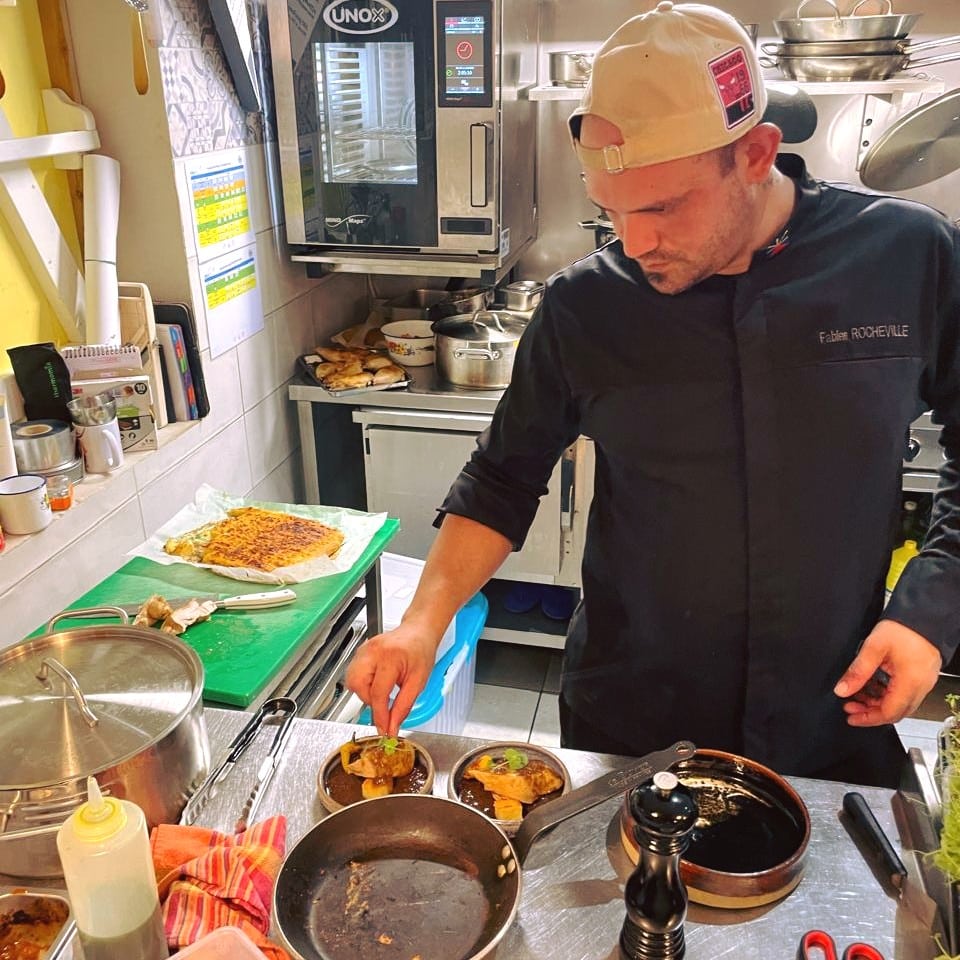
Fabien Rocheville did his apprenticeship in Indian, Tibetan and Nepalese restaurants. “I love Indian cuisine very much, and I believe it is one of the main roots of our own cuisine” He is looking forward to the event, especially because he feels that Creole is being lost on the younger generations.
He considers it the responsibility of both the older and younger generations to preserve Creole culture. “I was very lucky that my father told me about and explained to me what life was like ‘in the old days.’ As a child, I played in my uncle’s farfar; the farfar is what best represents Creole cooking.” A farfar is a traditional suspended wooden rack or loft located directly above the wood-fire stove (foyer au feu de bois) in a Creole kitchen.
“Above all, young people must be taught to preserve our culture, our Creole language and our farmers. Importing is the easy way out, and it shows a lack of respect for Réunion. Unfortunately, working exclusively with local products is neither highlighted nor considered a quality criterion in the various guides. I am alone in my category, because everyone else works with the big importers.”
Chef Rocheville believes promoting genuine cooking is essential, as it often gets lost in translation. “On social media, there are many recipes that pollute our culture, like sauce au cari (curry sauce) made with soy sauce or mushroom sauce, for example. To me, that is shameful—just as it is shameful for a so-called Creole person not to speak Creole.”
He only uses locally sourced ingredients in his cooking. “Innovation and tradition mean nothing if local products are not used. Simply working only with local ingredients would already be a major innovation for Réunion. As for me, I do not work with imported fresh products, because I would rather see a Creole person earn that money.”
For festival highlights and more, be sure to follow both Bertrand and the festival on social media, with additional highlight to follow from Cuisine Noir.