|
Getting your Trinity Audio player ready...
|
Beyond sustenance, food is a vehicle for history, identity, healing and belonging. Yet the contributions of Black women across the diaspora have often been overlooked, despite their role as innovators, preservers, and architects of culinary traditions that have shaped communities around the world.
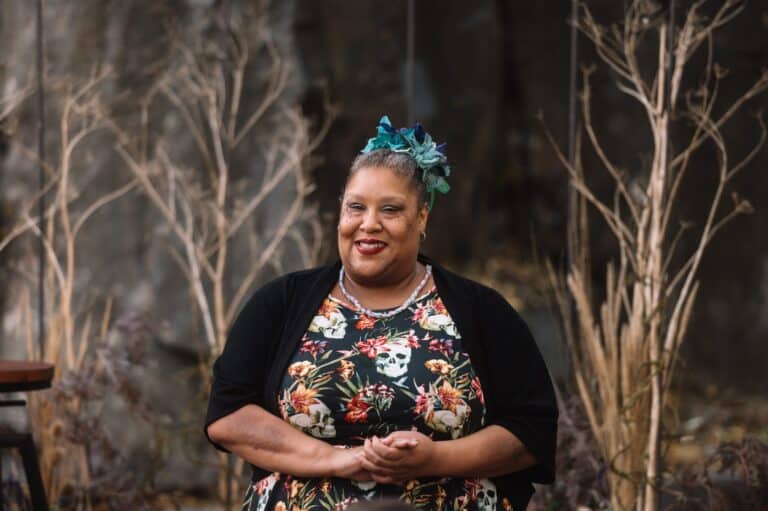
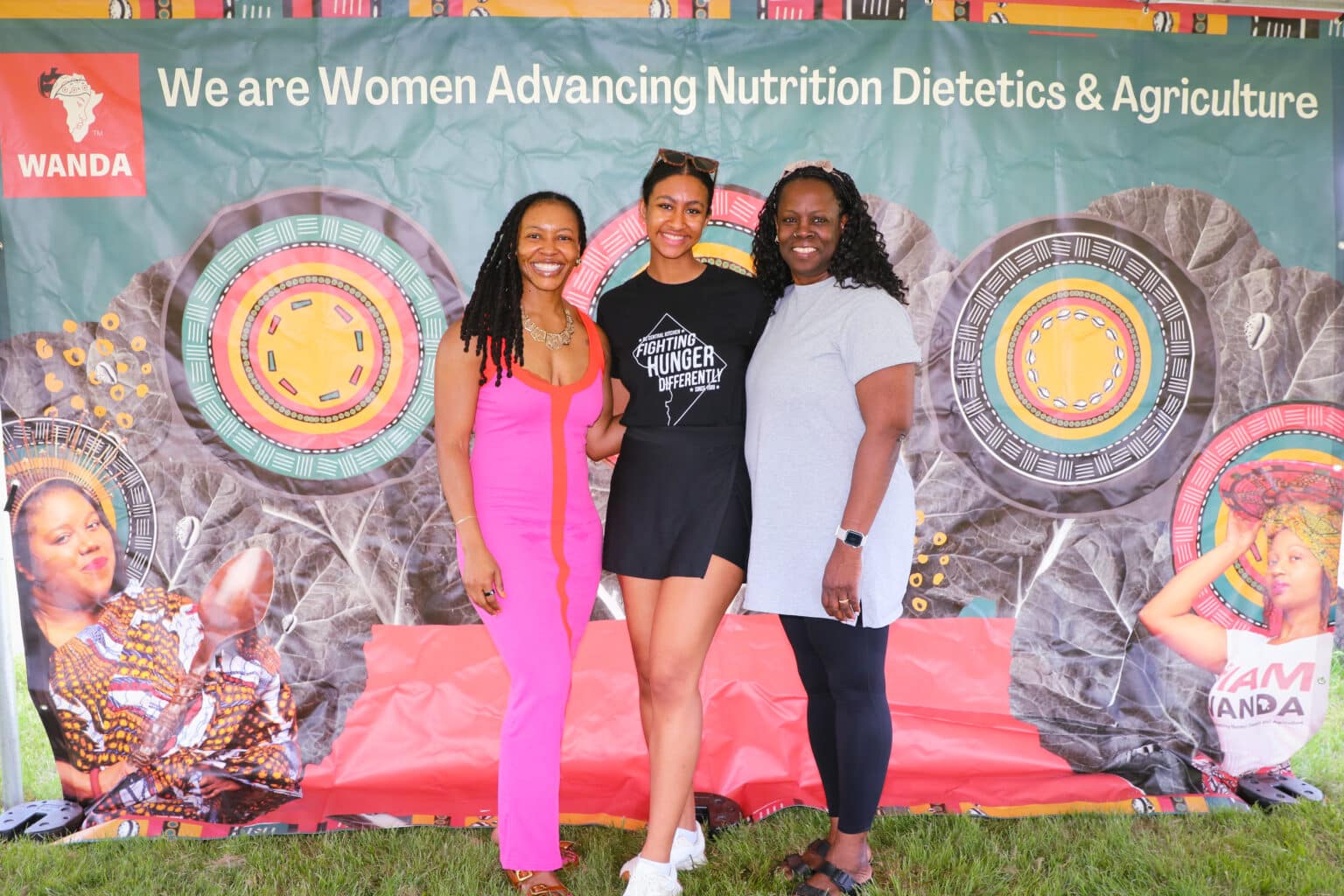
Ten years ago, public health nutritionist and communications strategist Tambra Stevenson set out to change that narrative by founding Women Advancing Nutrition, Dietetics and Agriculture (WANDA), an organization dedicated to advancing nutrition equity and cultivating a new generation of Food Sheroes.
As rates of chronic disease, maternal mortality, food insecurity, and social isolation continue to rise, WANDA’s work sits at the intersection of health, culture, community, and leadership. What began as a vision to elevate women and girls of African descent has grown into a movement spanning education, advocacy, innovation and global partnerships.
True Health Demands Nutrition Equity
Celebrating its tenth anniversary this year, WANDA has spent the last decade creating and innovating approaches to building a better food system and communities that centers the lived experiences of Black women and girls in spaces where they have often been overlooked.
“Over the last ten years, we’ve had the opportunity to test, pilot, and refine models that center Black women and girls who have been historically hidden figures in the food system,” Stevenson says.
“Food as medicine is one example. Food democracy is another. We are also leveraging technology to help build an ecosystem that connects communities across three continents. Building on my doctoral research on Black women’s belonging, we are at a time when loneliness and disconnection are increasing, we are leaning into community because community itself is medicine.”
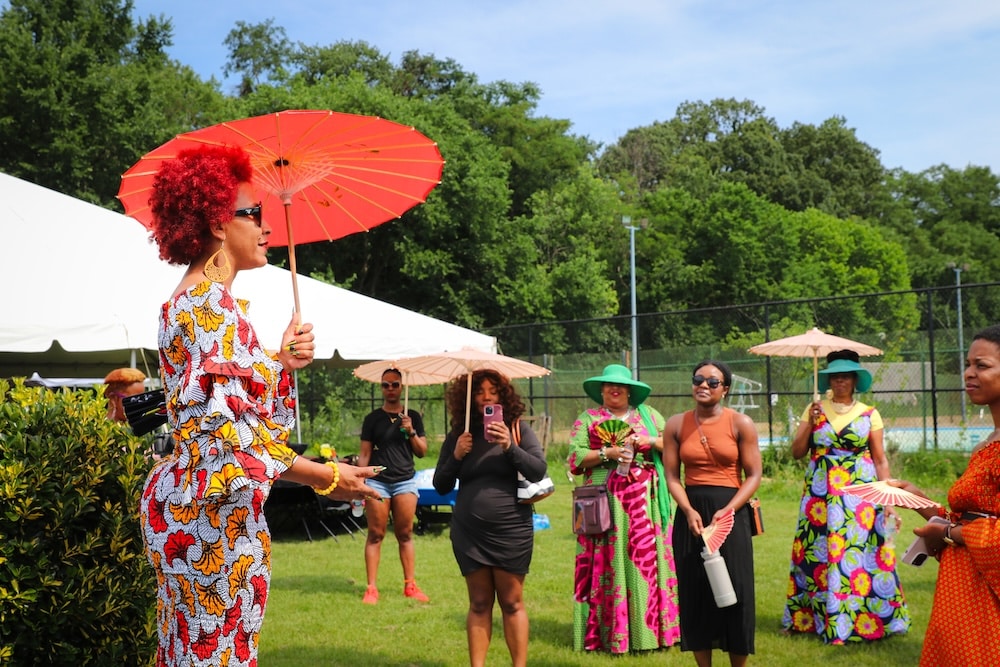
Central to WANDA’s evolution is a deliberate shift in language and philosophy. While food justice remains an important movement, Stevenson believes nutrition equity more accurately reflects the organization’s vision.
“We use the term nutrition equity to define our work more so than food justice,” she explains. “The distinction is similar to the difference between food security and nutrition security. I can give someone food, but that does not necessarily mean they are nourished, thriving, or healing. Nutrition equity asks a deeper question: What does it take for individuals and communities to truly flourish?”
For Stevenson, achieving nutrition equity requires more than policy solutions. It also requires changing the stories people tell about themselves and their relationship to food.
“The stories we tell ourselves about food, health, womanhood, culture, and belonging shape how we show up in the world,” she says. “For me, it is both a powerful and humbling opportunity to ask: What more can we do together? Technology gives us new tools to preserve our wisdom, amplify our stories, and accelerate narrative change.”
RELATED: WANDA Nonprofit Organization Champions Self-Care and Sisterhood Through Food
Expanding the Framework
As WANDA enters its second decade, the organization is expanding its focus on two interconnected priorities: education and maternal health.
One of WANDA’s signature initiatives is the WANDA Scholars Program, which invests in women pursuing degrees in agriculture, nutrition, and food systems leadership. Originally established at Oklahoma State University, the program has expanded internationally to support emerging leaders in Nigeria.
“In 2022, we established an endowment at Oklahoma State University, where I earned my degree,” Stevenson says. “We are currently working with university partners to ensure the endowment continues to support emerging leaders in nutrition and agriculture while also exploring opportunities to strengthen connections between students in Africa and the diaspora.”
Stevenson points to experiential learning opportunities as one area where additional support can make a meaningful difference.
“There are incredible global learning opportunities available to students, but many are financially out of reach,” she says. “We want to help remove barriers so that more students can access transformative experiences that prepare them to lead in a global food system.”
WANDA is also investing in maternal and child health through its NOURISH: Maternal Food is Medicine program in Washington, D.C. The initiative trains birthworkers to integrate culturally affirming nutrition and food-as-medicine practices into maternal care.
“When we look at maternal health outcomes, we know nutrition plays a critical role,” Stevenson says. “That is why we launched the Nourish Maternal Food is Medicine program. We are excited to share our findings at national conferences this year, including Black Mamas Matter Alliance and the Society for Nutrition Education and Behavior.”
The work reflects WANDA’s broader commitment to addressing health disparities through community-centered approaches that honor cultural traditions while advancing evidence-based solutions.
Juneteenth, Sisterhood, and the Future
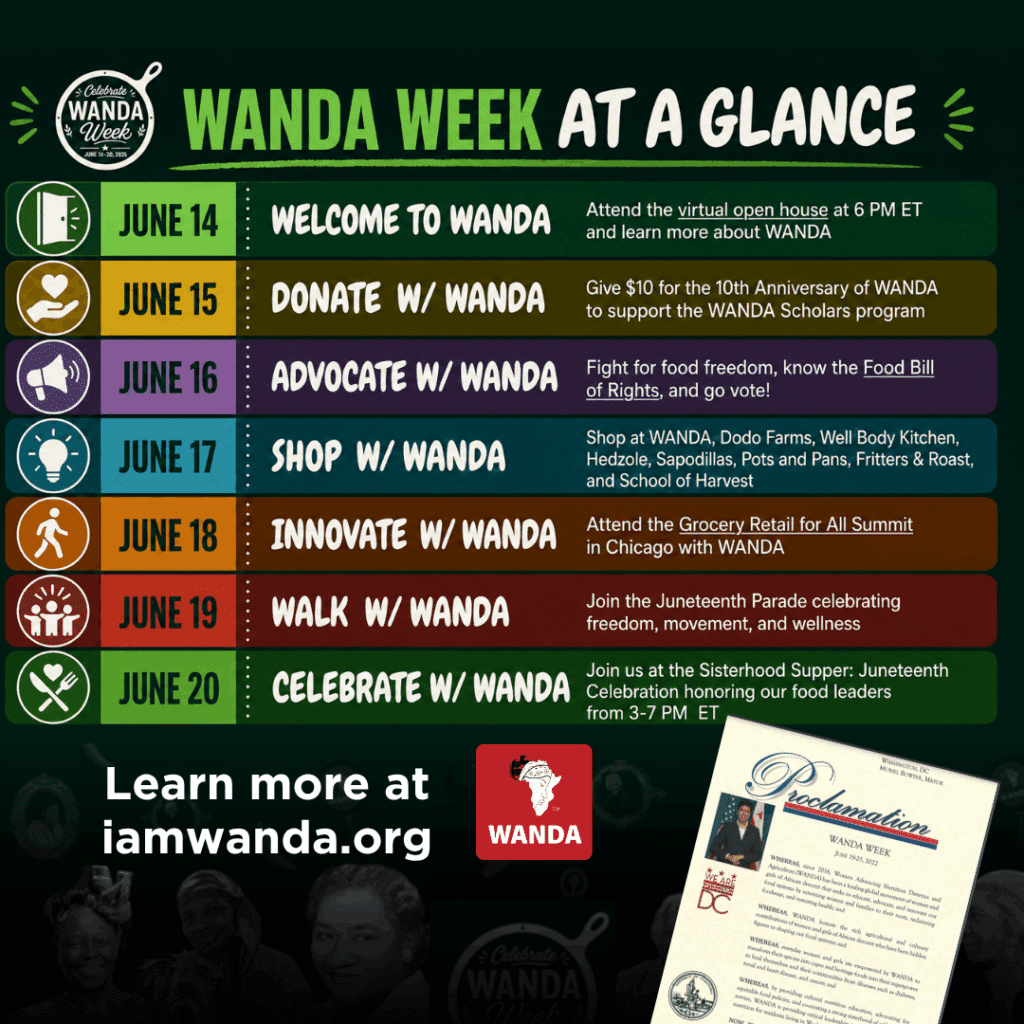
To commemorate both Juneteenth and its tenth anniversary, WANDA will host its signature Sisterhood Supper as part of WANDA Week (June 14 – 20), an annual celebration proclaimed by Washington, D.C. Mayor Muriel Bowser.
WANDA Week honors the contributions of Black women and girls, serves as a homecoming for Food Sheroes, and raises funds to support the WANDA Scholars Program. The week includes opportunities to learn, advocate, innovate, donate, and celebrate while highlighting the power of food to strengthen community.
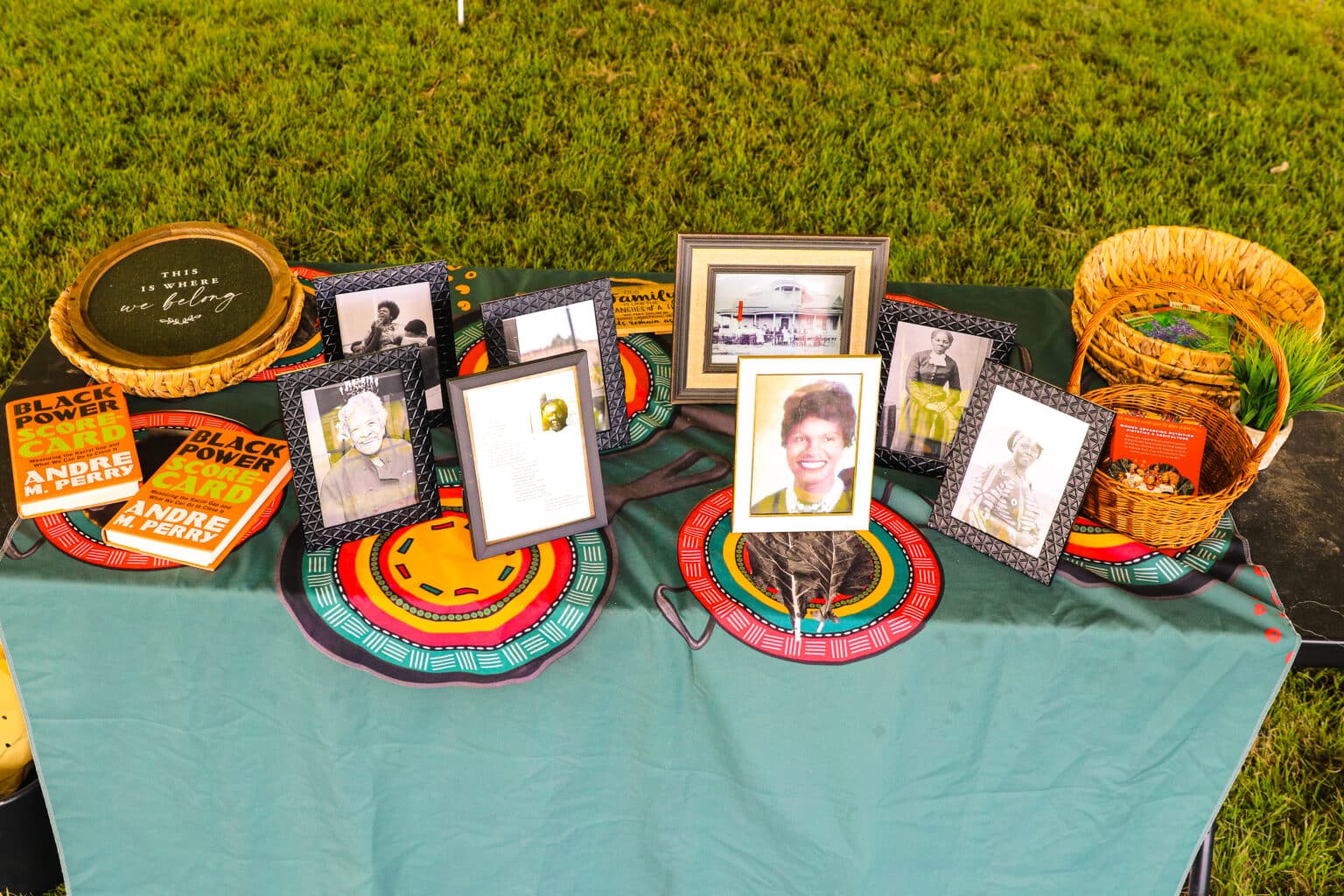
This year’s Sisterhood Supper on Saturday, June 20, will feature a menu inspired by the legendary Edna Lewis in recognition of the 50th anniversary of her book “The Taste of Country Cooking.” Long before farm-to-table became a culinary trend, Lewis elevated the traditions of rural Black Southern cooking and demonstrated that nourishment, heritage, stewardship, and seasonality are deeply interconnected.
“Edna Lewis reminds us that food is never just food,” Stevenson says. “It is history, culture, memory, and care. Her work showed us that our traditions hold tremendous wisdom, and that wisdom remains relevant today.”
For Stevenson, the gathering represents more than a meal. It is a response to a world that increasingly leaves people disconnected from one another.
“I think this moment calls us to expand the conversation, cultivate deeper connections, and double down on community in response to the political, economic, cultural, and societal shifts happening both globally and locally,” she says.
Ultimately, WANDA’s tenth anniversary is not simply a celebration of what has been accomplished. It is a recommitment to the work ahead.
“We know that loneliness, uncertainty, and the many factors that create stress and concern make community matter even more,” Stevenson says. “In that sense, Juneteenth becomes more than a celebration of freedom. It becomes an opportunity to recommit to one another, reclaim spaces where we belong, and imagine the healthier, more equitable future we are building together.”
Follow WANDA on social media for WANDA Week highlights and to meet Food Sheroes and WANDA Scholars. To attend Saturday’s Sisterhood Supper, go online for more details and tickets.