|
Getting your Trinity Audio player ready...
|
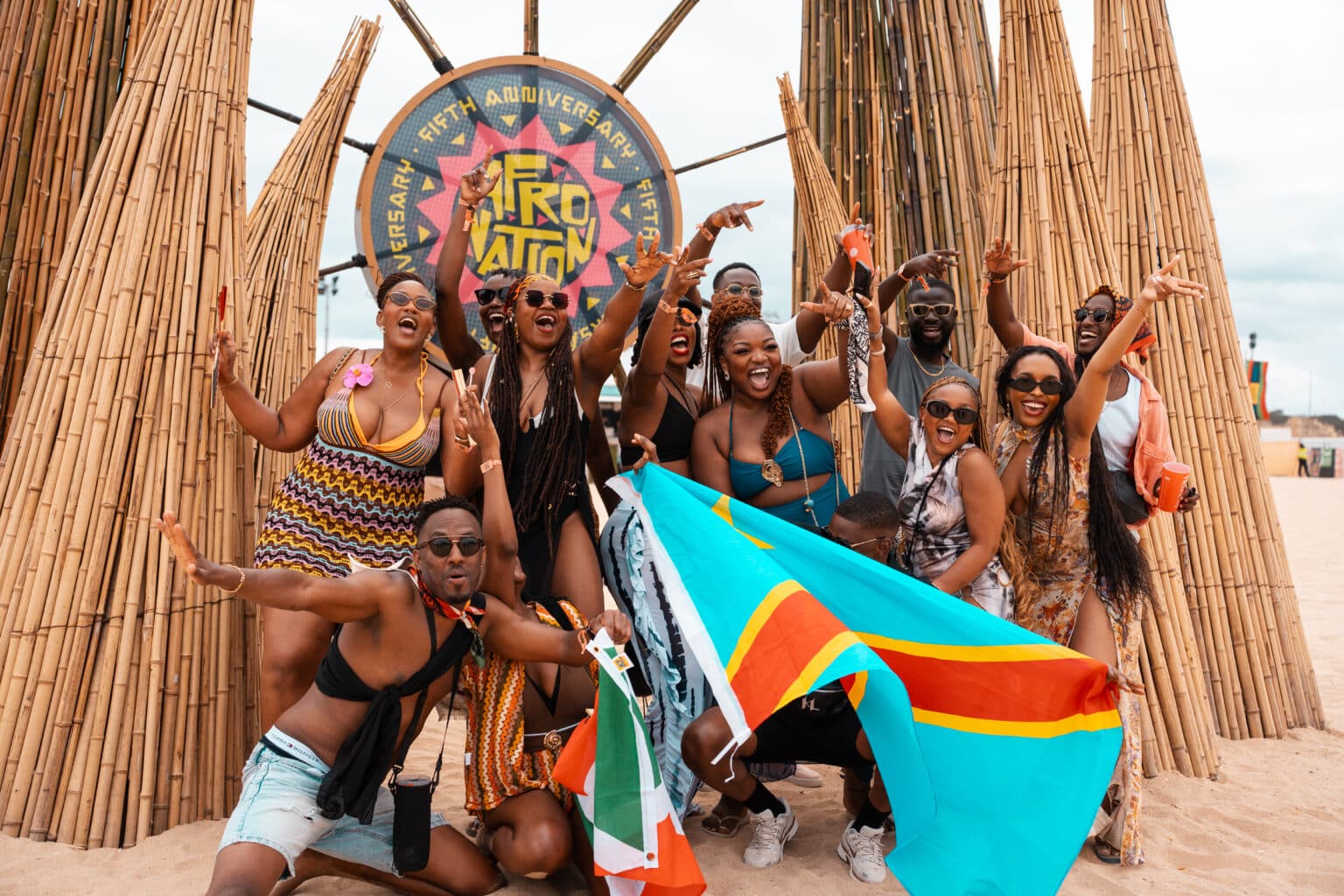
When people picture a Euro summer, they usually think Ibiza beach clubs, French wine vineyards, and Positano’s postcard-worthy coastlines. For the Black diaspora, the season starts somewhere else: Afro Nation Portugal.
Set to return in the Algarve from July 3–5, this year’s sold-out festival will welcome nearly 40,000 attendees each day. What began in 2019 as a gathering rooted in diasporic music, fashion, dance, and unapologetic Black joy has since grown into a global cultural phenomenon, drawing travelers from more than 180 countries. Furthermore, this year’s lineup brings together some of the biggest names in music, including Burna Boy, Wizkid, Asake, Tyla, Uncle Waffles, Gunna and Kehlani.
But Afro Nation Portugal doesn’t stop at the stage. The experience stretches well beyond the performances, with food vendors that hold their own against the headliners. Afro Nation Portugal’s culinary offerings serve up flavors, traditions, and comfort foods that connect Black communities across the diaspora. And between sets, festivalgoers trade the usual letdown of festival fare—think questionable hot dogs and stale nachos—for dishes layered with generations of technique, spice and cultural pride.
That energy runs throughout Praia da Rocha, where Black food culture takes center stage across the festival grounds. From aromatic Nigerian jollof rice to inventive takes on Jamaican classics and more, the culinary scene turns every break between sets into a destination in its own right.
Below are Black-owned food vendors worth lining up for throughout Afro Nation Portugal’s three-day takeover.
Afro Nation Portugal Food Guide: What to Eat
Abarka
Abarka operates as a cooperative under the nonprofit Dunia Kato, which supports migrants and systemically excluded people. The collective launched in 2020 with a focus on food as both livelihood and cultural expression.
“We chose this legal structure because it best reflects our vision of the social and solidarity economy, a model that places people at the center rather than capital,” a member of the cooperative told me. “It represents an alternative to the capitalist system, which is focused on unlimited growth in production and consumption regardless of its social and environmental consequences.”
Last year at the festival, Abarka drew attention with their menu that spotlighted dishes like akara, black-eyed pea fritters; alloco, fried sweet plantains; and thiébou yapp, a Senegalese one-pot dish built around tender, stewed meat and aromatic grains.
This year, the collective is excited to debut their chickenloco featuring marinated fried chicken served with a bright mango sauce. “We would also like to highlight our mafé, a traditional peanut stew made with vegetables and beef (also available in a vegan version),” says the member. “It can be served with a variety of sides, such as white rice, millet couscous, fufu, and many others. This dish is particularly meaningful to us because it reflects the traditional culinary heritage that we aim to represent and celebrate.”
To learn more about Abarka, visit them on Instagram and on their website.
Jollof Mama
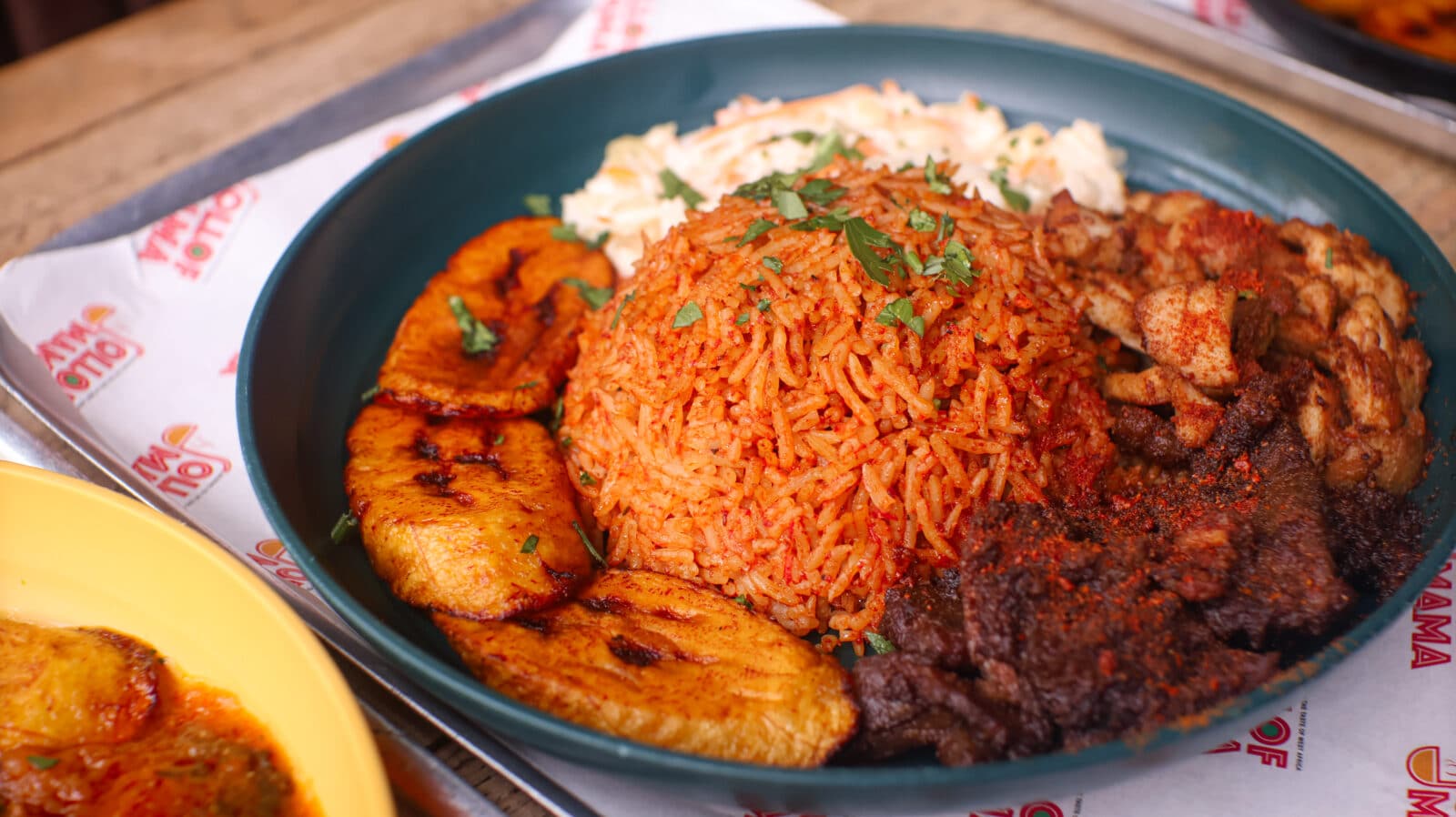
I connected with Tieyan Eweka-Olorunfemi, co-founder of the London-based Nigerian restaurant Jollof Mama, to talk about the brand’s return to the festival. “We’re passionate ambassadors of Nigerian food and culture…as one of London’s leading African street food brands, our mission is to introduce authentic Nigerian flavors to as many people as possible,” she says. Jollof Mama has returned to Afro Nation for the past five years and plans to show up again this July with the same energy.
This year, the team brings a festival-goer favorite: beef suya, a Nigerian street-food staple made with grilled meat coated in yaji, a spice blend that typically includes ground peanuts (kuli kuli), cayenne pepper, ginger, paprika, onion powder and other seasonings.
Eweka-Olorunfemi points to the dish’s growing fanbase on the festival circuit. “Our beef suya has become one of the standout dishes that people return for year after year,” she says. “Afro Nation is a celebration of African culture on a global stage, making it the perfect place to showcase one of Nigeria’s most iconic street foods.”
To learn more about Jollof Mama, visit them on Instagram and Facebook.
Patty Planet
I caught up with Carl Kieffer, owner of Patty Planet in London, to talk about the brand’s festival debut and the buzz around its viral PAZZA—a Caribbean-inspired pizza built on a flaky Jamaican patty-style turmeric suet dough crust, topped with melty cheese and toppings like jerk chicken or tender oxtail.
Kieffer describes the concept as a mash-up that pushes familiar flavors into new territory. “Using flaky patty pastry as a pizza crust with toppings like jerk chicken and oxtail creates something people haven’t seen before,” he says.
Patty Planet keeps Jamaican flavors at its core while still playing with whimsical, unexpected food fusions. That balance of tradition and experimentation shapes how the brand approaches festivals like Afro Nation Portugal. Kieffer points to the crowd as the ideal group for these types of offerings.
“Afro Nation feels like the perfect audience because there’s already a strong connection to the culture behind the food,” he says. “For us, PAZZA represents Caribbean creativity and innovation…It grabs attention visually, but the flavor is what people remember.”
To learn more about Patty Planet, visit them on Instagram, TikTok, and on their website.
Raps
When Tinie Tempah steps away from the studio, he turns his attention to food, building concepts that pull from his Nigerian heritage, London’s Jamaican influences, and the chicken-shop culture of South East side. That mix shows up most clearly in his wrap lineup, where familiar flavors meet a street-food comfort.
Raps headlined at last year’s Afro Nation Portugal with a menu featuring three signature wraps, each built around their buttermilk brined fried chicken and layered with bold sauces and textures. The Unruly combined jerk fried chicken, fried plantain, jerk BBQ sauce, and lime mayo slaw. The African Giant paired buttermilk fried chicken with jollof salsa, fried plantain, lettuce, tomato, and mayo and the Buffalo Soulja leaned into heat and tang with buttermilk fried chicken, buffalo sauce, blue cheese, house pickles, tomato, and lettuce.
If you’re moving between sets and need something easy to grab, swing by their stall for a handheld that you can take on-the-go.
To learn more about Raps, visit them on Instagram and on their website.
Rhythm & Roots
What’s Afro Nation Portugal without jollof on the menu? I spoke with Adaeze Anyibama, founder of Rhythm & Roots, about the brand’s presence at the festival this year and its goal of bringing the diaspora closer to “the rich culinary traditions of Africa.”
This year, Rhythm & Roots plans to serve up plates of Nigerian jollof rice paired with fried plantain and a choice of roasted chicken or beef suya. Anyibama highlights jollof’s cultural weight across the diaspora. “Jollof rice is an iconic West African dish that sparks conversation, pride, and celebration wherever it is served,” she says. “Combined with our expertly seasoned suya and sweet fried plantains, it perfectly represents the bold flavors and communal spirit that Rhythm & Roots aims to share at Afro Nation.”
At the festival, Rhythm & Roots intends on introducing asun, a smoky, spicy goat meat dish known for its tender texture and aromatic heat. Anyibama frames it as part of a broader mission. “We feel passionate about sharing the taste of home with the African diaspora and introducing new audiences to the depth and creativity of African gastronomy.”
To learn more about Rhythm & Roots, visit them on Instagram and on their website.
Yaji Lisbon
“At Yaji Lisbon, we view food as more than just a meal; it is a cultural experience, a bridge between communities and a celebration of identity,” says Judith Ohanma, one of the three sisters behind the restaurant, which opened in 2023. The group returns to Afro Nation Portugal this year ready to spotlight Nigerian cuisine once again.
For this year’s festival, Yaji Lisbon brings plates of Nigerian jollof rice and suya back to the grounds. Ohanma describes the dish as a direct link to street food culture and shared nostalgia across the diaspora.
“It is flavorful, memorable, and deeply connected to our heritage. At Afro Nation, where people gather from across Africa and the diaspora, we believe this dish serves as both a taste of home for many and an exciting introduction to Nigerian cuisine for others.”
To learn more about Yaji Lisbon, visit them on Instagram and on their website.