|
Getting your Trinity Audio player ready...
|
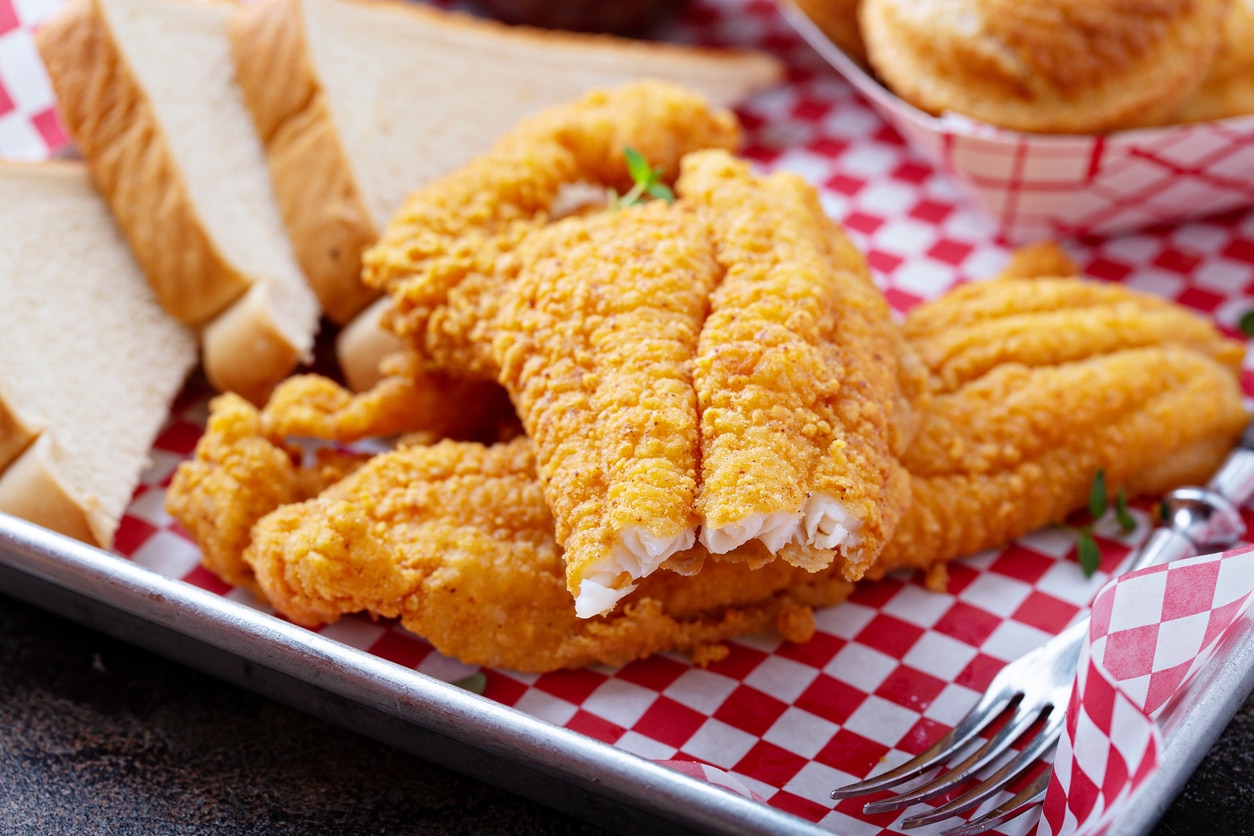
There’s nothing like a good fish fry! Dancing, playing cards, telling stories and crunching into perfectly seasoned pieces of fried fish with all the sauces and sides. “Though we are really into crabs here in Maryland, I don’t think I ever met a piece of fried fish that I didn’t want to eat,” laughs Tiara Darnell, former owner of Blaxicocina in Mexico City. “I think a fish fry is one of the Blackest experiences that I can have, and frying fish makes me feel connected to my Southern heritage,” Darnell admits.
“When you drop the fish into the oil, everything in the background kind of gets quiet and you’re just listening to the bubbling of the oil as it goes from a sizzle to a hard boil,” adds executive chef Sean Streete of Lita in Walnut Creek, California. “It reminds me of the days when my mom fried escovitch fish,” says the Jamaican American.
“Growing up in the Bronx, New York, instead of a more rural place, getting fish was the only opportunity we had to be involved with the sourcing of our food by choosing from live or frozen fish at the neighborhood fish market,” says social media food influencer Kahja Elliott of Kay in the Bay.
Poet and foodie Sierra Fisher adds, “Fish frys for Black people can signal a type of celebration of community and can create a kind of instant family when you’re eating the fish together in real time.”
History of the Black Fish Fry
The earliest known recipe for battered, deep-fried fish appeared in a 12th-century Moorish cookbook, thought to have been written in what is now Spain or Portugal. However, the history of the fish fry in African American communities started during enslavement.
Toward the end of the plantation work day, many slave owners allowed enslaved workers to go fishing for themselves. Fishing was one of the few things enslaved people could do with little interference from their slaveholders and at the end of the work week, they hosted a fish fry for the whole community. That tradition was carried on into emancipation with even more reasons to host this social gathering, from card parties and cookouts to graduations and family visits.
“My mother is from Detroit, so we spent a lot of summers going back and forth to Michigan,” notes Fisher, who lives in Rockville, Maryland. “When my uncle knew we were coming to visit, he would always do a fish fry with fried catfish and fried shrimp.” She continues, “It was a big deal, because I grew up Seventh Day Adventist and they don’t do shellfish, but we were allowed this once-a-year exception.”
Fisher says her uncle really went out of his way to make a good fish fry for their visit. “He would clean the fish the day before, he would make sure he got his batter right and by the time we got there, the house smelled like fried fish and corn bread. It’s such a strong memory and I still yearn for those times,” she reminisces.
Streete says the memories he has of fish fry meals in Jamaica are not as plentiful today because of tourism development. “When I was growing up, it was easier to buy snapper, kingfish or lobster from a fisherman who was walking up the road selling his catch,” says the chef, who spent most of his career at Michelin Star restaurants. “But it’s harder now because, over the past 30 years, developments made for tourists make their beaches private, so a lot of the local Jamaican people don’t have access to the waterways.”
He continues, “As a result, you don’t see the fishermen walking up and down the freeway with their catch anymore, because where they can fish has been drastically reduced.”
Friday Fish Fry and Church Fundraisers
During the Great Migration, as Black families moved from the South to northern cities, the tradition of having a fish fry on a Saturday night changed to the Friday fish fry. Some say it was probably influenced by Irish and Italian Catholics and their custom of eating fish on Fridays.
That custom influenced better seafood prices and fish availability on that day, which made it even more favorable for African Americans to eat fried fish on Fridays. In the Caribbean, there are many places that also do fried fish on Fridays, like the famous Oistins Fish Fry in Barbados, which is especially packed on Fridays.
Back in the U.S., the Black church is also known for its tradition of fish fry fundraisers. “At my grandmother’s Seventh Day Adventist church, fish – not shellfish – was one of the only proteins they would eat. And when they did have fish frys, it was always on Friday nights,” notes Fisher.
“Around the time when I was 11 years old, my mother got born again, so we were in the church heavily,” Elliott shares. “That was my first exposure to fish frys as a means of community celebration and leveraged as a form of money making,” the Oakland resident admits.
“It was a low-pressure way to fundraise for something like the building fund, because once people start smelling the aroma of the fish frying, it sells itself,” she laughs.
RELATED: Fried Fish and Spaghetti: A Black Tradition Cooked With a Side of History
Fried Fish in the African Diaspora
The type of fish fried by each culture depends on what’s available in the region. Catfish are abundant in the Mississippi Delta region, so that became the fish of choice. In New Orleans, Louisiana, shellfish like fried shrimp and fried oysters are popular, especially in their Po’boys. In Atlanta, Georgia, fried whiting, catfish and tilapia are popular. Other popular fish to fry include porgy, perch, crocker, cod, bream, bass, haddock, flounder, trout and snapper.
In the Caribbean, the national entree and side in Barbados is fried flying fish and cou cou – a porridge-like dish made mostly of cornmeal and okra, with deep roots in West Africa. In Jamaica, the popular fish is escovitch, made with snapper. It’s served with the head on and made with a pickling technique called escabeche, in which fried fish is picked in aromatic vinegar. The technique was created by the Moors and brought to the island by Spanish Jews. Escovitch is the fried fish that Streete grew up on during his summers spent with his father’s side of the family in Jamaica.
“We use a lot of snapper in Jamaica, but we also use kingfish, which has a similar texture to snapper,” shares Streete, who graduated from Le Cordon Bleu in Miami. “When making escovitch fish, we start out by cleaning out all the crevices of the fish with vinegar and fresh lime. Then we’ll start with our base, which is green seasoning with fresh cilantro, thyme and scallion,” he explains.
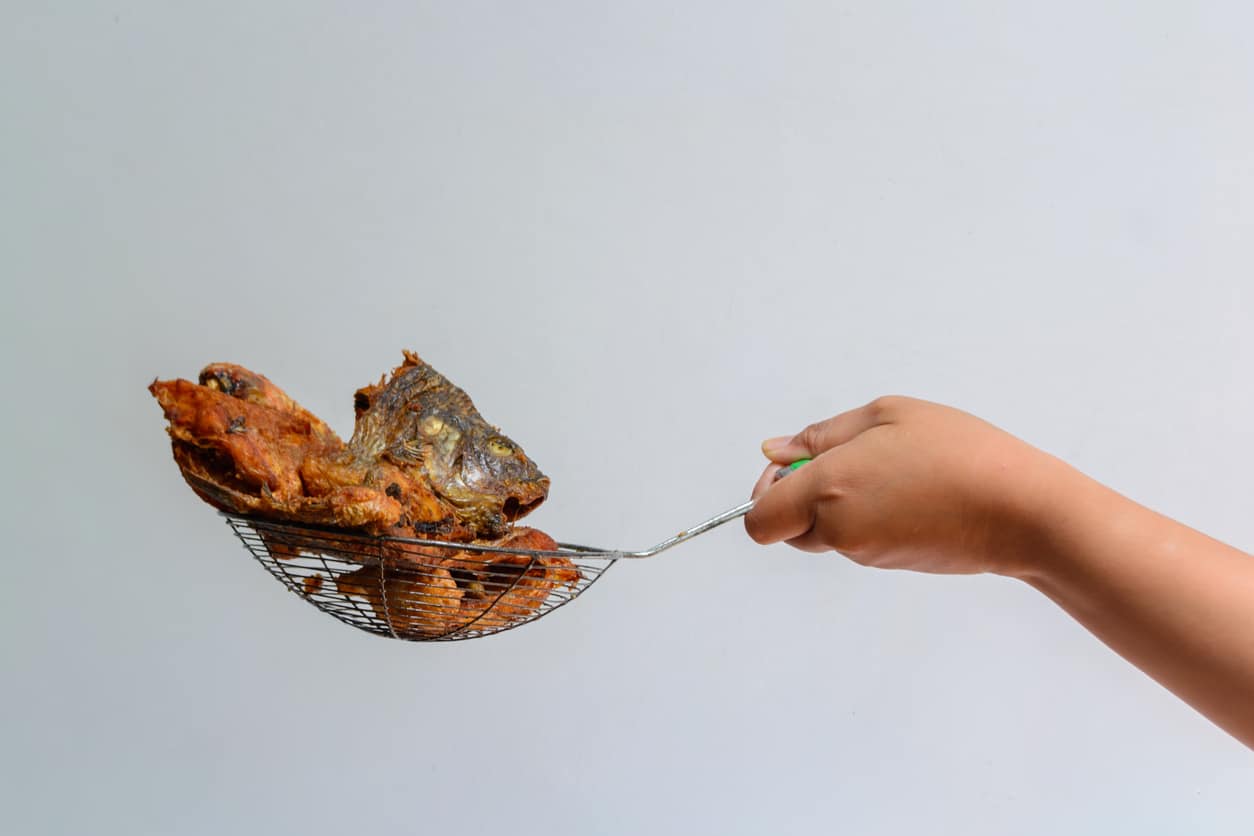
“Then we add scotch bonnet peppers, which is going to give it its flavor profile. When allspice is added, some people grind it down and put it into the marinade, or put it in the vinegar portion of the escovitch, which is the sauce that pickles or preserves the fish.” He continues, “The vinegar consists of the scotch bonnet peppers, carrots, thyme and the allspice. We may do a light dusting of flour – not the cornmeal dredge like American-style, though that’s good too.”
Then it’s cooked in a shallow fry, where half the fish is covered in oil and he has to flip it to cook the other side. “We also get some of the flash frying technique from the Chinese, who have been in Jamaica for more than a century,” adds Streete. “And you’re touching that grease mentally, thinking ‘Is that grease hot enough?’ And if it isn’t, you need to pull that fish out right away and wait until it’s at the right temperature.”
When the fish is finished frying, the vinegar-based liquid is poured over the fish and it’s ready to eat. Streete notes, “Since we didn’t always have consistent refrigeration for holding our proteins, the vinegar preserves the protein so you can eat it fresh or at a later time. The way that a lot of Jamaican dishes are prepared is based on survival and food preservation.”
Today, at his restaurant Lita, Streete mixes his Jamaican and Trinidadian heritages to put a twist on the traditional escovitch. “I add more pimento and black pepper to my dredge, which is different from the Jamaican way,” he notes. “My nearly two-pound escovitch can feed four people and during this past Mother’s Day weekend, we sold at least 24 of them. People always call ahead to ask, ‘Do you have the fish,’” he laughs.
A fish dish that’s popular as a street food in Sierra Leone, West Africa is fried fish balls. They’re made with a choice of haddock, halibut, tilapia or cod fish minced with onions, potatoes, fresh and powdered seasonings and breadcrumbs and fried like hushpuppies.
Tacos are a street food in Mexico as well as the United States, but Darnell wanted to give her patrons a twist on the Mexican version. “We did a fish taco with the style of fried fish that you would find at any Black church in the U.S.,” she explains.
“The fish we used was huachinango, which is the closest thing Mexico has to catfish, and our tacos were much bigger than the usual Mexican tacos, because we used big pieces of fish, like we would at a Black fish fry. It was my way of bringing both cultures to the table with one dish and the tacos were a big hit,” says Darnell with pride.
Favorite Fish Fry Seasonings, Sauces and Sides
When it comes to fried fish, each family or region has its must-haves when it comes to fish fry seasonings, sauces and sides. For example, a Louisiana favorite for seasoning is Louisiana Fish Fry and popular hot sauces are Tabasco and Crystal, all made in the state. Crystal hot sauce is also popular along the East Coast.
“When we visited my family in Detroit, my uncle would always have French fries and cole slaw with his fried fish and sometimes mac and cheese,” shares Fisher. “And there was always Tabasco and Louisiana Red for hot sauce, but he’d make his own tartar sauce.”
“In Jamaica, we usually eat escovitch fish with fried bammy, which is fried cassava,” notes Streete. “We might also have whole roasted corn and of course you have to have the pepper sauce.”
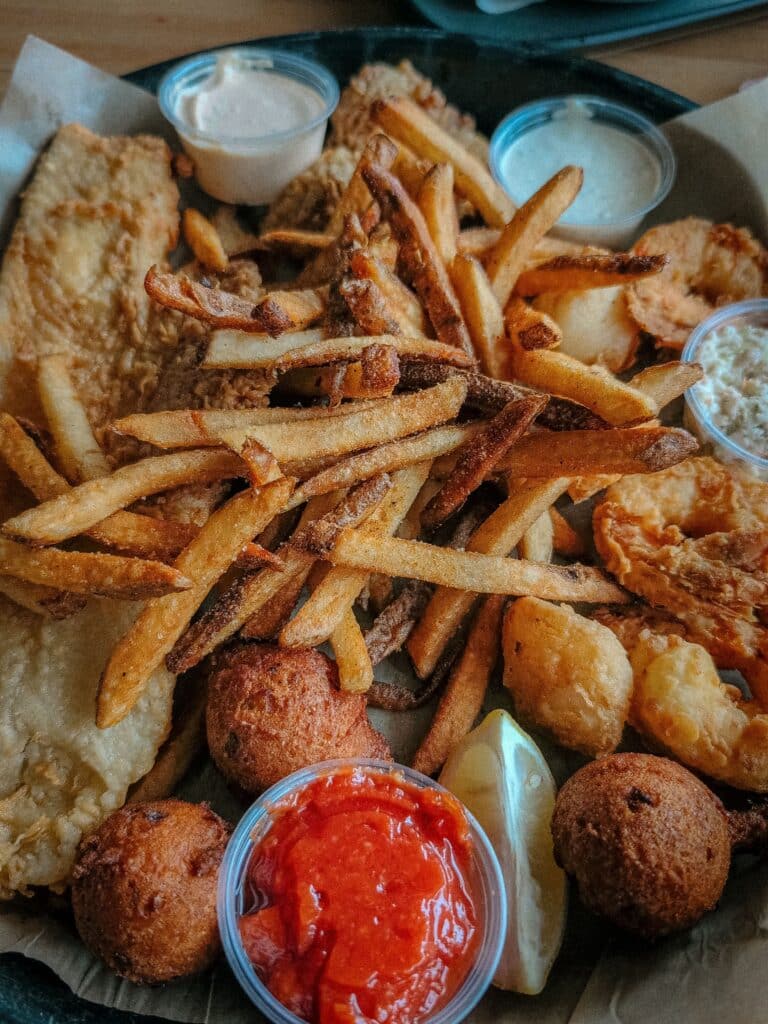
“I always have to have Old Bay seasoning, because to me it has that right combination that sets off fish and seafood,” offers Elliott. “I usually like to pair my fried fish with malt vinegar and those rustic, hand-cut, skin-on fries lend themselves well to vinegar. But in cases where that’s not available, a good corn-on-the-cob, cole slaw and hushpuppies are always welcomed,” she smiles.
Cole slaw or corn on the cob, and hushpuppies or slices of white bread are very popular sides at a fish fry in the U.S. It’s said that inexpensive white bread became popular in order to help any stray bones go down and not get stuck in the throat.
But Darnell had a hard time finding the things she was used to in the U.S., when she decided to have a traditional Black fish fry for her Soul Food Sunday in Mexico City – a precursor to her restaurant, Blaxicocina.
“It was a really great opportunity to share some of Black American culture with Black and non-Black Mexicans, along with Black American expats and visitors,” says the world traveler, who’s been to 35 countries.
She explains, “It was challenging to have fried fish on the menu because Zataran’s Fish Fry mix was an expensive ingredient to order and it was hard to rely on somebody coming here from the U.S. to bring it to me. So I had to create my own mix and I couldn’t find anything with the consistency of corn meal that we need to make the fish fry mix, cornbread, grits and hushpuppies.”
Eventually, Darnell tried three different varieties of corn and found that a softer yellow corn blended well in the Vitamix and gave her the consistency she was looking for. “It was a process of getting the right corn, getting the right consistency on the grind and then figuring out the ratio of seasonings to make it taste as close to what I’d be looking for as a Black American coming to a fish fry that’s supposed to be representing the U.S. Black American culture here in Mexico City,” she emphasized.
However, she didn’t have any problems getting the sides for her fried fish tacos, which she introduced on the menu at Blaxicocina. “We added a tomato pico de gallo and I made an Old Bay aioli and a corn relish, to be reminiscent of the summer corn I had while growing up,” Darnell explains.
“And, of course, we had Frank’s Red Hot sauce on the table, which was the hot sauce we could get in Mexico.” The spice company McCormick saw a story about Darnell’s restaurant and about her mother bringing her Old Bay seasoning from the United States, so they started sending her five-gallon jugs of the spice. “And now, even though my restaurant is now closed, I still have like a lifetime supply of Old Bay,” laughs the former Army brat, who now lives in Cali, Columbia, South America.
Whether it’s the culturally traditional ways of frying fish or new ways with a modern twist, fish frys are a tradition that’s here to stay. “It’s important to pass down our fish fry traditions to the next generation. I may put my own twist on my uncle’s recipe, but I’m still honoring him by passing down that feeling of family fellowship that he gave us over the years,” Fisher says with emotion.
Darnell notes, “We have to have a record of our culinary history, like fish frys, to show our contributions to the U.S. and the world, so it’s important to be our own griots and culinary historians.” Elliott adds, “The preservation of the fish fry in Black foodways is to preserve the aspect of community. And it’s a great invitation for people to slow down and have a little bit more of a mindful eating experience.”
Finally, Streete emphasizes, “Fish frys reinforce community and force us to connect with each other. Our guards come down and we remember that we’re all one people, throughout the Black diaspora.”