|
Getting your Trinity Audio player ready...
|
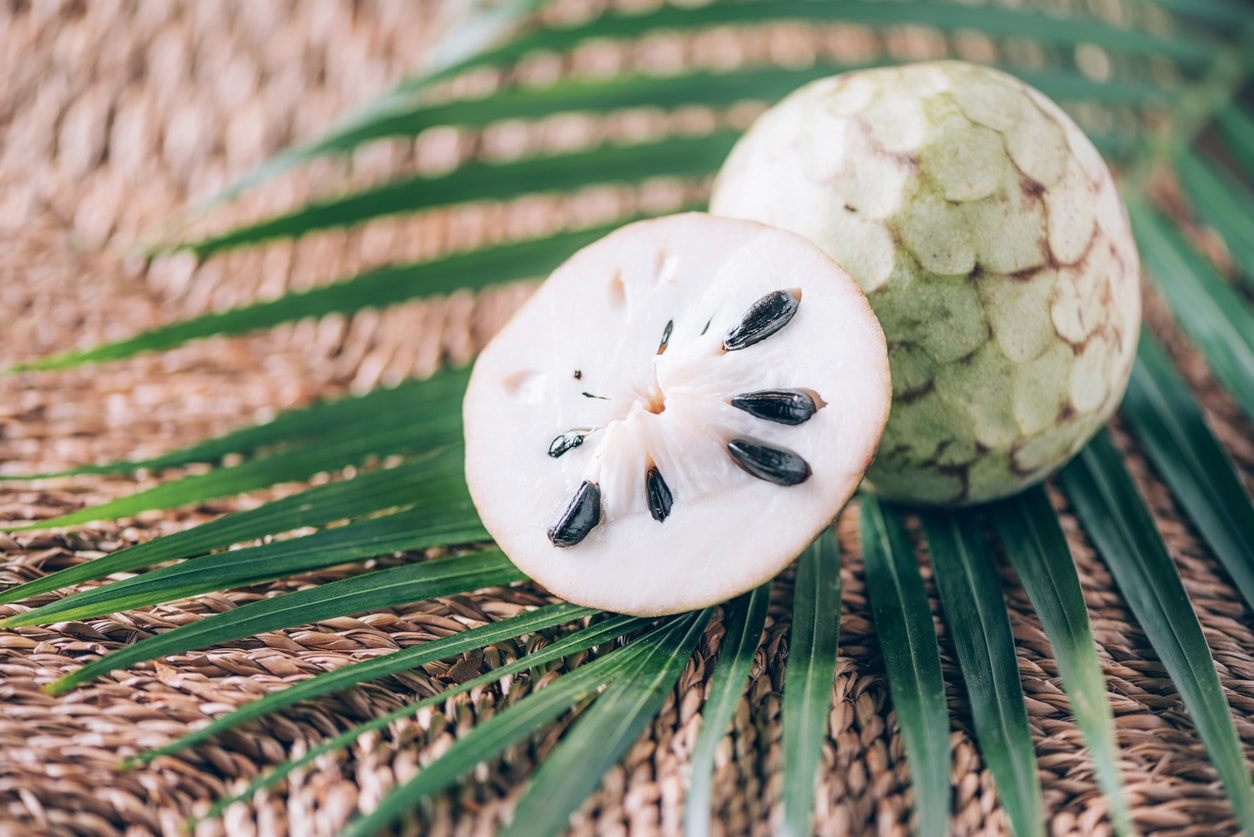
Soursop has no problem attracting attention. From the soft, curved spikes of its green skin and its creamy sweet-tangy taste to the various names it goes by, the oblong-shaped soursop fruit entices us to unravel its culinary mysteries and benefits. But in order to do that, we first have to find out where it came from.
To help guide us on the quest to better understand the origin and complexities of soursop fruit—and its role in our culinary culture—we turn to Ecuadorian food sovereignty researcher Diana Ante Padilla, Haitian wellness brand founder Arielle St. Cloud and culinary herbalist/researcher Rebecca Fils-Aime.
MEET OUR EXPERTS
- Diana Ante Padilla is a researcher whose work spotlights food sovereignty in urban contexts in Ecuador with a focus on recovering ancestral knowledge, agroecology and community resilience.
- Arielle St. Cloud is a storyteller and the founder of Souf Collectif, a Haitian-inspired bath and wellness brand At Ease ATL boutique, a pop-up sponsored by the City of Atlanta for the World Cup.
- Rebecca Fils-Aime is a culinary herbalist, researcher, cook and writer who practices at the intersection of food, kitchen remedies for health and Black culinary history.
The Origin of Soursop Fruit
“Soursop is native to the tropical regions of the Americas. Research points mainly to the Caribbean, Central America and northern South America as its place of origin,” details Padilla, a researcher in urban food sovereignty in urban and agroecology based in Esmeraldas, Ecuador.
“With colonial maritime routes, the fruit later spread to Africa and Asia, where it adapted easily to tropical climates. Today, soursop is part of the culinary traditions across the Caribbean, Brazil, the Philippines, West Africa and Southeast Asia.”
As its seeds were sown far and wide on the planet, it’s not a surprise to find soursop fruit is known by several names. The Encyclopedia Britannica cites soursop (Annona muricata) as part of the Custard Apple family—a broad term used to refer to soursop fruit in Australia and parts of the Caribbean.
But depending on where it sprouts, the plant’s name shifts. In most Spanish-speaking regions it’s called guanábana/guanabano. The widely used name in Portuguese (Brazil) is graviola while its most common name in the Philippines is guyabano. Corossol is how it’s referred to primarily in French-speaking countries and the Caribbean while paw paw, or Brazilian paw paw, is interchangeably used in parts of the English-speaking world.
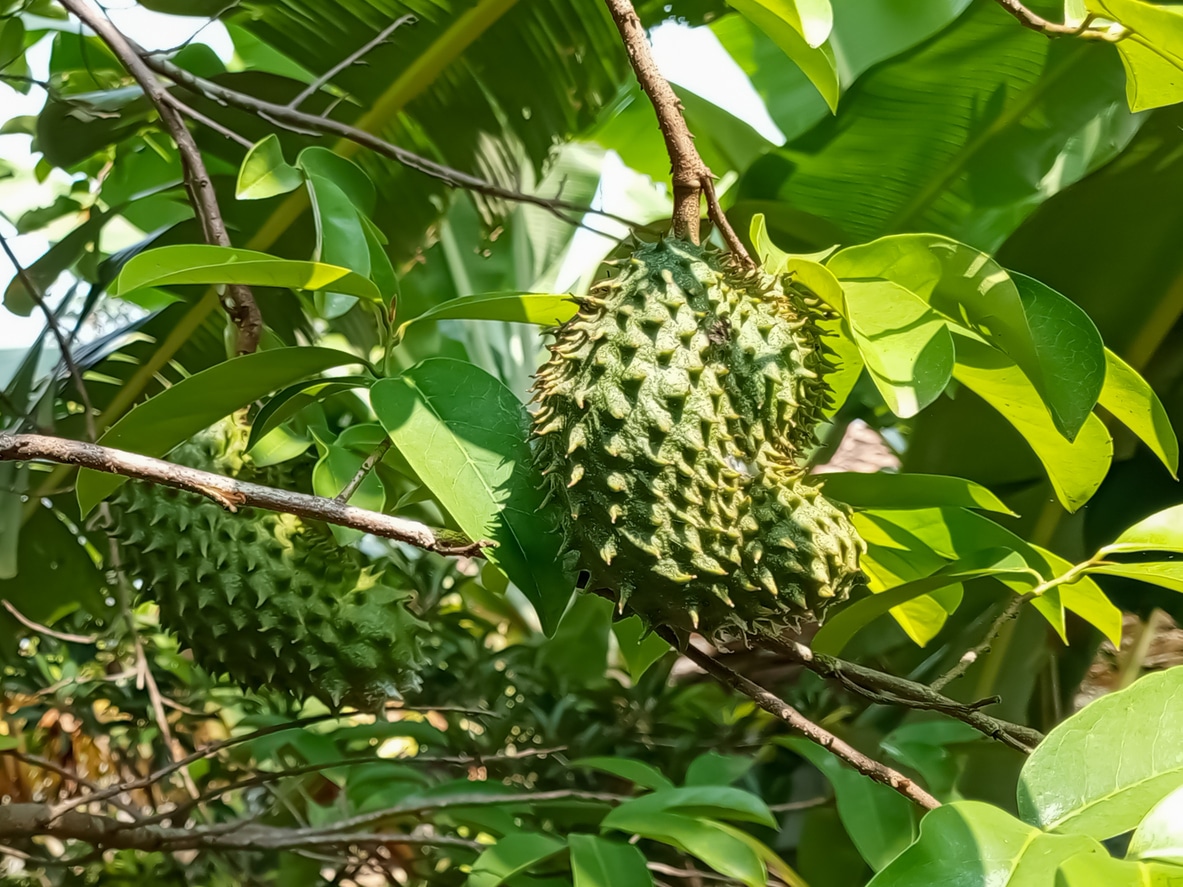
With Ecuador ranked as the third top exporting country for fresh soursop in 2024 by global B2B agricultural and food-supply chain intelligence platform Tridge, it’s no wonder the country has seen growth in the export market for soursop.
Padilla observes, “Growing international demand for tropical and functional foods has helped position soursop as one of Ecuador’s promising agricultural exports.” She details that soursop fruit is grown on tropical trees cultivated in orchards and plantations, with farmers using grafted trees to produce larger fruit and accelerate harvests. Within two to three years, the trees have grown enough to produce fruit for commercial production of soursop products or fresh fruit shipments.
“In Ecuador, soursop has deep roots in both the Coast and the Amazon regions,” she notes. According to Padilla, the best-known regional varieties and adaptations of Ecuadorian soursop reflect the country’s agricultural and climatic diversity: the Ecuadorian Giant Creole Soursop (appreciated for its large size and intense flavor), the Brazilian or “Perla” variety (known for being sweeter and brighter green in color) and the Amazonian Soursop (recognized for its thick pulp and extra-sweet flavor).
Ecuadorian Soursop
As for the part soursop plays in Ecuadorian cuisine, Padilla shares, “Long before colonization, Indigenous peoples consumed the fruit fresh and used its leaves for medicinal teas. Over time, especially in coastal provinces such as Manabi, Guayas and Esmeraldas, it became incorporated into beverages and desserts.”
In her hometown of Esmeraldas, Padilla says fresh soursop can be found in local markets and street stalls as well as at family orchards and small farms. Currently she reveals soursop fruit frappés are all the rage with locals.
“One of the most popular preparations is the guanabanazo, a thick smoothie made with soursop pulp, milk, ice and condensed milk,” she describes. “Because of the intense heat waves recently experienced in the city of Esmeraldas, soursop has become especially appreciated as a refreshing fruit that helps people cool down during extremely hot days.”
While soursop grows abundantly in the humidity of the tropics, it’s a different story when it needs to travel. According to the National Institute of Health’s National Library of Medicine, fresh soursop fruit has a high moisture content (about 80%) and is sensitive to temperature change, so producing countries share a common problem in the management of fresh fruit for export.
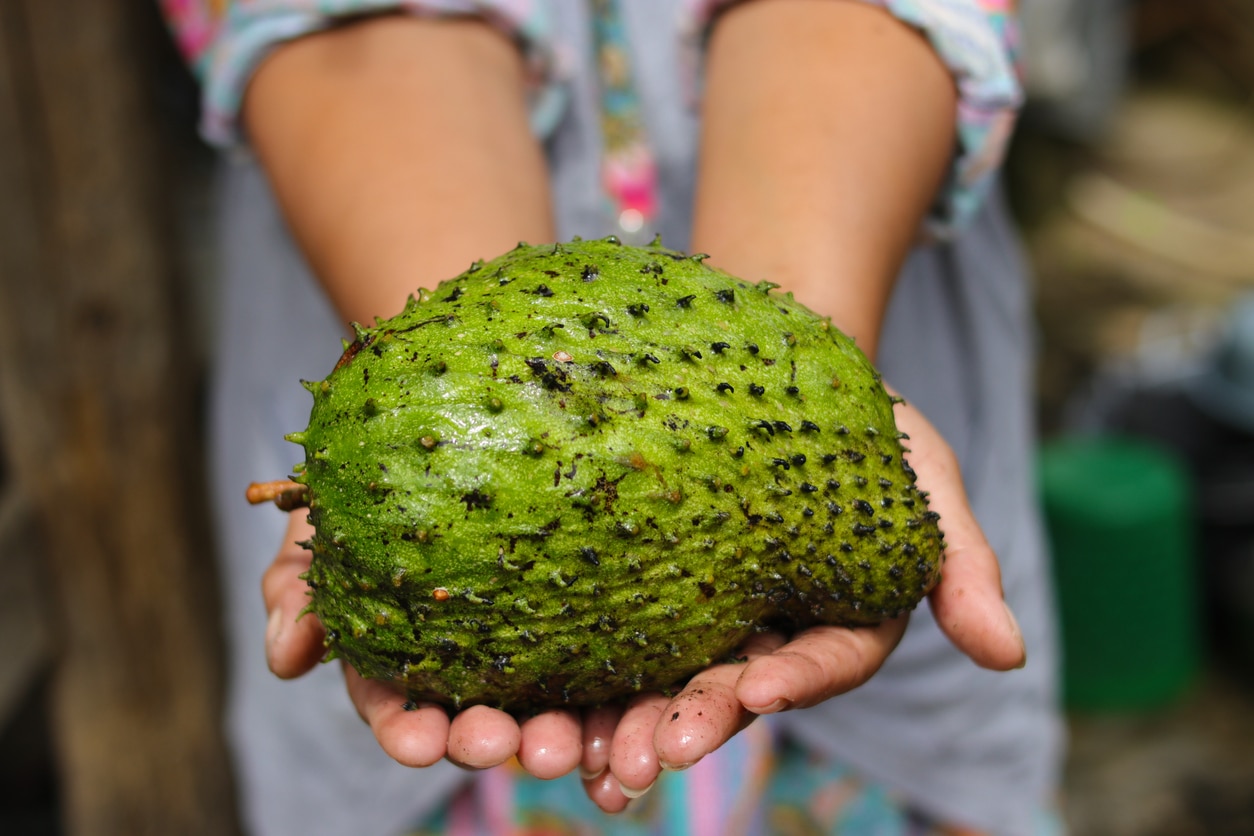
“It ripens really quickly, so it’s super expensive in the US. If you go to a farmer’s market, soursop [can cost] $50 because it’s really hard to transport,” attests St. Cloud, an Atlanta-based storyteller and founder of Souf Collectif, a Haitian-inspired bath and wellness brand. “This is why most people in the States use frozen soursop pulp for food and purchase dried soursop leaves from herbal stores.”
Growing up in a Haitian family, St. Cloud traveled to the islands often to visit relatives during her childhood and is well acquainted with soursop’s therapeutic qualities as “it’s our top botanical herb.”
She points out, “It’s the type of tree that, back home in Haiti, everyone has one in their backyard. It speaks to Haitian culture because we’re really a culture of trying to find as many uses as possible for something because, in a lot of ways, we have been under-resourced. But, also we have so many resources botanically. And, so, if you have a tree that’s so prevalent and found around the country, people are going to find as many ways to use it as possible.”
RELATED: Soursop: Cooking Versatility That Goes Beyond Health Benefits
Resourcefulness and Necessity
Traditional wellness uses for soursop involve using its leaves, bark, flowers and fruit for remedies and recipes. This knowledge of botanical remedies was primarily passed down through generations, says St. Cloud, who comes from a family that includes several agronomists.
As a child, St. Cloud experienced soursop’s restorative benefits first hand. “Growing up, I suffered from frequent migraines and fainting spells…When I would go to Haiti and I had migraines, they would boil the soursop leaves and then apply them to my head, like a poultice,” she recalls. The wellness brand founder relates how tea steeped from soursop leaves can also help address insomnia or, when added to cold baths, aid in relieving fevers.
“[This] comes from a long line of wellness rituals that is really rooted in science and our culture,” points out St. Cloud about soursop benefits. “It wasn’t something that was seen as a luxury practice. It was just done out of necessity for [addressing] basic ailments like stomach pains, headaches or helping mothers having trouble with their lactation. This is intergenerational knowledge that’s a part of a system that is our botanical wellness culture.”
Culinary herbalist and researcher Fils-Aime recognizes how soursop’s beneficial reputation has managed to cross oceans. “There is evidence of soursop in the Caribbean as early as the 15th century, which is one of the reasons why it’s so ingrained in the culture,” she observes.
“Soursop has been used in religious traditions for centuries in places like Central America, the Caribbean, Africa and India. For example, soursop is often used in religious ceremonies honoring the Yoruba orisha [divine spirit] named Obatala across the diaspora,” says Fils-Aime.
She continues, “Soursop is one of the many potential offerings for Obatala that grow in the Caribbean…So some of the religions that have come from West Africa through the Transatlantic Slave Trade that have been brought to the Caribbean Hispanic islands use soursop nectar—either for religious ceremonies or for making their own drinks. In fact, soursop arrived to India from the Caribbean in the 19th century, and the ways its used in ayurveda (India’s traditional system of herbalism) mirrors how Caribbean people use the plant for medicinal purposes.”
Soursop Benefits
Fils-Aime credits her Haitian heritage and the elders in her family for passing down the traditional practices utilizing soursop’s holistic benefits. While the fruit’s seeds are toxic, the fiber-rich makeup of the soursop fruit provides a good amount of the daily recommended minerals needed, including Vitamin C and potassium, says the Atlanta-based herbalist.
In addition to making a calming tea with its leaves, Fils-Aime says soursop can also aid with stomach issues and can be used in skin care. “It has both kinds of fiber that you’d want for your body in terms of helping to regulate digestion…You can also use the leaves and apply them topically [or make tea] and instead of drinking it, use the cooled-down liquid as a face wash to help with any minor bumps or pimples. And I know of people who have even used the leaves to treat larger skin issues, like a boil or abscess. For example, in parts of Nigeria they’ll cook the soursop leaves, mash them up and put them on different things that they see on the skin.”
So how did this collective wisdom about soursop benefits come to be preserved? “I think it’s a combination of things. It’s mostly oral tradition. When we were brought over to this side of the world, we know that enslaved Africans engaged with Indigenous people who were already here and we’ve learned a lot of practices from them about soursop,” muses Fils-Aime.
“Another way is by paying attention to traditional and historical practices, things that have been happening for hundreds of years. I know a lot of people always look to the science—and I’m glad that the science is there to prove some of these things—but I also believe in historical knowledge,” she attests.
Taste Sensation
While soursop’s history and benefits are intriguing, all of that wouldn’t matter if the fruit didn’t taste so good. For Padilla, the Ecuadorian equates soursop with her culinary and cultural memory.
“In my home, soursop has always been present. I constantly saw it in markets and family kitchen. Its flavor is one of the most complex and memorable in the tropics: sweet and tangy at the same time with notes reminiscent of pineapple, strawberry and banana combined with a velvety, cream texture. It also has a strong, fresh aroma that immediately evokes heat, open-air markets and freshly made juices.”
Atlanta-based storyteller St. Cloud connotes eating soursop with happy times. “In our Haitian culture, soursop is something we eat for pleasure. Its taste is a mix between strawberry and apple, but it’s also citrusy with a nice creamy textured feel to it. It’s always seen as a fun treat and we’d make popsicles, ice creams and juices with it.”
As for cook and writer Fils-Aime, she associates soursop’s taste with Haitian hospitality, explaining, “It is very common when inviting somebody over to the house, especially if you have a soursop tree in the yard, to offer guests soursop juice. It’s seen as a refreshing, welcoming pick-me-up drink.”
But no matter how it’s used or served, soursop is a fruit definitely worth a closer look. What you discover about its wonderful flavor, and its notable history, may just make it a new food favorite to enjoy more often.